
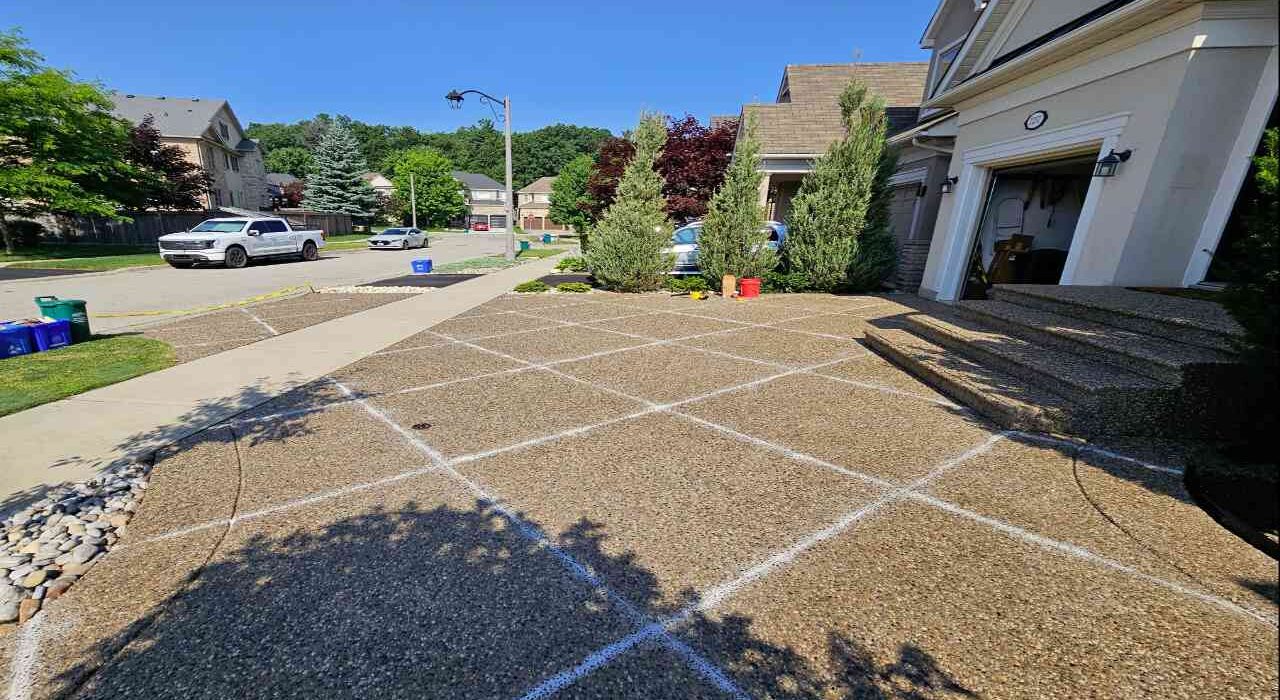
Step outside onto a stamped concrete driveway or natural stone patio in Southeast Oakville, Bronte, Roseland, or Tyandaga. Running across the pavement at regular intervals, you will find long, straight, intentional cuts slicing through the surface.
These are engineered control joints, and driveway control joint sealing is the most overlooked maintenance task on any premium hardscape. These channels were cut into the concrete at the time of installation to control where the slab cracks as it settles and moves.
Concrete will naturally crack along its weakest planes over time. The control joint ensures it cracks along a predetermined, manageable line rather than randomly across a visible surface.
Left open and unsealed, those same joints become the structural weakness they were designed to manage. Every rain event, winter freeze, and invasive insect colony converts a controlled engineering feature into an accelerating liability.
⏱️ Hardscape Sealing Standard
Premium driveway control joint sealing requires heavy-duty, traffic-grade polyurethanes or hybrid polymers (like Sikaflex-2c SL or MasterSeal SL 1) to prevent groundwater from eroding the aggregate sub-base. To handle intense vehicle tire-tracking and sub-zero freeze-thaw cycles, installers must pack compressed closed-cell backer rods to build a solid support foundation. Extruding self-leveling commercial compounds and broadcasting wet seams with texturized silica sand is mandatory to replicate authentic masonry grout and prevent frost heaving.
The Physics of Sub-Base Erosion and Winter Frost Heaving
The structural risk of an open control joint begins underground, well below the concrete surface. This hidden erosion builds silently through successive seasons until the damage becomes highly visible at grade level.
During a heavy summer downpour, rainwater sheeting across a driveway or patio surface collects rapidly at the low points of the slab. This concentrated volume funnels directly down through the joint, bypassing the concrete entirely and entering the aggregate stone sand sub-base below.
A significant storm event on a large driveway can direct hundreds of litres of water into open joint channels over a very short period. These underlying granular materials are not designed for continuous water infiltration or heavy water pooling.
Repeated water flow through the sub-base washes the fine sand particles out from beneath the slab edges and corners. This destructive underground washing process creates expanding voids that leave the concrete panels completely unsupported.
These voids have no visible surface indicator until the concrete panel above them begins to tilt or rock under load. Eventually, the unbacked panels will crack through their full thickness under standard vehicle weight.
A concrete driveway panel that sounds hollow when struck is a panel that has already lost its sub-base support. This compromised section is actively carrying heavy vehicle loads across an unsupported span.
The connection between horizontal driveway joint failure and vertical foundation structural movement is direct. Water that enters the sub-base through open driveway joints migrates laterally and vertically, reaching the soil surrounding and beneath the home’s foundation walls.
For a detailed look at how that ground-level water infiltration creates failed concrete seals and grade-level joints at the foundation perimeter, read our guide to foundation perimeter caulking covering the full structural cascade.
The water management and traffic-bearing demands of horizontal concrete joints at grade level are also closely comparable to what we address in pool deck weatherproofing applications.
Constant water volume, chemical exposure, and heavy use create similarly aggressive conditions for horizontal pavement sealant systems. For the authoritative engineering standards governing slab-on-grade joint design and sub-base protection, the American Concrete Institute’s expansion joint design guidelines define the technical baseline.
These strict industrial publications serve as the precise foundation that professional hardscape contractors and premium sealant applicators work from when specifying horizontal joint systems. Winter compounds this initial erosion damage with a second, independent mechanical failure mechanism.
Any water that has infiltrated the sub-base and remains in the joint cavity when temperatures drop below freezing expands by approximately nine percent as it converts to ice. In a confined concrete joint, that expansion generates pressure against the adjacent panel faces that can exceed several megapascals.
This intense pressure easily exceeds the maximum baseline tensile strength of the concrete at the joint edge. The pavement panels are forced apart and upward in a destructive process called frost heaving, creating permanent vertical displacement at the joint line.
A driveway or patio surface that was perfectly level before winter presents lips, steps, and uneven transitions after the spring thaw. These sudden structural shifts are not only visually disruptive on a premium residential hardscape installation.
They create dangerous tripping hazards at every single pavement transition point across your exterior walkway. This unbacked settlement represents a severe potential liability on any property where guests, tenants, or delivery service personnel are present.
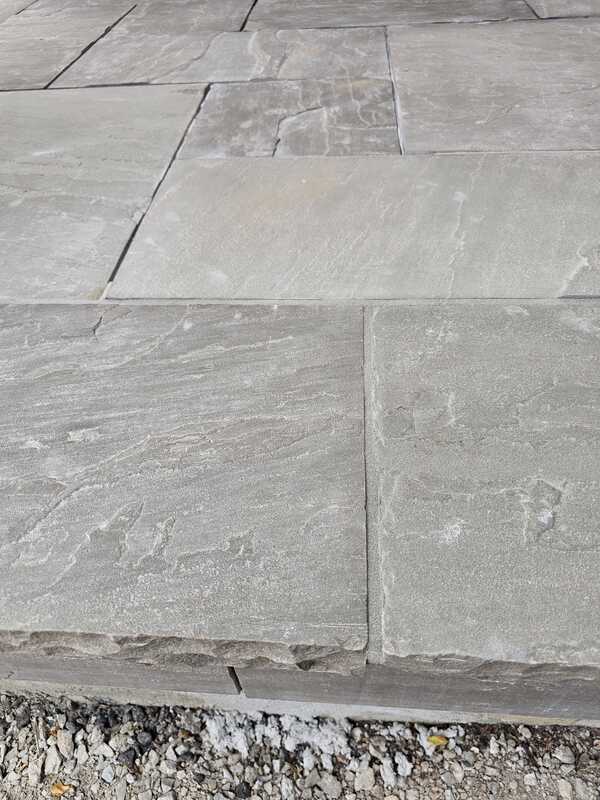
The Intrusion Nuisance: Structural Weed Invasions and Ant Colonies
Beyond the hydraulic and thermal damage mechanisms, open pavement control joints create a severe biological problem. Wind-blown organic material, fine silt, and moisture accumulate in open joint channels continuously.
Within a single season, an open joint on a south or east-facing driveway in Oakville collects enough organic substrate to support active weed germination. The weeds that establish themselves in pavement joints are deeply rooted perennial and grass species.
Their invasive root systems penetrate the joint channel and grow laterally beneath the concrete edges. This lateral root mass exerts immense mechanical pressure against the joint faces as it expands.
Root growth in a control joint actively levers the adjacent panels apart. This action widens the joint, destabilizes the panel edges, and accelerates the water infiltration cycle.
The ant colony problem is also structurally more significant than it appears to most property owners. Species that colonize horizontal pavement joints do not simply nest in the surface material.
They tunnel systematically through the bedding sand and aggregate sub-base beneath your concrete panels. This continuous excavation removes vital sub-grade material and creates an underground network of galleries that progressively undermines the slab.
A Technical Diagnostic Guide: 5 Indicators of Horizontal Joint Failure
A careful inspection of your driveway and patio joint network at the start of each season takes twenty minutes. Evaluating these specific material conditions provides a complete picture of the current structural risk at grade level.
Diagnostic Point 1: Deep Unsealed Voids and Missing Expansion Foam
A joint that is entirely open with no sealant material present is the most acute failure condition you can uncover. This structural void creates an unobstructed funnel directing every rain event straight into the sub-base.
Joints with a visible depth greater than two to three centimetres indicate that sub-base material has already washed out. This empty gap confirms that the concrete panel edges have lost their primary support foundation.
Diagnostic Point 2: Lengthwise Adhesive Splitting Down the Centre of Old Sealant
A sealant bead that looks intact but shows a crack tracking down its centre line is a clear indicator of three-sided adhesion failure. The old compound bonded incorrectly to the back floor of the joint cavity as well as both side panel faces, tearing apart as the concrete shifted.
This structural error leaves the channel wide open along its entire length despite the visual presence of rubber material. Water passes through this centre split completely unhindered, dropping straight down onto your aggregate bedding stone.
Diagnostic Point 3: Proliferating Weed Growth and Silt Accumulation Inside the Cuts
Active weed growth emerging from a pavement joint confirms that organic material has filled the gap deep enough to support a root system. This invasive green growth proves that moisture is staying trapped in the joint long enough to support active seed germination.
This root mass acts like an underground lever that pushes against the raw concrete edges as it expands. Silt accumulation that sits level with or above the concrete surface indicates that the joint has been collecting dirt for multiple seasons.
Diagnostic Point 4: Hollow-Sounding Slabs and Uneven Concrete Panel Edges
Tapping the concrete panels firmly adjacent to the joint line reveals the exact condition of your underlying soil support. A panel with full sub-base contact returns a solid dense sound while an unsupported panel returns a hollow resonance.
This hollow echo confirms that expanding voids have opened up directly beneath your driving surface. Uneven panel edges where one slab has settled lower than the adjacent one confirm that structural sub-base erosion has already occurred.
Diagnostic Point 5: Heavy Sand or Silt Pushing Up to the Surface After Heavy Rain
Fine sand or granular material appearing on top of the joint after a storm is direct evidence of active sub-base erosion. Pavement engineers refer to this destructive upward movement of wet silt and sand as soil pumping mechanics.
The water moving through the unsealed joint is actively transporting your vital bedding foundation out of the cavity lines. This indicator combines with hollow-sounding panels to confirm that your driveway requires immediate professional assessment before heavy vehicles cause a total collapse.
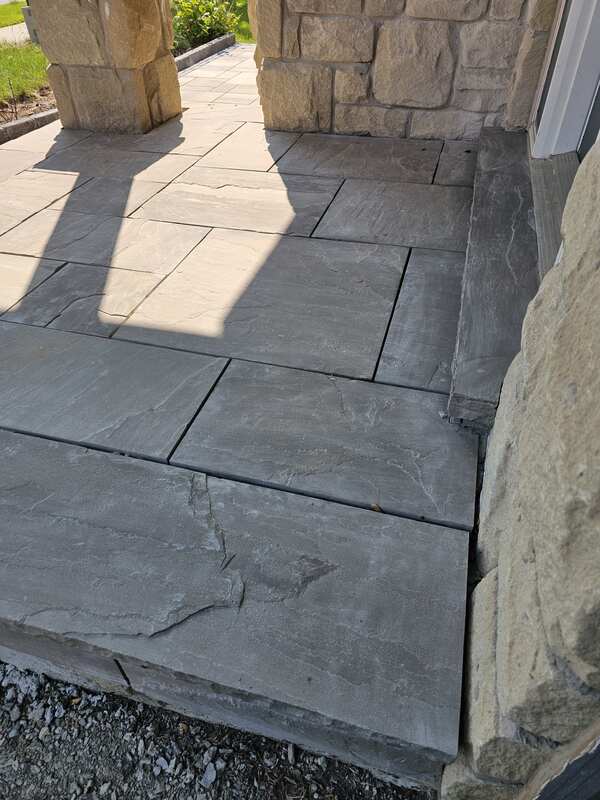
The Surgical Workflow for Horizontal Joint Restoration
A surface patch applied over contaminated, degraded, or biologically infiltrated pavement joint material is not a repair. It is a cosmetic layer sitting on top of an active failure, and it will debond along the contamination interface under the first thermal movement cycle or significant rain event.
The restoration of a horizontal driveway or patio control joint requires starting from clean, bare concrete substrate on both faces of the joint and applying correctly specified material to that clean substrate directly.
Phase 1: Deep Extraction of Silt, Weed Roots, and Sub-Grade Organic Debris
All existing sealant, foam backer, weed root material, accumulated organic debris, compacted silt, and any ant colony material in the joint is extracted completely using oscillating tools, detail cutters, compressed air, and hand scrapers appropriate to the joint width and depth.
The extraction target is bare concrete on both faces of the joint and visible clean aggregate or stone at the base of the channel. Any residual biological material left in the joint will inhibit adhesion of the new sealant and provide a substrate for renewed weed germination beneath the sealed surface.
For heavily contaminated joints where root systems have extended along the underside of panel edges, the mechanical extraction process includes cleaning the horizontal ledge at the joint base to ensure the new backer rod and sealant system seats against clean concrete rather than compressed organic material.
Phase 2: Stripping Hydrocarbon Oils and Vehicle Traffic Contaminants
After mechanical extraction, joint faces are cleaned with solvent to remove adhesive residue and surface contamination. Concrete surfaces at driveway and patio grade level accumulate oil, rubber, and chemical deposits from vehicle traffic and outdoor use that are not removed by mechanical tools alone.
These surface contaminants interfere with sealant adhesion chemistry and must be addressed before any new material is applied. The standard of surface preparation required for a horizontal driveway traffic joint is identical to what we apply on commercial facade projects.
As our article on commercial exterior caulking and building envelope sealing details, the mechanical cleaning standard does not change based on whether the substrate is a residential driveway or a corporate precast panel.
The adhesion chemistry is governed by substrate cleanliness, not project category.
Phase 3: Installing Closed-Cell Backing Foam for High-Load Concrete Slabs
Green concrete cuts and diamond-blade relief channels require a dense, foam base floor to handle the massive downward rolling weight of vehicle traffic. We wedge thick, round backing ropes into these raw concrete slots to build a custom-depth support bench that stops your wet self-leveling compound from sinking down into the open dirt base below.
Our field crews seat this backing rope deep enough to ensure the top rubber skin cures with thick, square dimensions. This heavy cross-section provides the massive material volume needed to absorb extreme horizontal stretching whenever your driveway panels shrink or expand during Ontario seasonal shifts.
For a standard 10mm wide saw cut channel, our technicians tool the center of the wet ribbon to an exact depth of 10mm. This square physical shape prevents the material from tearing apart under heavy tire tracking pressure, ensuring the edges stay anchored to the bare concrete wall faces.
As outlined in our detailed guide on what is a backer rod, filling these horizontal cavities with a solid foundation is essential to avoid structural adhesion failures. Deep driveway expansion seams left without an underlying foam cushion will split open during their very first winter freeze cycle.
Phase 4: Applying Self-Leveling Polyurethane and Texturized Silica Finishes
Our installation team injects the specified high-movement compound into the prepped joint track using advanced pneumatic equipment. This professional delivery system maintains uniform material depth and consistent volume throughout the entire driveway perimeter.
Liquid self-leveling polyurethane compounds provide vital specialized performance for wide horizontal channels bearing heavy vehicle loads. Our custom hardscape teams completely eliminate edge cracking and sealant failure by extruding elite multi-component formulations like Sikaflex-2c SL or MasterSeal SL 1.
These heavy-duty commercial polymers deliver the precise elongation threshold and heavy traffic resistance that a vertical window joint sealant never needs to provide.
Our chosen polyurethanes require a strict minimum substrate temperature of 4 degrees Celsius and rising throughout the entire initial curing phase. Applying these compounds below this thermal threshold causes the moisture-cure chemistry to stall, trapping gas bubbles that ruin your seal.
These advanced compounds utilize specialized cross-linked chemistry to maintain absolute stability against continuous tire tracking. These horizontal barrier material specifications align perfectly with the modern slab joint execution parameters governed by the official CSA Group concrete standards database.
This superior structural grading enables the cured rubberized bead to expand and compress seamlessly through Ontario’s freezing winters and blisteringly hot summers. The flexible connection absorbs extreme framework stress without cracking or unzipping from your moving concrete slabs.
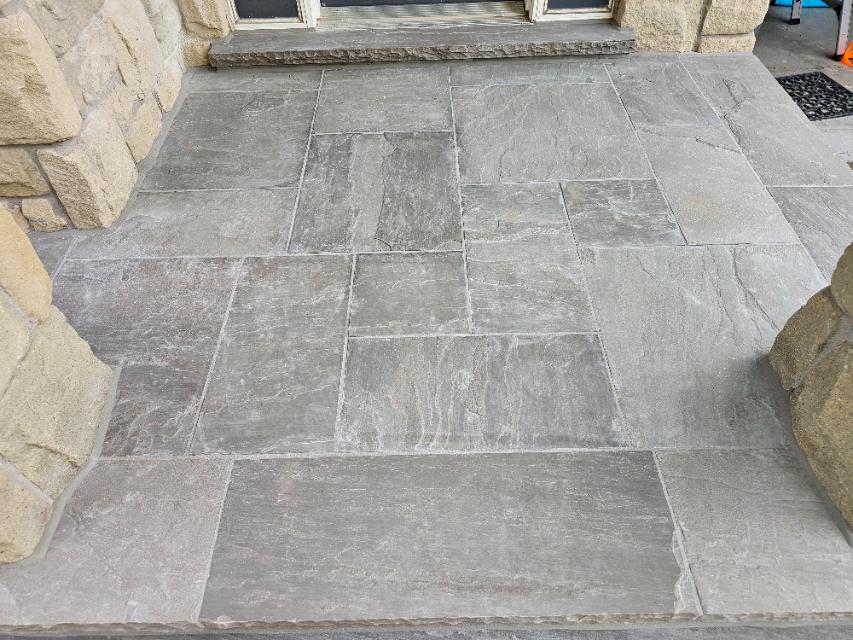
Secure Your Hardscape Surfaces Before Sub-Base Erosion Sets In
Investing in a premium poured concrete driveway or custom natural stone patio adds massive structural value and visual appeal to any local property. However, executing an emergency mudjacking procedure to hoist a sunken concrete slab back into position costs significantly more than sealing the control joint that allowed the panel to drop in the first place.
Completely rebuilding a backyard patio after multiple stone slabs have shifted, frost-heaved, or cracked right down the center demands full stone demolition, aggregate sub-base replacement, and an entirely new installation. Excavating and pouring a new driveway on a high-end Oakville property easily escalates into a five-figure capital expense.
The physical concrete expansion joint itself is incredibly small. The underlying structural devastation that occurs from leaving it unshielded through multiple seasonal freeze-thaw cycles is not.
Coordinate Your On-Site Concrete Control Joint Evaluation
Contact Oleg at Proper Caulking to schedule a specialized, on-site driveway and patio joint structural assessment for your Oakville or Burlington property today. Our experienced technical field crew meticulously checks every single relief lane, foundational contraction seam, and grade-level perimeter transition across your entire residential hardscape footprint.
Our inspectors provide you with a completely honest breakdown of exactly which sub-base zones are currently at risk of groundwater washout, delivering a transparent project scope backed entirely by our signature 10-year workmanship warranty.
Arranging this service early in the spring weather window ensures that your protective self-leveling polyurethane barrier is completely installed, leveled, and fully cured before peak summer driveway or patio traffic kicks into high gear.
Protect Your Driveway and Patio From Costly Slab Shifting
Don’t let failed pavement control joints wash out your sub-base aggregate or create permanent winter frost-heaving. Contact us for a specialized, zero-obligation horizontal joint assessment today.
Proper Caulking – Oakville & Burlington, Ontario