
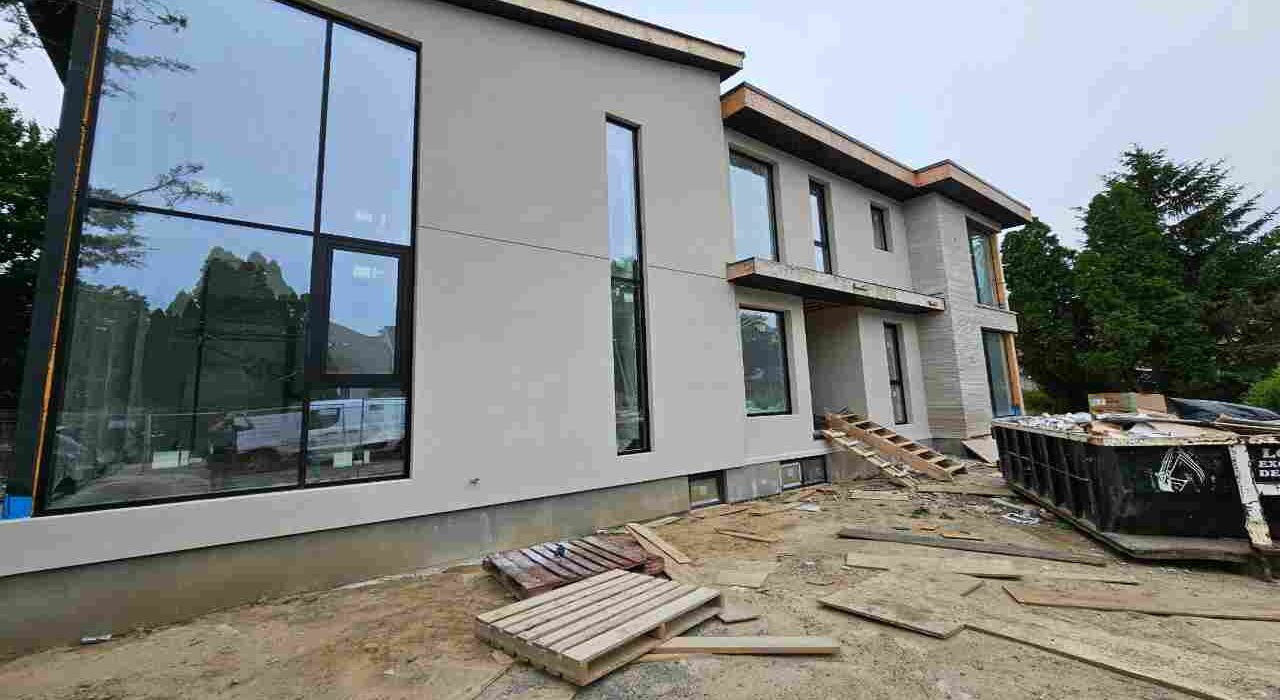
Executing high-performance exterior stucco caulking projects requires a strict analytical engineering approach to protect luxury custom estates across Oakville and Burlington. Whether navigating intense lakefront humidity along Lakeshore Woods or managing rapid thermal masonry shifting in Joshua Creek and Alton Village, synthetic cladding demands elite perimeter defense.
Because rigid synthetic stucco (EIFS) cannot absorb foundation settlement or window casing shifts, uncalibrated retail compounds quickly split and trigger catastrophic five-figure facade remediation bills. Protecting these high-end architectural systems requires completely bypassing cheap store-bought acrylics in favor of commercial-grade neutral-cure chemistry.
⏱️ Stucco Service Standard
Premium stucco exterior caulking requires high-adhesion, neutral-cure architectural silicones (like DOWSIL 795 or Sikasil-WS) rather than cheap acetoxy-cure compounds to avoid chemical finish etching. Because rigid synthetic stucco cladding (EIFS) cannot absorb frame shifting, a professional application must use careful manual hand-tool stripping to protect the fragile fiberglass mesh from tearing. Maintaining a strict 2:1 width-to-depth joint ratio over closed-cell backer rods is mandatory to prevent invisible subsurface moisture rot.
The Hidden Destruction of Subsurface Water Ingress
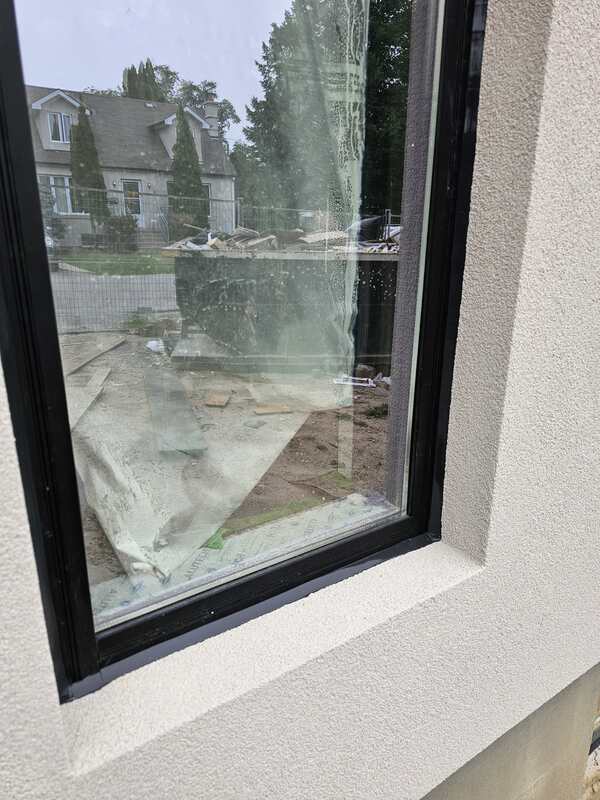
A split or debonded sealant line on a traditional brick home typically allows rainwater to run harmlessly down the exterior face of the wall. On an EIFS home, this hidden failure mode is significantly more dangerous because the cladding layout actively traps the moisture once water breaches the surface boundaries.
Exterior Insulation and Finish Systems are composed of a continuous layer of rigid foam insulation boards bonded tightly to the wall substrate. This insulation layer is wrapped in a protective fiberglass mesh fabric and coated with a polymer-modified synthetic finish coat.
The multi-layered cladding system is engineered as a completely airtight and watertight external building envelope. This tight engineering acts as its greatest strength during normal weather conditions and its most critical structural vulnerability the moment a perimeter seal fails.
When a weatherseal line at a window frame, door surround, or architectural transition splits, it creates a direct path for moisture entry. This intruding water does not simply run down the back face of the insulation panels and drain out cleanly at the bottom track.
The water gets drawn deep into the dense insulation assembly by capillary action and absorbed by the internal fiberglass reinforcement mesh. Because the non-porous outer face of the synthetic stucco is designed to block external moisture transmission, the water that enters cannot evaporate back out to the atmosphere.
This moisture entrapment sets up a destructive, closed-loop moisture environment directly inside your wall cavity. The plywood sheathing and timber framing behind the EIFS panels absorb this trapped moisture continuously until the wood cells break down.
Advanced wood rot develops rapidly across the sheathing before progressing deep into the primary structural load-bearing framing. In warm, humid conditions, which describe an Oakville or Burlington summer precisely, toxic black mold colonies establish themselves in the wall cavity within weeks.
None of this catastrophic structural decay is visible from the exterior driveway or property lawn. The synthetic stucco face looks completely intact, and the perimeter sealant line may only appear partially separated to the untrained eye.
Inside the wall assembly, the subsurface moisture damage remains highly active and advances deeper with every local rain event. By the time visible interior warning signs appear on your drywall, the hidden decay has progressed for months or years.
These late-stage symptoms include damp drywall spots, a musty odor along baseboard lines, or soft areas in the wall surface. At this point, the remedial work expands from a simple proactive joint repair to a highly destructive, full wall stripping project.
Property owners face a massive construction scope including structural framing assessments, chemical mold treatments, insulation replacement, and complete EIFS reinstallation. The cost differential between sealing a failing boundary early and addressing a structural failure after two or three seasons is extreme.
Why Retail Acrylic and Polyurethane Caulks Ruin Stucco Textures
The temptation to buy a tube of retail acrylic latex or standard polyurethane caulk at a big-box hardware store is completely understandable. These consumer products are inexpensive, widely available, and look visually identical to industrial-grade compounds when sitting inside a plastic tube.
However, the underlying physical and chemical damage they inflict on a synthetic EIFS surface is catastrophic. Standard retail acrylic caulks suffer from up to 30% volumetric shrinkage as their water content evaporates during the initial curing phase.
On a non-porous vinyl or smooth metal casing, this extreme shrinkage simply pulls the bead thin while leaving the substrate surface intact. On a delicate synthetic stucco finish coat, this violent physical contraction triggers severe mechanical failures.
The highly porous, sand-textured finish of an EIFS wall provides thousands of microscopic mechanical anchor points across the adhesion face. As the retail compound dries out and its internal adhesive tension spikes, it pulls against these texture points with immense force.
This stress physically delaminates the decorative finish coat away from the base mesh layers sitting directly beneath the joint. This destructive pulling action leaves a ragged strip of torn architectural coating tracking along the full length of your window frame.
The premium textured surface that defines the visual elegance of your stucco home is permanently ripped away. This shortcut leaves a raw, mismatched substrate pattern that cannot be cosmetically patched without re-coating the entire exterior wall assembly.
A basic maintenance task that started as a simple hairline crack repair instantly becomes an expensive facade remediation project. Low-grade retail polyurethane caulks create an equally severe chemical threat to these sensitive wall systems.
Their basic cure chemistry releases aggressive chemical byproducts that trigger rapid plasticizer migration into the surrounding synthetic coatings. This migration causes permanent yellow discoloration, chemical etching, and oily staining that remains visible from across the street.
The Surgical Workflow of Professional Stucco Sealing
Sealing a stucco or EIFS joint correctly is not a standard caulking job with a premium product. It is a materially distinct process that requires different tools, different preparation technique, and a stricter tolerance for substrate integrity at every stage.
Phase 1: Deliberate Hand-Tool Stripping and EIFS Mesh Preservation
Removing old sealant from a stucco interface cannot be done with the oscillating multi-tools or hook scrapers used on brick. The delicate fiberglass mesh embedded in the EIFS base coat sits within a few millimeters of the joint face.
An aggressive mechanical tool will cut through the mesh and damage the structural layer of the cladding system, creating an expensive repair problem far larger than the original sealant failure. Extraction at a stucco joint requires thin-blade hand tools, controlled depths, and continuous visual assessment of the substrate condition as material is removed.
The goal is complete removal of old sealant without scoring, cutting, or abrading the stucco finish coat or the mesh layer beneath it. While this deliberate process takes significantly longer than a standard extraction, the alternative is accelerating the structural damage you are trying to prevent.
Phase 2: Substrate Soundness Auditing and Finish Coat Pre-Washing
Once the joint is cleared, the channel faces require a chemical pre-wash to remove residual adhesive, environmental contamination, and biological growth. On synthetic stucco, this specialized step allows for an immediate visual assessment of the finish coat condition along the joint edge.
Any areas where the finish coat has already delaminated, micro-cracked, or absorbed water must be identified before the new sealant is applied. Sealing over a compromised substrate produces a weak bond that will fail prematurely at the weak point regardless of the quality of the material used on top.
Phase 3: Hourglass Geometry Engineering for High-Movement Stucco Boundaries
Deep window-to-stucco transitions require precise structural joint geometry before any fresh architectural sealant is injected into your cladding channels. As outlined in our comprehensive guide covering what is a backer rod, installing this flexible backup foundation is structurally non-negotiable for any joint where deep masonry cavity tracks exist.
We enforce a strict 2:1 width-to-depth structural ratio across all high-exposure EIFS perimeter boundaries by seating high-density closed-cell backer rods at exact manufacturer depths. For a standard 16mm wide expansion joint or casing transition, our technical crews tool the center ribbon thickness to an exact depth of 8mm.
Pushing a firm friction-fit foam foundation into the channel controls the overall sealant cross-section while completely preventing catastrophic three-sided adhesion failure. This precise backing process gives the cured polymer compound the perfect hourglass profile it needs to flex seamlessly.
This advanced shape allows the rubber bead to survive intense multi-axis thermal movement at the delicate stucco interface without tearing away from the edge faces. It concentrates the physical expansion stress cleanly along your durable side anchor tracks, protecting your luxury siding from early cracking.
Phase 4: Neutral-Cure Material Injection and Porous Surface Curing Chemistry
High-adhesion neutral-cure silicone applications on textured stucco surfaces are particularly sensitive to temperature and humidity at the time of application. The mild, stable climate conditions of late spring and early summer provide the optimal seasonal sealing window for high-end stucco work.
For a full breakdown of why Oakville exterior caulking is best executed in May and June, our dedicated seasonal guide covers the chemistry in detail. It outlines the specific temperature ranges that allow commercial silicone to cure evenly across a porous stucco substrate without bubbling or cracking.
Architectural EIFS layouts and smooth synthetic finishes define the luxury new-build landscape across Burlington and the Niagara Horseshoe. Securing these modern custom homes requires a specialized, heavy-bodied elastomeric barrier that handles multi-axis envelope shifting without scoring the delicate reinforcing fiberglass mesh layer.
Material Science: The Need for Neutral-Cure Architectural Silicone
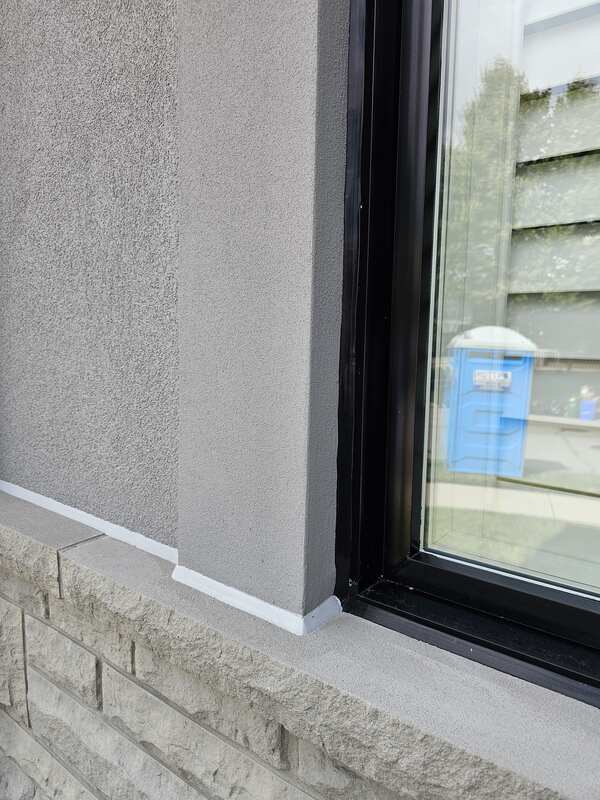
The chemistry of the compound you inject into a stucco joint dictates its ultimate lifespan just as much as manual channel preparation. Not all silicones are engineered equally, and the distinct molecular difference between neutral-cure and acetoxy-cure formulations is structurally critical on a delicate synthetic EIFS surface.
Standard retail silicones, including the common clear and white tubes sold at everyday hardware stores, are cheap acetoxy-cure formulas. As they cure, these standard consumer caulks release a strong acetic acid byproduct right into your wall channel. On non-porous building elements like smooth glass panels or glazed bathroom tile, this acid vapor dissipates quickly into the air and leaves no lasting damage.
However, when applied against the highly porous, alkaline surface of an exterior stucco finish coat, that raw acetic acid chemically reacts with the synthetic binders inside the cladding. This destructive chemical reaction triggers permanent surface staining, surface etching, and a partial breakdown of the coating chemistry right at the material interface.
The low-grade caulk might appear to bond firmly at first, but the underlying substrate has been chemically weakened, causing the joint to fail far faster than it would against a chemically neutral surface. Professional neutral-cure architectural silicones release a completely non-reactive byproduct as they dry.
Advanced commercial polymers, including elite trade formulas like DOWSIL 795 and Sikasil-WS, bond to porous stucco through a safe chemical welding process that never alters or corrupts the finish coat chemistry.
The resulting seal is permanently compatible with modern EIFS layers, maintaining deep molecular adhesion through the extreme thermal shifting and intense UV exposure of a full Ontario seasonal climate cycle.
For an exhaustive, technical overview of EIFS joint repair requirements and commercial expansion joint design guidelines, the EIFS Industry Members Association (EIMA) publishes the definitive, authoritative trade standards that govern correct sealant selection and substrate preparation on these architectural systems.
The Compounding Stresses of Multi-Axis Foundation Transitions
The heavy-bodied construction silicones we deploy at Proper Caulking are engineered to a completely separate performance tier than store-bought caulks. Premium commercial-grade polymers are formulated with superior joint movement thresholds of up to 50 percent or more, fully compliant with the rigid industrial criteria detailed in the ASTM C920 standard specifications.
This extreme level of elastomeric flexibility allows the cured compound to safely expand up to one and a half times its baseline joint width during intense seasonal temperature swings without tearing away from your stucco edges or window framing substrates.
It is also highly critical to audit the vulnerable base of a stucco cladding system, where the vertical EIFS facade drops down to meet a horizontal concrete ground slab, asphalt driveway, or stone backyard patio.
The thermal movement tracking across that lower transition combines vertical wall expansion with horizontal slab shifting, pulling the weatherseal across two separate geometric planes simultaneously.
For local properties where failed concrete joints or cracked grade-level seams are clearly visible right at the base of a stucco wall, this high-stress interface requires a professional assessment alongside your window and door perimeters.
Our comprehensive article covering concrete step caulking and exterior masonry joints details the full structural risks of these low-profile grade transitions, providing the definitive guide to armoring your foundation line against subsurface water tracking.
Protect Your Stucco Before Summer Humidity Sets In
Tracking down and repairing deep water tracking behind a failed synthetic stucco system is an incredibly destructive process. The restoration project forces field crews to cut away large vertical sections of insulation boards down to bare plywood foundations.
Technicians must then remove advanced timber framing rot, treat toxic mold colonies, and completely rebuild the multi-layered EIFS facade to match modern structural codes. The total financial cost of an emergency stucco overhaul on an Oakville or Burlington property easily escalates into a major five-figure capital expense.
In severe cases with extensive subsurface sheathing rot, the ultimate construction bill stretches significantly higher. The proactive alternative is a specialized exterior inspection and targeted perimeter weatherseal restoration before local moisture levels spike.
This seasonal maintenance investment represents a small fraction of a full siding reconstruction budget. It provides an impenetrable barrier when executed with low-modulus architectural polymers and specialized hand-tool extraction.
Coordinate a Professional Exterior Stucco Joint Audit
Our technical field division can meticulously check every single window surround, door casing, and multi-material architectural transition across your property. We deliver a precise summary detailing exactly where your perimeter barriers are breaking down and which framing pockets are exposed to hidden water tracking.
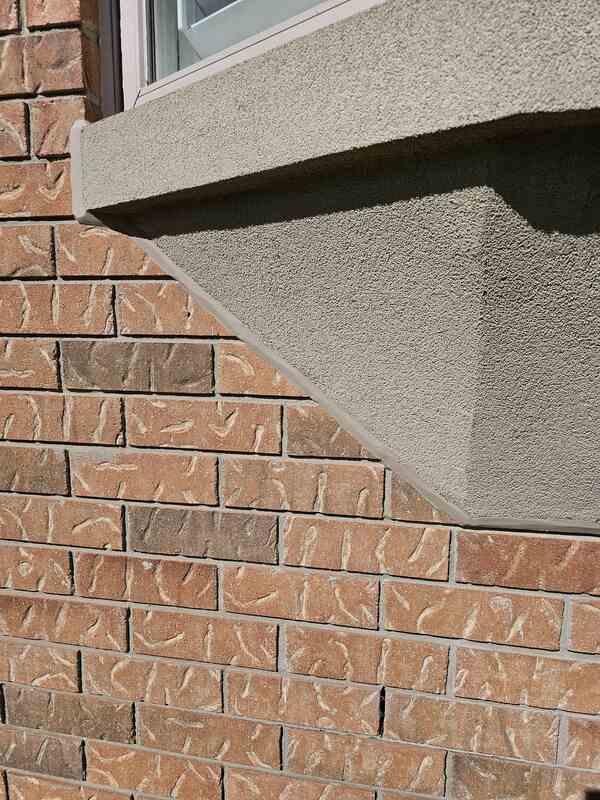
We stand behind our local field work by providing a comprehensive 10-year workmanship warranty on all our residential installations. If you want to see how we weatherproof tricky brick-to-stucco junctions, foundation lines, or exterior expansion joints, take a look at our full menu of exterior sealing services built to eliminate drafts throughout the Halton region.
Frequently Asked Questions on Stucco Exterior Caulking
Why does cheap retail caulking ruin synthetic stucco finish coats?
Standard retail acrylic caulks experience up to 30% volumetric shrinkage as they dry. This intense physical contraction pulls with enough force to delaminate the decorative coating away from your underlying fiberglass mesh.
What is the difference between neutral-cure and acetoxy-cure silicone on EIFS?
Acetoxy silicones release a harsh acetic acid byproduct during curing that chemically eats into the highly alkaline binders of stucco. Professional neutral-cure sealants release a non-reactive byproduct that chemically welds to the joint cleanly without altering the cladding texture.
Can you use an oscillating multi-tool to scrape out old stucco joints?
No, mechanical multi-tools and aggressive hook scrapers should never be used on stucco or EIFS gaps. The delicate fiberglass reinforcing mesh sits within millimetres of the joint edge, and a power tool will instantly slash it, turning a simple re-caulking job into a multi-thousand-dollar facade repair.
What is the correct depth ratio for a stucco expansion joint?
Exterior stucco transitions must maintain a strict 2:1 width-to-depth joint ratio using compressed closed-cell backer rods. For example, a standard 16mm wide expansion joint must be tool-finished to a precise center ribbon thickness of exactly 8mm to distribute thermal movement evenly.
How expensive is it to repair subsurface water rot behind damaged EIFS walls?
If moisture tracking is left unaddressed behind a failed stucco joint, it traps water against your plywood sheathing. Remediating late-stage rot forces crews to strip massive vertical sections of insulation boards and replace rotted framing timber, leading to five-figure expenses.
Book Your Oakville Spring Slot Before It Fills
Don’t force your building envelope to cure in sub-optimal, blistering mid-summer humidity. Contact Oleg at Proper Caulking today to stabilize your exterior joints with calibrated trade precision.
Proper Caulking – Bronte, Glen Abbey & River Oaks, Oakville, Ontario