
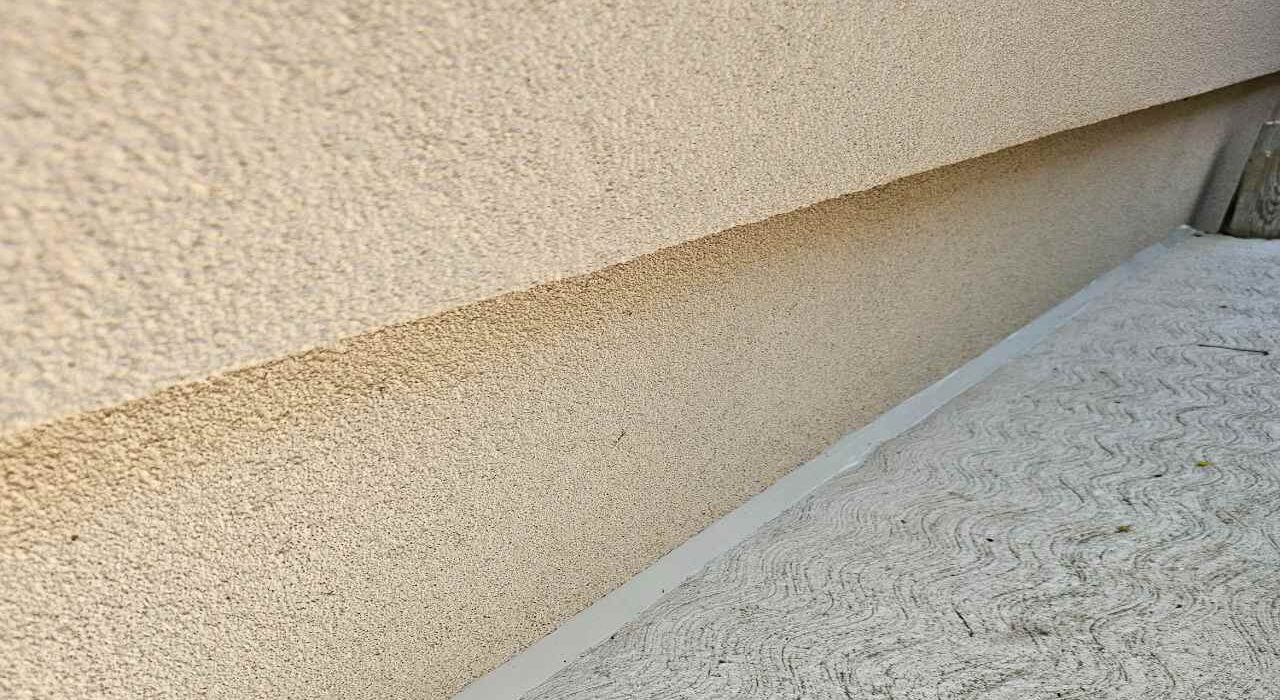
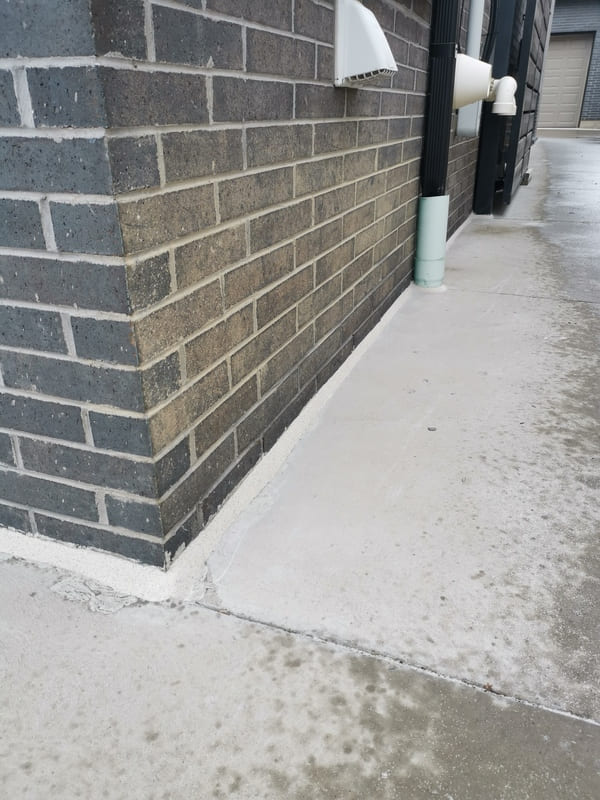
Take a slow walk around your home in South Oakville, Bronte, or Glen Abbey and look down. At grade level, where your concrete sidewalk, driveway, or patio meets the brick foundation wall, there is a crucial maintenance joint. This gap is the lowest point of your building envelope, making Oakville foundation caulking a task that most homeowners neglect without a second thought.
That ground gap is a quiet financial time bomb. When the horizontal sealant fails, water follows the path of least resistance straight into the sub-base concrete layers and your foundation wall. This hidden damage is neither quick nor cheap, building silently for multiple years before it ever becomes visible.
Quick Answer: Failed foundation caulking allows surface water to funnel directly into the gravel sub-base beneath your driveway and against your porous basement walls. This continuous water tracking causes concrete slabs to sink, washes away structural sub-base soils, and triggers expensive interior basement mold growth.
Sinking Slabs and the Pooling Water Funnel
A horizontal expansion joint between a concrete slab and a foundation wall is not decorative. It exists because concrete and brick move at entirely different rates as temperatures cycle through a southern Ontario year.
The structural gap accommodates that constant movement without cracking the surrounding material. When the sealant filling that joint degrades, cracks, or pulls away from the edges, it stops being a controlled movement boundary.
It instantly transforms into an open channel directing water precisely where it can do the most structural damage. During a heavy Oakville summer storm, water sheeting off the driveway, patio, or sidewalk surface collects rapidly at the low point of the slab.
With a failed joint sitting right at the foundation edge, that water has a direct pathway down through the gap. It rushes past the edge of the pavement and sinks straight into the loose soil sitting below the heavy concrete.
This is not a small volume of liquid pooling against your home. A single heavy downpour can push hundreds of gallons of water through a narrow, open joint over the course of a few hours.
The catastrophic structural consequence is the rapid erosion of the compacted granular sub-base that the concrete slab rests on. This underlying sub-base, typically composed of crushed stone or compacted gravel, is what keeps your heavy pavement level and supported.
When water flows through this gravel layer repeatedly, it washes the fine dirt particles out from beneath the slab. Pavement engineers refer to this destructive underground washing process as sub-base softening.
For detailed technical guidance on preventing slab base softening through proper concrete pavement joint sealing, the Federal Highway Administration’s Field Reference Manual provides authoritative engineering guidelines. This structural documentation on concrete subgrade uniformity and joint performance is directly applicable to residential driveway layouts.
Once the underlying sub-base is compromised, the heavy slab completely loses its structural support. It begins to settle unevenly, tilting backward toward the foundation wall or developing low spots where stormwater now pools even more aggressively.
Hairline cracks open up across the pavement surface. Eventually, entire sections of the concrete driveway drop down or snap completely.
Replacing a sunken or cracked concrete driveway, patio, or sidewalk in Oakville is a major renovation project measured in thousands of dollars. Resealing the horizontal gap that caused the failure costs a small fraction of that amount, eliminating the water leak before the sub-base is ruined.
While horizontal walkways running parallel to your home handle broad ground-level drainage, heavy elevated entry steps face unique mechanical forces.
If you are noticing gaps forming specifically beneath your front entryway threshold, read our detailed guide on porch to house expansion joint caulking to prevent structural ledger board rot.
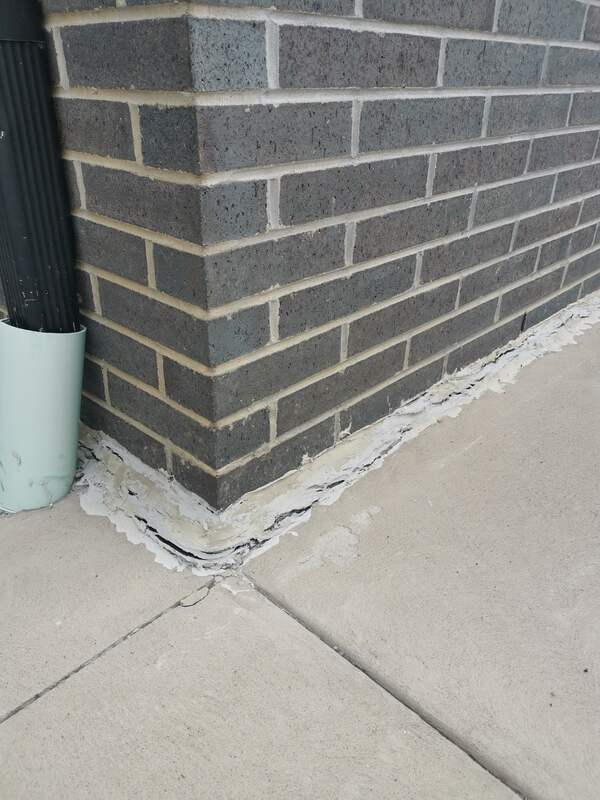
The Threat of Basement Foundation Leaks
Sinking pavement slabs are only one part of this underground problem. The other hidden consequence of a failed grade-level joint is the catastrophic destruction that occurs to the foundation wall itself.
When stormwater pools inside an open concrete-to-brick gap at ground level, it sits in direct contact with your lower masonry boundaries. Poured concrete, exterior brickwork, and mortar joins are highly porous materials that act like hard sponges when left unshielded.
Under sustained moisture exposure, water rapidly accumulates in these confined spaces and builds massive hydrostatic pressure against the buried wall face. This crushing force drives the pooling water straight through microscopic fissures, cold joints, and porous mortar lines.
The moisture follows the path of least resistance inward, tracking completely through your deep foundation wall assembly toward your finished rooms. The destructive results are familiar to any local homeowner who has ever dealt with a wet, damp basement layout.
Efflorescence, which appears as white mineral salt staining on interior concrete walls, serves as an early warning sign that your outer envelope has been breached. Damp fiberglass insulation, hidden wood rot inside wall cavities, and bubbling interior drywall finishes follow soon after.
By the time visible black mold establishes itself inside your lower living spaces, the exterior grade-level water leak has typically been active for multiple seasons. Remediation at this advanced stage requires not only stripping back and resealing the outside joint but also funding expensive interior gut work.
This intense hydrostatic pressure dynamic is critical to monitor in local neighborhoods featuring clay-heavy soil profiles. Dense clay soils tightly lock in moisture rather than draining it away freely like loose, sandy gravel mixes.
This means any stormwater that gets funneled through a broken sidewalk joint stays trapped against your buried foundation walls for days or weeks. This poor drainage maintains a continuous, pressurized water load against your masonry instead of dissipating safely after a storm passes.
The Complex Workflow of Ground-Level Repair
Grade-level expansion joint repair is not a simple task for a basic hardware store caulking gun and an afternoon of free time. The severe weather conditions at ground level, intricate layout geometry, and heavy substrate contamination make this a highly demanding structural sealing process.
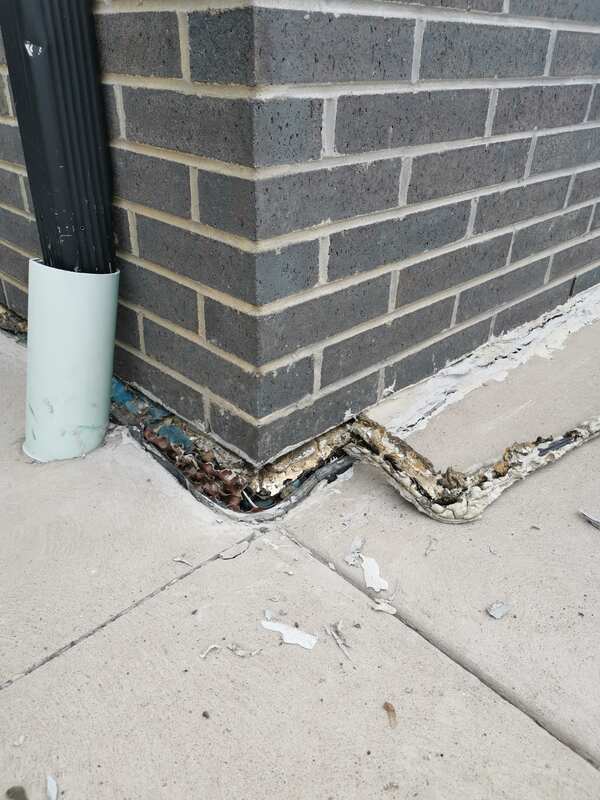
Old degraded sealant at ground level is typically full of embedded grit, stone dust, and decaying organic material. In many cases, old weathered backing foam ropes have absorbed groundwater and collapsed deep inside the underlying foundation cavity.
Every single inch of this rotten material must come out completely before any fresh compound can be safely injected. We execute a full mechanical cutout using dynamic oscillating power tools and specialized steel hook scrapers to clear the tracking lines.
Our technical field crew works meticulously down to clean bare brick along the foundation face and raw concrete along the slab edge boundaries. There are absolutely no shortcuts allowed in this intensive manual cleaning process.
Fresh sealant injected directly over a contaminated substrate will debond along the invisible grime layer within a single season. This costly adhesive bond failure happens regardless of the specific product quality or brand used on top.
The Structural Logic of Underlying Joint Support
Wide ground-level concrete gaps require a dense backing foam foundation to handle the crushing downward forces of walking traffic and vehicle loads. We pack thick backing ropes into the deep mud channels to construct an adjustable bottom floor that keeps the wet compound from sinking out of sight.
Our field crews seat this backing line deep enough to ensure the top rubber skin cures with thick, square dimensions. This heavy cross-section provides the massive material volume needed to absorb vertical shearing strains whenever your heavy driveway slabs sink or tilt away from your home’s brick base.
Our comprehensive guide to professional joint preparation covers exactly why this packing step is structurally non-negotiable on any deep horizontal gap. Choosing the correct seasonal timing also dictates the ultimate success of driveway and sidewalk applications at grade level.
Concrete surfaces sitting in direct summer sun can reach extreme surface temperatures that interfere with proper chemical curing. This intense heat causes the top of the compound to skin over prematurely before the material has cured through its full depth.
Late spring and early summer provide the optimal seasonal sealing conditions for Oakville exterior caulking work at ground level. These baseline environmental parameters map perfectly to the structural concrete performance benchmarks curated inside the official CSA Group concrete standards database.
This ideal seasonal window delivers moderate surface temperatures, stable overnight lows, and low atmospheric humidity. This balance allows the high-performance traffic sealant to cure evenly from the face to the substrate without blistering or tearing away.
A Technical Diagnostic Guide: 5 Indicators of Grade-Level Joint Failure
Before you hire a foundation company in Burlington or Oakville, take a quick walk around the outside of your house [local]. Checking for these five common structural problems will help you spot hidden moisture damage before it ruins your walls.
Finding these simple visual signs tells you if your lowest building envelope boundary is actually protected from the weather. These are the five classic indicators that a previous worker skipped the backing rope foundation inside your pavement gaps.
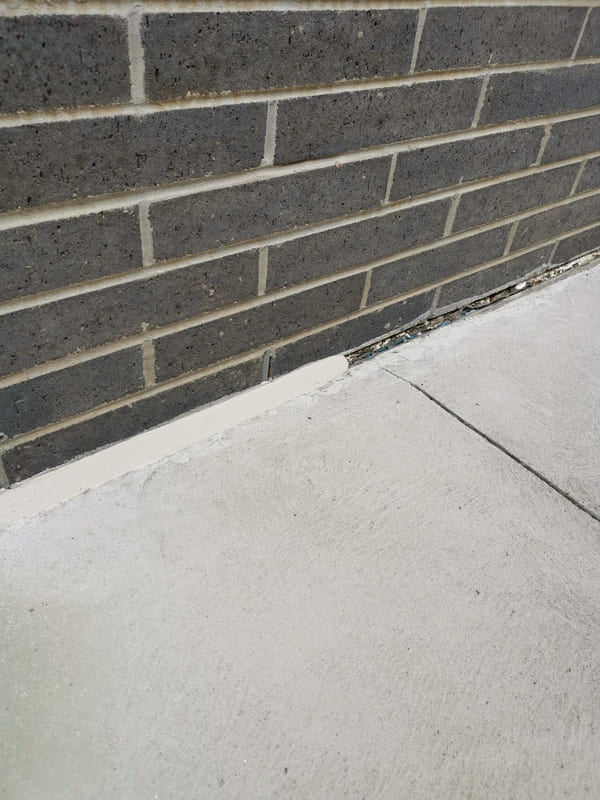
Diagnostic Point 1: Deep Open Gaps and Voids Along the Foundation Walls
Total sealant absence is the most severe structural failure mode you can find around your perimeter. This empty void creates an unhindered water funnel that dumps rain directly into your home’s gravel sub-base during heavy storm events.
Rushing rainwater flows straight against your porous foundation layers without any physical resistance. Over time, this constant dumping causes severe soil shifting and forces wetness through your lower masonry walls.
Diagnostic Point 2: Longitudinal Centerline Tearing Down the Sealant Bead
A deep crack tracking right down the center of your sealant line is the definitive signature of three-sided adhesion failure. The original worker squirted wet paste deep into an empty hole, causing the material to bond incorrectly to the back wall of the cavity.
Because the caulk was pinned to the back wall, it could not stretch sideways when your house naturally shifted in the weather. The opposing pulling forces snapped the brittle material right down the center line, leaving the joint wide open to incoming storms.
Diagnostic Point 3: Exposed Disintegrated Foam Backing Debris
Visible foam ropes or crumbled pieces poking out of the gap mean your internal backing support has completely collapsed. Weathered backing foam absorbs groundwater like a sponge and rots inside the joint pocket during freeze-thaw cycles.
This rotten debris creates a sloppy mess that stops new caulk from sticking to your home. This heavy contamination requires full mechanical extraction down to bare brick before any fresh compound can bond.
Diagnostic Point 4: Tilting or Sinking Concrete Walkway Slabs
Noticeable concrete settlement indicates that sub-base softening is already actively occurring beneath your feet. The horizontal joint has leaked water long enough to wash away the fine dirt particles that keep your pavement supported.
Once that underlying gravel layer washes away, the heavy concrete panel tilts backward toward your house. This tilt creates a dangerous slope that funnels future stormwater even more aggressively against your basement walls.
Diagnostic Point 5: Interior Basement Dampness and Wall Mold
Efflorescence or dark mold patches on indoor basement walls confirm water infiltration has successfully bypassed your building envelope. This white mineral salt staining proves that outside groundwater is soaking straight through your lower masonry boundaries.
The failed exterior ground-level seam is the direct source of this hidden structural moisture damage. Fixing the inside drywall is completely useless until you strip out and replace the leaking sealant line on the outside of your home.
Protect Your Home Foundation Before the Next Storm
The grade-level joint stretching along the base of your home represents a critical structural boundary line. It operates as the exact geometric horizon where your outer building envelope meets the ground, dictating whether driving surface water sheds harmlessly away from your property or channels directly inward.
Left unshielded, escaping groundwater siphons straight past the perimeter to erode your gravel sub-base and compromise your main foundation wall. A properly sealed horizontal expansion joint, deployed with heavy-bodied architectural polymers and precise compression depth techniques, preserves this foundational barrier for a decade or more.
Conversely, a failed or neglected grade seam begins costing you substantial money the very first time heavy seasonal rain downpours hit your neighborhood. If you want to see how we weatherproof tricky brick-to-concrete junctions, foundation lines, or exterior pavement expansion joints, take a look at our full menu of exterior sealing services built to eliminate drafts throughout the Halton region.
Coordinate Your Expert Grade-Level Sealing Assessment
Contact Oleg at Proper Caulking to arrange a comprehensive on-site visual joint inspection before the heavy summer storm season sweeps through the region [local]. Our dedicated field crew serves residential and commercial property owners across the entire Oakville and Burlington markets, checking your grade-level perimeters under a zero-cost evaluation structure.
Our inspectors provide you with an honest, completely transparent summary outlining what specific materials and boundary layers your foundation actually requires to remain structurally sound [local]. Every complete weatherproofing application we execute stands backed entirely by our signature, industry-leading 10-year workmanship warranty.
Protect Your Foundation From Costly Water Damage
Don’t let failed ground-level seals ruin your basement or sink your concrete walkways. Contact us for a free, professional grade-level joint inspection today.
Proper Caulking – Oakville & Burlington, Ontario