
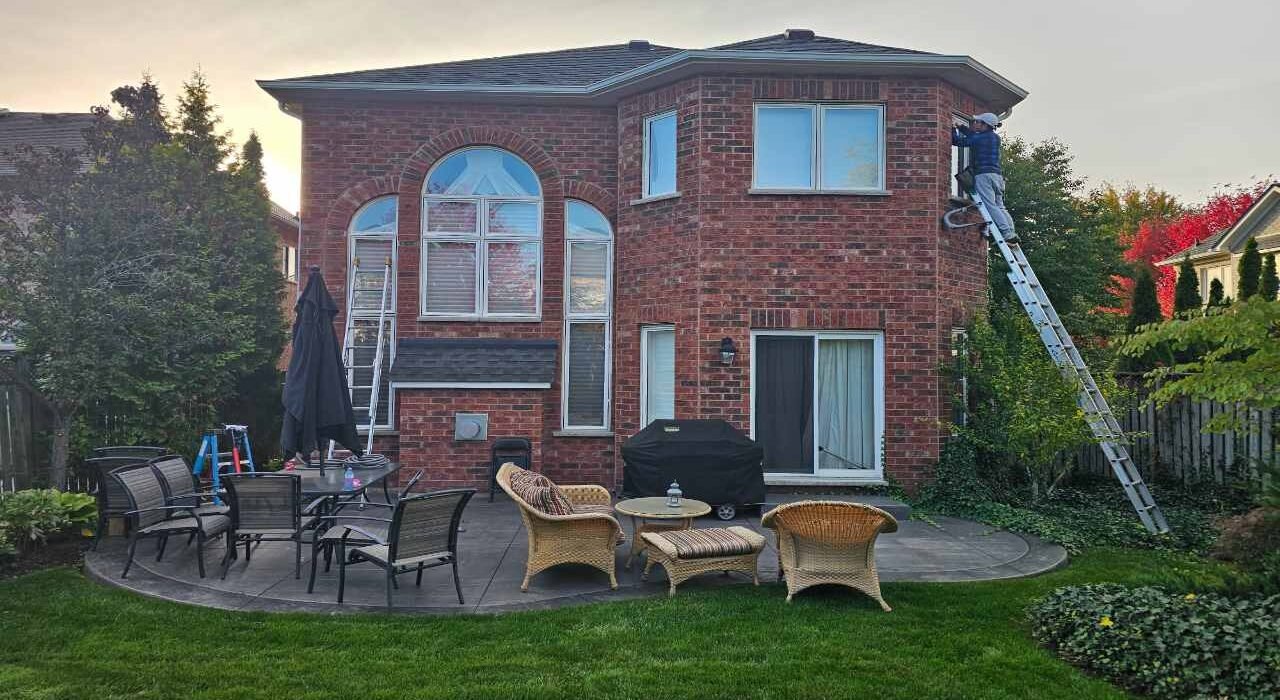
Preserving the structural integrity of your residential or commercial building envelope requires a strict engineering approach to seasonal moisture management. When executing specialized exterior caulking Burlington transitions along vertical or horizontal facade channels, property owners must understand that different microclimates dictate entirely separate material stresses.
Generic handymen and uncalibrated painting crews approach weatherization as a basic cosmetic task. True trade precision relies on pure structural physics.
Treating a moving substrate boundary with entry-level retail sealants ensures early adhesive-face tearing during the first major seasonal weather shift. This turns a minor maintenance item into an accelerating property liability that degrades the asset from the outside in.
📍 Burlington Service Standard
Professional exterior caulking Burlington services require high-movement, commercial-grade polymers certified under the global ASTM C920 standard specification to seal volatile structural seams across Aldershot, Roseland, Millcroft, and Tyandaga. To stop intense Lake Ontario shoreline wind loads from driving drafts behind window casings or flashing lines, installers must completely extract failing retail caulk down to bare substrate. Enforcing a strict 2:1 width-to-depth joint geometry over closed-cell backer rods is mandatory to survive severe winter freeze-thaw cycles.
The Shoreline Climate Threat to Halton Properties
Every building envelope functions as a complex shield. It must mitigate intense wind loads, solar baking, and hydrologic pressures simultaneously.
Custom homes and low-rise commercial plazas across the Halton region frequently feature mismatched materials. This includes rough clay brick transitions tracking directly onto smooth anodized aluminum window frames or synthetic EIFS stucco moldings.
The underlying connections face continuous multi-axis mechanical shear. Managing these volatile junctions requires specialized commercial-grade polymers and exacting field preparation protocols.
Properties located throughout the Burlington footprint face intense environmental loads. Standard retail sealants simply cannot endure these over long-term seasonal cycles.
Sustained seasonal pressure differentials off the open water of Lake Ontario drive rainwater laterally across building facades. This forces moisture deep into any unshielded expansion line, masonry contraction seam, or compromised window trim joint.
When these perimeter seals fail, lateral water tracking quietly penetrates the wall cavity. This initializes rapid sub-wall framing rot, degrades insulation R-values, and compromises year-round HVAC energy performance.
The geographic orientation of neighborhoods stretching from the lakefront up to the Niagara Escarpment accentuates these structural challenges. Coastal winds generate severe micro-vibrations across extensive glass curtain wall assemblies, aluminum cladding panels, and garage door casings.
This continuous mechanical shaking places an ongoing structural demand on perimeter joint boundaries.
As detailed in our breakdown of why caulk cracks under regional weather loads, the installed sealant compound must have high-elongation characteristics. Without absolute chemical elasticity, the joint will experience clean centerline cohesive splitting or catastrophic adhesive debonding along the material interface.
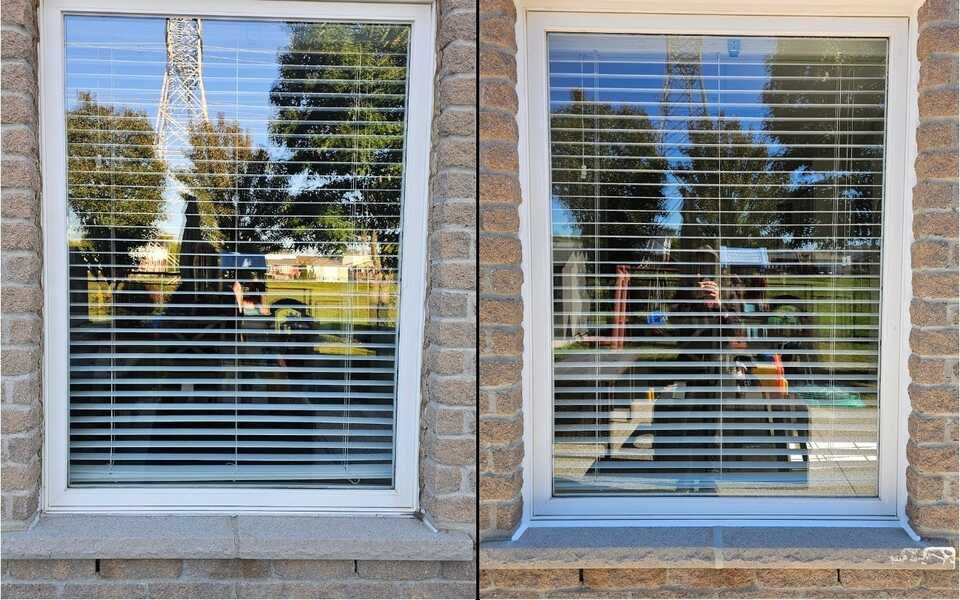
Ontario’s aggressive thermal swings complicate material interactions. During peak summer exposure, unshielded brickwork and dark aluminum trim elements store immense thermal mass.
Surfaces expand rapidly as temperatures climb past forty degrees Celsius. Conversely, sub-zero winter freeze cycles contract these exact same substrates.
This movement widens the joint tracks and strains the joint boundaries to their maximum elongation thresholds. Bypassing generic, low-tier retail tubes in favor of industrial polyurethanes, low-modulus structural silicones, and advanced silyl-modified hybrids is mandatory.
This is the only way to establish permanent adhesion that survives these severe physical cycles. Leaving joints empty or allowing degraded, brittle retail compounds to crack open creates an unshielded pathway for secondary structural damage.
Open structural seams also act as immediate highways for seasonal insect columns and rodent migrations trying to find shelter inside your warm wall spaces. Property owners can learn how to insulate these pathways permanently by reading our structural overview on pest prevention window caulking setups.
Water entering horizontal concrete control joints or porous step treads funnels straight down into the aggregate stone sub-base foundation. This causes fine sand particles to wash out completely.
Overlooking this critical maintenance phase leads straight to uneven panel shifting, severe frost heaving, and eventual catastrophic failure under standard vehicle weight.
For the authoritative architectural guidelines governing concrete slab design and the underlying standards required for sub-base moisture protection, the official American Concrete Institute (ACI) Concrete Joints Hub provides the engineering baseline that professional trade specifiers reference. Unprotected brick veneer water tables and limestone block ledges represent another severe risk area.
Rain sheets cascading down vertical walls hit these architectural projections with concentrated hydraulic force. If the horizontal junction where the cladding meets the stone ledge is unsealed, water tracks backward into the air space behind the bricks.
As we extensively cover in our manual on tracking down leaking water lines behind window frames, this trapped moisture undergoes catastrophic volumetric expansion as it freezes. This breaks the surrounding mortar joints, destroys the structural bond, and causes premature face spalling across the masonry facade.
Trapped cavity moisture eventually saturates nearby window frames and triggers fogging between insulated glass pane units. To separate glass assembly issues from frame boundaries, explore our checklist covering window condensation seal failures to isolate the root cause.
Our Specialized Joint Restoration Protocol
We do not execute temporary surface patches, cosmetic skim coats, or quick caulking overlays over contaminated substrate tracks. New commercial-grade architectural sealants will fail rapidly if forced to bond against old oil residues, atmospheric soot, or decomposing rubber films.
Our technical field crews restore complete structural protection by moving systematically through a rigorous, non-negotiable four-phase workflow designed for long-term building envelope durability:
Full Mechanical Cutout to Bare Substrate
We completely slice out and extract 100% of failed, degraded retail caulk and hardened tar residues down to a totally clean structural substrate channel. Our technicians utilize specialized, high-velocity oscillating trade tools fitted with ultra-thin, flush-cut segment blades to safely clean masonry shoulders and delicate wood window casings without chipping the brick faces or scoring the organic trim fibers.
Chemical Substrate Neutralization & Priming
Following extensive mechanical breakout, all internal joint faces undergo a deep vacuum dust removal and meticulous solvent wipe. This step strips away deep-seated traffic hydrocarbon oils, industrial pollution deposition, and crusty concrete efflorescence salts. This high standard of preparation is mandatory before executing specialized paint applications, as outlined in our field checklist for exterior caulking painting prep boundaries.
Backer Rod Compaction & Geometry Engineering
We wedge non-absorbent, compressed closed-cell backing foam ropes deep into the prepared joint channels to build an internal support bench floor. This crucial foundation layer enforces a strict 2:1 width-to-depth structural joint geometry ratio and explicitly functions as a bond-breaker. This specific setup prevents toxic three-sided adhesion, allowing the finalized rubber bead to stretch and compress freely across both side faces without tearing apart down the centerline.
Architectural Sealant Extrusion & Mechanical Tooling
Our installers inject specified commercial-grade architectural sealants deep into the engineered channels using heavy-duty equipment to guarantee uniform compound density and consistent bead volume across the entire run. The wet rubber ribbon is instantly hand-compressed using specialized trowels to form a smooth concave profile, forcing the polymer into the microscopic pores of the stone or trim to secure airtight, permanent two-point adhesion.
Securing Your Property Investment
Executing a proactive building envelope condition audit is the most efficient way to intercept compounding masonry damage, draft channels, or sub-grade aggregate washout before severe structural problems set in. Completely rebuilding an eroded concrete driveway, remediating deep wall cavity mold infestations, or restoring moisture-damaged custom stucco assemblies can quickly escalate into a substantial capital expense that dwarfs the cost of maintenance.
By relying on verified material science instead of cheap residential cosmetic shortcuts, our field teams provide a permanent weatherbarrier that locks in your property’s underlying asset valuation. A proper architectural sealant installation executed with exact depth control, correct joint configuration, and premium climate-matched compounds will comfortably outperform standard retail repairs by a decade or more, keeping your interior climate perfectly stabilized through every extreme Ontario winter and hot summer.
Furthermore, eliminating structural drafts around window perimeters and door boundaries immediately reduces operational utility strain, as highlighted in our operational breakdown of how to save on cooling utility bills through perimeter sealing.
Unsealed structural transitions act as open chimneys that allow warm conditioned air to escape continuously during winter while pulling humid air inside during summer. Securing these pathways with commercial-grade elastomeric polymers ensures your HVAC systems maintain internal climate settings efficiently, permanently lowering energy waste while enhancing structural defense across all seasons.
Protect Your Building Envelope and Property Asset Value
Don’t let failed exterior joints, cracked masonry seams, or leaking window transitions spike your HVAC costs and disrupt your property’s structural foundation. Contact us for a specialized, professional structural joint assessment today.
Proper Caulking – Oakville & Burlington, Ontario