
You wake up on a clear spring morning in Burlington, look toward your window, and see a blurry layer of fog trapped stubbornly inside the glass panes. While surface sweat is normal, persistent window condensation in Burlington homes often signals a serious structural seal failure.
When moisture gets trapped inside a double-pane glass unit, it immediately degrades your comfort and spikes your seasonal energy bills. This trapped moisture also ruins the long-term structural health of your surrounding window framework.
I am Oleg, owner of Proper Caulking, and I have spent 18 years diagnosing trapped glass moisture across the Halton Region. Most people assume foggy windows are an indoor humidity issue, but inter-pane moisture is actually the final symptom of an exterior failure.
When your outside perimeter caulking degrades, rainwater pools on the frame and prematurely rots the factory glass seals. Let me show you why your window seals fail, how solar pumping destroys glass, and how professional exterior sealing protects your investment.
Surface Sweat vs. Trapped Fog: How to Diagnose Your Windows
The first thing to determine is where the moisture is. This matters because the cause, the severity, and the solution are completely different depending on the answer. Condensation on the interior glass surface is common and generally harmless in small amounts.
It happens when warm, humid indoor air contacts the cold surface of the glass and the water vapour in that air drops below its dew point and forms droplets.
You will see this most often on the coldest pane surfaces during winter mornings, in kitchens and bathrooms where humidity is high, or in newer, tightly sealed homes where ventilation is insufficient to move humid air out.
Wipe it off and it is gone. If it is recurring heavily on every window in the house, you likely have a humidity management problem rather than a window problem, and improving ventilation or running a dehumidifier will address it.
Moisture trapped between the panes is a different situation entirely. If you can see fog, streaking, mineral haze, or water droplets inside the glass unit and wiping the interior or exterior surface does nothing to change it, the factory seal on your Insulated Glass Unit, the IGU, has failed.
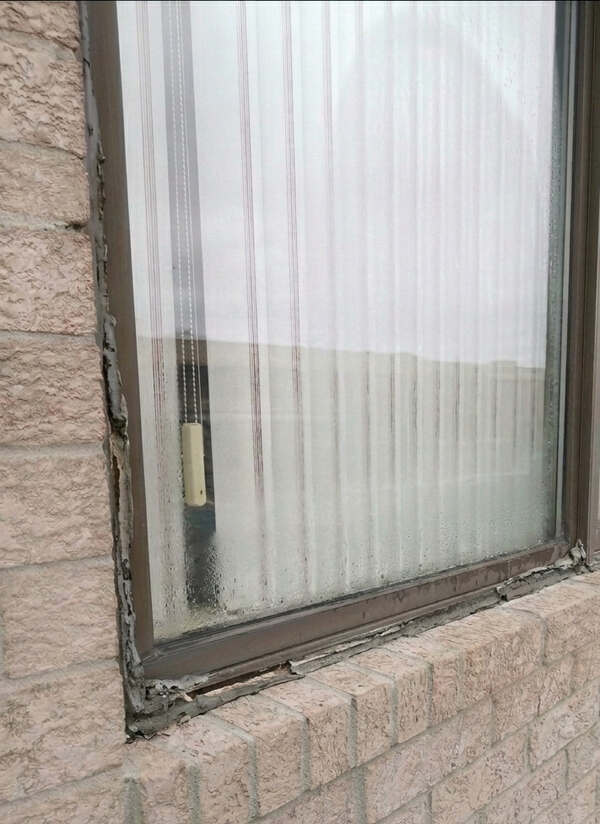
The IGU is the hermetically sealed assembly of two or three panes with a gas-filled cavity between them, typically argon or krypton, that provides your window’s insulating performance. That seal is permanent by design.
When it breaks, the insulating gas escapes, outdoor air enters the cavity, and with it comes moisture. Once moisture is cycling in and out of that cavity, you will see fogging, and eventually mineral deposits and permanent staining on the inner glass surfaces.
To be clear with homeowners who ask: exterior caulking cannot fix a broken IGU seal. Once the moisture is inside the glass unit, the unit needs to be replaced by a glazier or window installer.
What exterior caulking absolutely can do is prevent the conditions that cause IGU seals to fail prematurely in the first place. That connection is what most people miss.
The Physics of Solar Pumping: How Temperature Destroys Window Seals
To understand why window seals fail, you need to understand a phenomenon called solar pumping. The underlying engineering principle is straightforward even though it sounds highly technical.
When direct sunlight hits a double-pane window, the air trapped in the cavity between the panes heats up and expands. This expanding air volume pushes outward relentlessly against the perimeter seal of the Insulated Glass Unit.
When the sun sets and temperatures drop, the cavity air cools and contracts sharply. This thermal contraction creates a negative pressure loop that draws outdoor air inward through any structural weakness in the seal.
Every day that a window sits in direct sun, it physically breathes. It vents outward during the heat of the afternoon and pulls inward during the cool of the evening.
This daily breathing cycle is not a design flaw. Factory glass seals are engineered to manage solar pumping for fifteen to twenty years without failure under completely dry conditions.
What accelerates this destruction is standing moisture sitting directly at the frame joint. When the seal breathes inward each evening while a cracked caulk joint holds water, it draws that moisture straight into the glass cavity.
At Proper Caulking, we completely eliminate this water reservoir by injecting commercial-grade polyurethanes. We tool every bead to a strict 2:1 width-to-depth structural ratio over a closed-cell backer rod to force rainwater to shed away from frame tracks immediately.
Over repeated seasonal cycles, the desiccant material inside the spacer bar becomes completely saturated. Once that moisture-absorbing desiccant fails, it can no longer protect the cavity, and visible fogging begins.
Older wood and vinyl double-pane units in mature Burlington neighbourhoods like Shoreacres, Roseland, and the historical downtown core are vulnerable. Many of these installations have passed their twenty-year service life, and their original builder caulk has long since degraded.
In high-wind exposure zones like Alton Village or The Orchard, pressure differentials from wind-driven rain compound this effect. These pressures push moisture into perimeter gaps aggressively, accelerating the destruction of your glass investment.
Broken window seals are also one of the leading causes of energy loss in Burlington homes during summer cooling months. For a full breakdown of what a compromised building envelope costs you on your hydro bills, see our article on saving on AC bills with professional caulking.
How Exterior Caulking Protects Your Glass Investment
A new IGU replacement is not an inexpensive repair. Depending on the window size and unit type, a single glass replacement can run several hundred dollars before labour. Replacing the full window frame and unit is more.
Protecting the seal you already have, by keeping water completely away from the perimeter joint where the frame meets the surrounding wall, is a fraction of that cost and eliminates the primary source of premature failure.
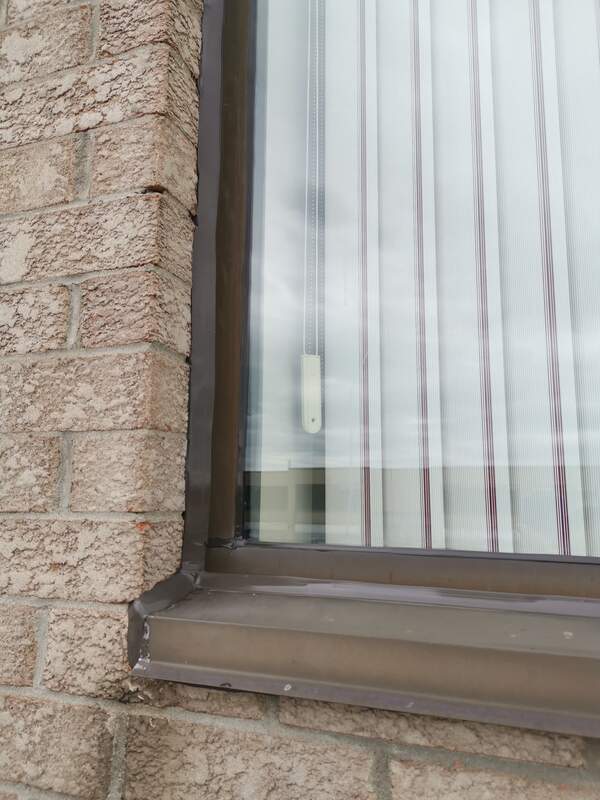
Here is what a healthy exterior caulking bead does for your window’s glass unit. It seals the joint between the window frame and the surrounding masonry, brick, stucco, or siding so that rainwater hitting that surface sheds immediately rather than pooling.
Once moisture forces its way completely inside your double-pane glass unit, the factory insulating seal has officially broken. At this stage, you will need to hire a glass specialist to replace that specific foggy glass pane.
However, before you spend your hard-earned budget on a glass replacement company, you must address the underlying structural root cause. In my 18 years of inspecting local properties, the early breakdown of that factory glass seal is almost always caused by a failure of your exterior perimeter caulking.
When your outside sealant cracks and separates, rainwater seeps past your siding and pools directly inside your window frame track instead of draining away. Your factory glass unit is forced to sit in a constant puddle of stagnant water, which prematurely rots, rusts, and destroys its perimeter seals.
If you pay to replace your blurry glass windows without repairing the failed exterior seals that caused the pooling water in the first place, your brand-new glass unit will suffer the exact same fate. It will rot all over again within a few seasons because the underlying environment remains completely unchanged.
A professional architectural sealant application prevents wind-driven rain from getting behind the frame. It removes the reservoir of standing moisture that solar pumping draws from each evening.
Without that reservoir, the glass unit seal can do the job it was designed to do under dry conditions. It cycles pressure changes safely without introducing water into the internal cavity.
When that exterior bead dries out, cracks, or pulls away from the substrate, the joint opens. Water sits in it continuously.
During warm days the internal window cavity expands and vents. During cool evenings it contracts and draws, pulling that trapped moisture straight past the compromised barriers.
The internal desiccant saturates. The fogging starts.
This is not a slow, theoretical process. In a cracked window perimeter joint, the moisture cycle can begin producing visible glass unit damage within two to three seasons.
The heavy-duty materials we use at Proper Caulking are specified for exactly this harsh environment. We utilize commercial-grade moisture-cure polyurethanes, specifically Tremco Dymonic 100.
This elite compound features a verified Shore A Hardness rating of 40 and allows for +100% expansion and -50% compression movement.
It maintains its bond and flexibility through Burlington winters, summer UV exposure, and constant thermal movement between mismatched framing and masonry substrates.
Retail latex caulk applied in the same joint will crack and separate within a year or two. This cheap retail substitute reopens the same vulnerability right away.
For more on how failing exterior caulking connects to water getting inside your wall assembly and window frame, see our article on leaking window frames in Burlington.
For authoritative guidance on residential window performance standards and condensation resistance in Canadian climate zones, Natural Resources Canada’s Office of Energy Efficiency provides detailed homeowner resources.
5 Red Flags That Your Window Seals Have Given Up
A quick walk through your home while paying close attention to each window will tell you a great deal about the condition of your glass units. Checking these specific areas reveals exactly how well your exterior caulking is protecting your building envelope.
Identifying these structural vulnerabilities early saves your property budget from expensive premature frame rotting. These are the exact warning signs I evaluate on every single residential assessment.
Red Flag 1: Visible Fog, Haze, or Streaking Trapped Between the Glass Panes
Persistent condensation or blurry moisture trapped inside the double-pane unit is the definitive sign of total Insulated Glass Unit seal failure. Once the factory perimeter seal breaks, the unit requires a full glass pane replacement by a certified glazier.
However, extracting and replacing the broken glass unit only addresses half the problem. You must still reseal the exterior frame joints immediately to stop rain pooling from destroying the brand-new factory seals all over again.
Red Flag 2: Permanent Mineral Deposits or White Staining on Inner Glass Surfaces
White crusty residue or cloudy mineral streaking that cannot be cleaned off indicates advanced moisture cycling between the glass panes. Stagnant water has vaporized and dried inside the cavity long enough to permanently etch the inner glass sheets.
At this severe stage, the desiccant material inside your window spacer bar is completely saturated and chemically dead. The compromised insulated glass assembly is entirely beyond recovery and must be extracted.
Red Flag 3: Consistently Higher Condensation Levels on Specific Windows
If one specific window consistently sweats on the inner room-side surface while adjacent windows in the same area stay clear, its internal seal has failed. The unit has lost its dense argon or krypton insulating gas fill.
This gas loss drops the thermal performance of that specific window assembly, making it conduct cold outdoor temperatures at a rapid rate. The perimeter seal has structural micro-cracks even if visible inter-pane fogging has not yet developed.
Red Flag 4: Exterior Perimeter Caulking That is Cracked, Brittle, or Splitting
Degraded, chalky exterior caulk is the direct upstream cause of accelerated window glass seal destruction. An open or separated perimeter joint actively collects wind-driven rainwater during every local storm event.
This pooling water creates a permanent stagnant reservoir that feeds the daily solar pumping breathing cycle. Stripping and replacing the old sealant at this stage protects the factory glass unit before permanent internal fogging begins.
Red Flag 5: Noticeable Drafts, Frigid Cold Spots, or Rattling Glass Frames
Total seal failure eliminates the protective gas barrier, turning your premium double-pane window into a poorly performing single sheet of glass. This rapid thermal transfer creates severe cold radiation drops across your living spaces.
You will notice a major surge in your seasonal utility bills along with audible air movement around the perimeter sash tracks. For an in-depth breakdown of how failing exterior caulking contributes to continuous energy loss across your home, see our complete caulking tips guide.
Stop Living with Foggy, Drafty Views
A fogged window is a clear warning sign that your home’s building envelope has a major structural gap in it. This failure allows moisture to penetrate vulnerable wall cavities and forces your heating and cooling systems to work continuously.
Replacing the damaged glass unit itself is a technical conversation for your local window installer. However, applying the heavy-duty perimeter caulking that protects that new glass unit is a conversation for us.
Call Oleg directly for a live response and a free local window health assessment. We serve Burlington and the surrounding Halton Region year-round, and a consultation about your properties costs you nothing but a few minutes.
Our trade crew delivers high-movement silicone installations engineered explicitly to withstand intense Ontario seasonal shifts. Learn more about all our specialized services at Proper Caulking.
Stop Living with Foggy, Drafty Windows
Don’t let pooling exterior water rot your expensive window glass seals. Get a free, comprehensive window health assessment from an 18-year local expert today.
Proper Caulking – Burlington, Ontario