
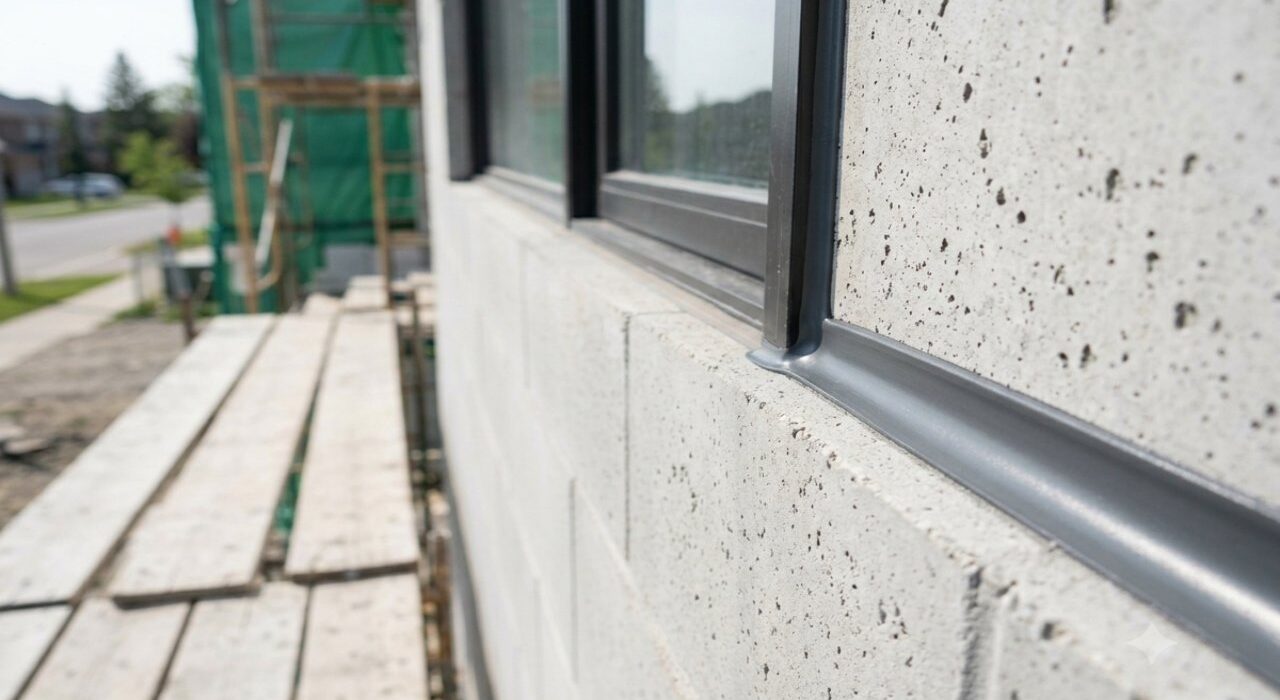
You just completed a window installation project and are likely wondering how to tool caulking smooth to achieve an architecturally flawless profile. However, introducing a soapy water spray to slick down that wet polyurethane bead inadvertently compromises the entire assembly by leaving behind a hidden film that blocks structural bonding.
This critical installation error is the single greatest cause of premature adhesion failure, forcing brand-new exterior seals across Oakville, Burlington, or Milton to delaminate after just one Canadian winter cycle. To secure a permanent weather barrier, professional technicians strictly enforce a dry-tooling standard completely free of liquid slicking agents.
⏱️ Quick Answer
Spraying soapy water to smooth down uncured polyurethane caulking destroys the chemical bond, causing the material to peel off the wall during winter freezes. The soap leaves behind a slick chemical film that blocks the sealant from sticking to porous brick, concrete, or wood. For a permanent, waterproof seal, professional installers strictly use a mechanical “dry tooling” method without any liquid modifiers.
How Different Types of Caulk React to Tooling Methods
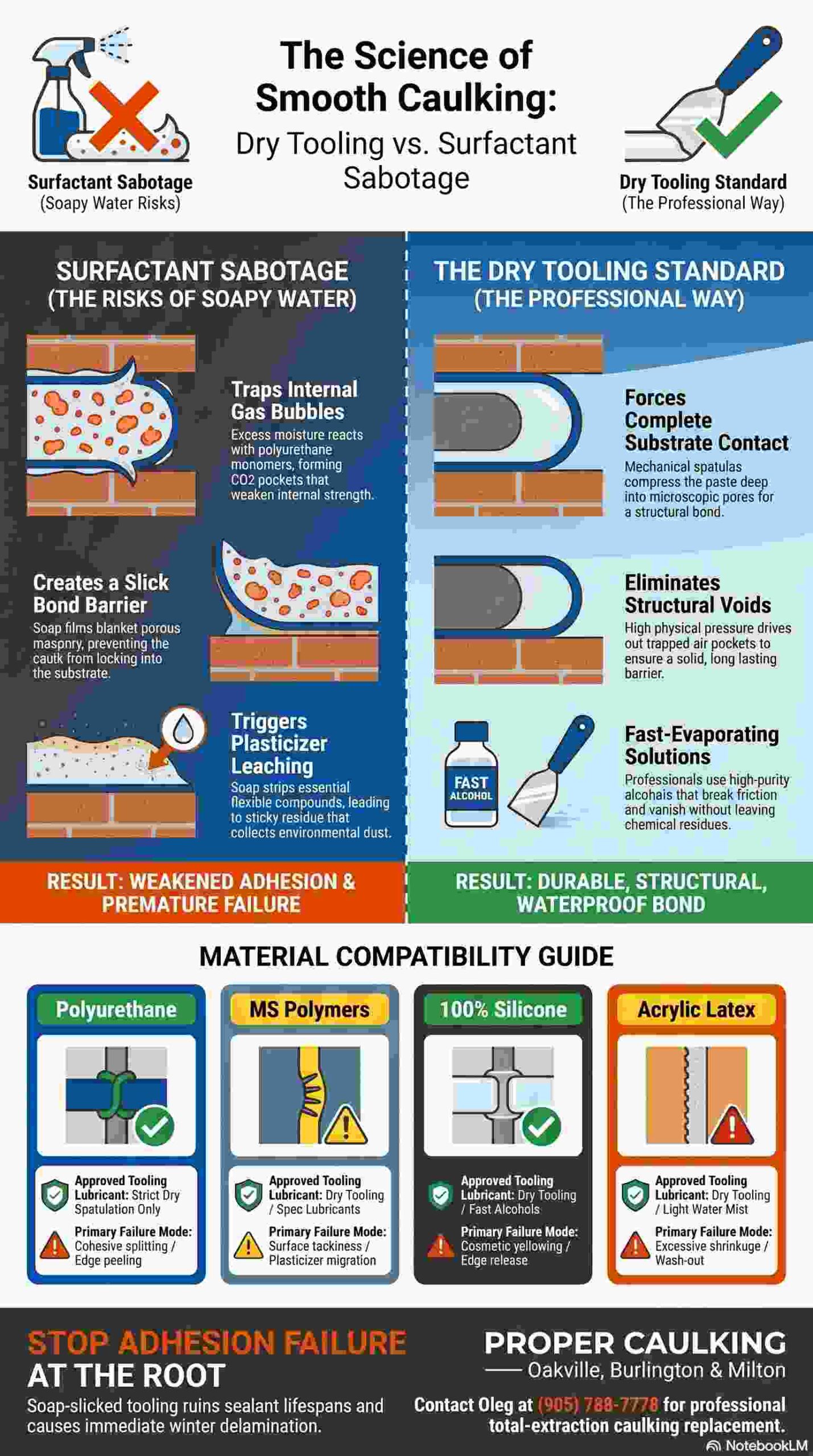
Polyurethane and advanced MS polymer sealants face critical chemical risks when exposed to liquid surfactants during application. Conversely, traditional acrylics and inorganic silicones react differently to moisture profiles, requiring distinct field installation parameters to prevent premature joint delamination.
| Sealant Base Class | Approved Tooling Lubricant | Boundary Layer Contamination Risk | Impact on Polymer Curing Kinetics | Primary Field Failure Mode |
|---|---|---|---|---|
| Polyurethane | Strict Dry Spatulation Only | Critical / High | Triggers internal gas pocket formation | Cohesive splitting and edge peeling |
| Advanced MS Polymers | Dry Tooling or Spec Lubricants | High | Causes severe plasticizer migration | Surface tackiness and dust wash-out |
| 100% Silicone | Dry Tooling or Evaporating Alcohols | Medium | Disrupts surface alkoxy crosslinking | Cosmetic yellowing and edge release |
| Acrylic Latex | Dry Tooling / Light Water Mist | Low | Minimal impact on water evaporation | Excessive shrinkage and wash-out |
Why Soapy Water Ruins Polyurethane Caulking Adhesion
While liquid surfactants provide an immediate slick surface for easy spatulation, they introduce destructive chemical reactions within organic polymer matrices. Understanding these specific microscopic failure modes reveals why common household smoothing tricks cause long-term structural delamination.
How Water Spray Ruins the Caulk’s Internal Strength
Polyurethane sealants require atmospheric moisture to trigger their internal crosslinking chemistry and vulcanise into a solid elastomer. However, when an installer sprays excess water onto an uncured polyurethane bead, the water molecules aggressively attack the unreacted isocyanate monomer chains.
This premature moisture reaction forces the chemical formulation to release excessive carbon dioxide (\(CO_{2}\)) gas pockets directly inside the curing paste. To see how these moisture interactions compare to inorganic options, read our silicone vs. polyurethane vs. acrylic caulk performance profiles.
How Soap Films Cause Caulking to Peel Off the Wall
Commercial dish soaps contain amphiphilic surfactant molecules designed to lower liquid surface tension and lift grease away from surfaces. When this soapy solution slips into the joint during spatulation, it immediately blankets the porous walls of brick masonry or precast concrete.
This microscopic chemical film leaves behind a slick, non-volatile residue that blocks the polyurethane paste from locking into the substrate pores. To see how these chemical blockages interact with freeze-thaw cycles, review our guide on why caulk cracks under Southern Ontario weather.
Why Soap Triggers Sticky Surface Discoloration
Advanced polyurethanes and MS polymers rely on highly calibrated internal plasticizers to maintain their long-term flexibility during deep Canadian winter drops. Introducing liquid soap surfactants strips these essential compounds from the polymer matrix through a destructive chemical process known as solvent leaching.
Once these plasticizers are drawn to the surface, the joint loses its flexibility and suffers from permanent surface tackiness. This sticky residue actively collects environmental dust, causing unsightly black discoloration along custom stone, brick, and stucco exterior caulking repair lines across Burlington and Oakville estates.
When Is It Safe to Use Soapy Water on Caulking?
While liquid surfactants permanently compromise organic polyurethanes, certain inorganic sealants can tolerate mild moisture lubricants during installation. However, field teams must strictly manage these chemical boundaries to prevent slow-acting edge detachment along high-exposure joints.
Why 100% Silicone Resists Immediate Water Damage
Unlike organic, carbon-based polyurethanes, 100% silicone sealants feature an inorganic siloxane polymer chain built on alternating silicon and oxygen atoms. This unique molecular architecture is entirely non-reactive to water, allowing the material to withstand direct moisture exposure during its initial curing phase without forming gas pockets.
Because of this stability, silicones can tolerate mild liquid lubricants during the tooling process without losing their inherent elasticity or structural density. This chemical trait is why domestic installers historically relied on soapy water solutions to slick down smooth interior installations like kitchen backsplash countertop silicone joints.
The Risk of Over-Saturating Silicone Joints with Soap
Despite their water resistance, neutral-cure silicones are still vulnerable to edge contamination if surfactant concentrations are too high. Excessive liquid soap can wash into the joint shoulders, leaving a thin film that causes microscopic edge release over time.
This chemical film also degrades the sealant’s built-in UV stabilizers, leading to premature yellowing along south-facing glass windows and stone joints. Over-saturating the bead during spatulation can also leave a sticky surface residue that permanently traps airborne pollen and dirt.
Why Commercial Projects Strictly Ban Soap Sprays
In heavy-duty commercial storefronts and glass curtain walls along the QEW corridor, architectural specifications strictly forbid the use of dish soaps. Glazing engineers demand specialized, fast-evaporating alcohols or manufacturer-certified tooling agents to avoid clear-coat staining.
These professional solutions lower friction across the joint profile without leaving behind any non-volatile chemical residues. This strict protocol ensures the silicone maintains its maximum engineered wind-load resistance and structural adhesion baseline across its twenty-year lifespan.
Professional Field Specifications: The Dry Tooling Standard
Using liquid soap sprays on fresh exterior joints is the fastest way to cause peeling. To survive the intense weather shifts across Halton estates, our field crews use precise mechanical methods to shape seals without introducing destructive moisture barriers.
How Professionals Smooth Caulking Without Water
Our senior technicians use a strict dry spatulation standard to protect your home’s exterior. Instead of spraying dish soap, we use custom-shaped tooling blocks made from dense polyurethane foam or premium oiled hardwoods.
These professional spatulas glide smoothly over wet caulk lines without tearing the paste. This allows us to deliver a flawless, perfectly smooth concave joint without a single drop of harmful water getting trapped behind it.
📐 Official Architectural Specification
According to the ASTM C1193 installation protocols, high-performance elastomeric sealants strictly require dry, uninhibited contact to achieve full structural crosslinking. Introducing liquid soaps or moisture during active tooling permanently weakens the finished bead and causes catastrophic joint delamination.
How Tooling Seals out Microscopic Air Pockets
Dry tooling does more than just look pretty. It pushes the wet sealant deep into the microscopic pores of your brick, stone, or siding. This mechanical pressure forces out hidden air pockets.
Eliminating these structural voids ensures your caulking won’t crack or split when your house expands and contracts under tension.
For larger thermal expansion seams or deep window structural gaps, our teams integrate custom backer rods before sealing. Learn exactly how this process works in our comprehensive guide on backer rod window sealing integration.
Safe Evaporating Cleaners for Sticky Advanced Caulk
Some high-end modern polymers are exceptionally sticky and require a slicking agent to smooth out. In these rare cases, commercial specifications strictly forbid household dish soaps. Instead, our installers apply high-purity isopropyl alcohols or manufacturer-certified dry tooling sprays.
Because these technical solutions evaporate completely within seconds, they vanish without leaving a sticky soap film behind. This specialized field protocol ensures your completed seals keep your home completely waterproof across decades of intense Southern Ontario winters.
Secure Your Architectural Joint Evaluation Today
Failing, soap-slicked caulking compromises your facade and leads to costly structural decay. Contact Oleg at Proper Caulking to secure your masonry, window perimeters, and thermal expansion joints using certified dry-tooling protocols.
Our technical field division methodically extracts old, failing sealants and applies premium elastomeric compounds engineered to withstand harsh Southern Ontario weather cycles.
Every high-end residential restoration project we execute acts as a preventative financial shield protecting your structural assets, eliminating liquid penetration, and preserving your estate’s value for decades.
Stop Adhesion Failure at the Root Level
Soap-slicked tooling ruins sealant lifespans and causes immediate winter delamination. Contact our skilled field technicians today for a professional, total-extraction caulking replacement assessment.
Proper Caulking – Oakville, Burlington & Milton, Ontario
Frequently Asked Questions About Tooling Caulking Smooth
Can you use soapy water to smooth down polyurethane caulking?
No, you should never spray or apply soapy water onto a wet polyurethane bead during installation. The chemical surfactants in the soap coat the joint shoulders, leaving a thin film that permanently destroys the sealant’s ability to bond with building substrates.
How do professional tradespeople tool polyurethane caulk smooth?
Commercial trade professionals enforce a strict dry tooling method using clean mechanical spatulas or dense polyurethane foam profiling blocks. This process compresses the elastomeric paste directly backward into the joint gap without introducing adhesion-ruining liquid films.
Why does soap-slicked tooling cause caulking to fail in the winter?
Dish soaps introduce excessive water that reacts with unreacted isocyanate monomer chains, creating trapped gas bubbles that weaken the internal polymer structure. When Southern Ontario’s sub-zero seasonal drops exert tension on the joint, this brittle matrix splits and peels clear off the walls.