
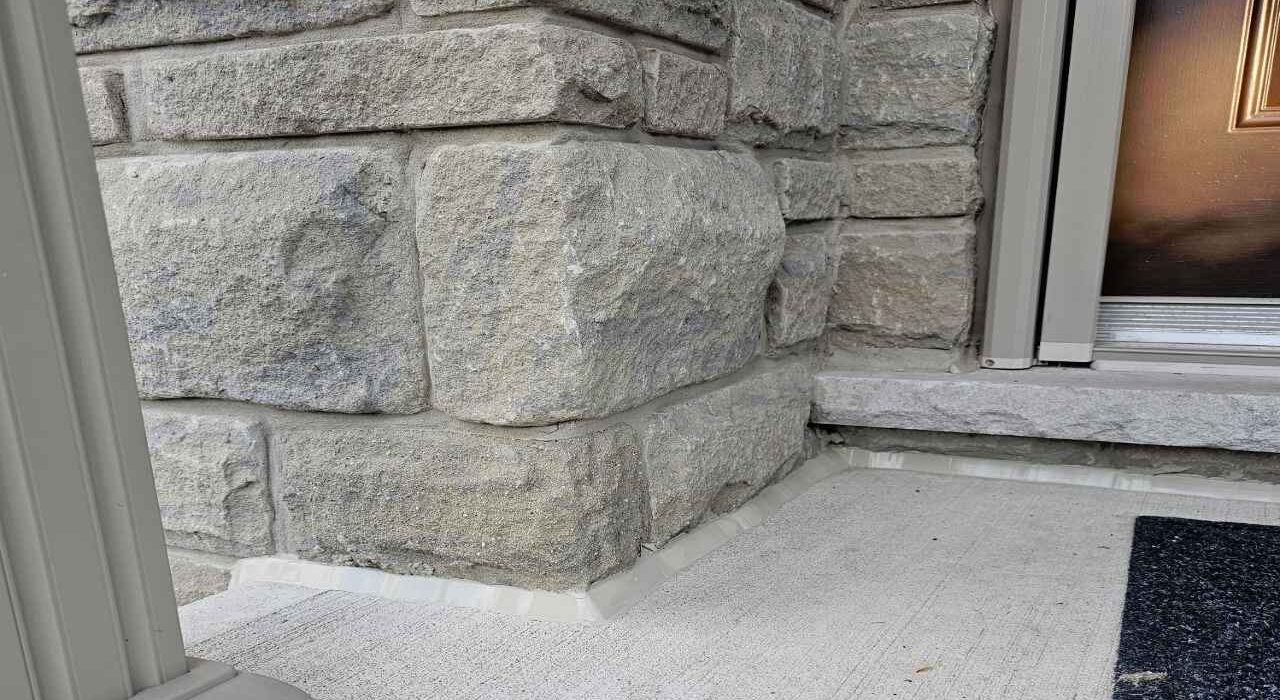
Step up to the front door of your Oakville, Burlington, or Milton home and look down at the stacked concrete steps and landing slabs beneath your feet. Managing these high-traffic thresholds relies on specialized concrete step caulking to form a permanent, flexible barrier against structural shifting and deep grade-level water pooling.
The horizontal and vertical seams between those concrete sections are critical structural joints that move, absorb foot-traffic impact, and face the full force of Ontario’s freeze-thaw cycles every single year. When these masonry joints split apart or empty out, they turn into an open gutter that directs every single rain event and pooling snow-melt straight down into the core of your staircase structure.
Most local homeowners fill these joints with rigid mortar or standard retail caulk and consider the job done. Both choices fail within a single season, creating a different structural problem than the one they were meant to solve.
⏱️ Step Sealing Standard
Sealing high-impact exterior staircases requires heavy-duty, traffic-grade polyurethanes or hybrid sealants (like Tremco Vulkem 45SSL or Sikaflex-1a) to absorb daily foot strikes and intense freeze-thaw cycles. To handle aggressive compressive shear loading, installers must pack compressed closed-cell backer rods to maintain a strict 2:1 width-to-depth joint geometry ratio [INDEX]. Completely clearing old mortar scale and road salt down to bare concrete is mandatory to prevent early adhesive face peeling and stop sub-base gravel washout [INDEX].
Step Physics: How Frost Heaving and Foot Strikes Shatter Rigid Mortar
A front entry staircase handles a volume of physical impact that no other sealed joint on your home’s exterior experiences. Every single foot strike transmits a massive compressive and shear load straight through the concrete tread surface and into the joint channels directly below it.
Over a year of daily use, the accumulated physical loading on an entry step joint is substantial, and it happens on top of the intense thermal and moisture cycling that every exterior joint faces. Filling a concrete step joint with rigid mortar compounds this structural engineering problem rather than solving it.
Mortar creates an unforgiving, inflexible bond between the separate concrete step faces. When freezing winter moisture penetrates the joint and freezes, it expands violently inside a structural cavity that cannot flex to accommodate that physical movement.
The expanding ice generates massive internal pressure that the mortar, the concrete step edge, or both building materials must absorb. Concrete edges fracture under the strain, and mortar joints crack and explode outward, creating a wider, more irregular gap than the original factory seam.
This destructive frost damage cycle repeats every single winter and worsens each time because each crack cycle admits more water than the previous one. Cheap retail acrylic caulk fails through a different mechanism but produces the exact same ruined result at your front door.
It cures rigid, loses its elongation capacity within two seasons, and shatters under the combination of foot strike shear and frost expansion. The only correct material for a concrete step joint is a commercial-grade elastomeric compound that remains highly flexible through repeated physical loading and freeze-thaw cycling simultaneously.
For the specific engineering of the transition joint where the full staircase assembly meets the main house foundation wall, our article on porch to house expansion joint caulking covers that structurally critical boundary in full detail. Addressing that perimeter boundary prevents water from bypassing your main framing lines.
For clear reference on the safety consequences of failing exterior step joints for residential occupants, reviewing the Health Canada residential fall prevention guidelines documents the real-world injury risk profile of uneven or shifting exterior stair surfaces. Maintaining uniform, stable walking treads keeps your main property entrance fully compliant with national safety standards.
The Shifting Stair Trap: Sub-Base Washout and Tripping Hazards
Applying new caulk over an existing failed step joint produces a temporary patch that fails under the very first frost cycle. The joint surface at a concrete step location is heavily contaminated with winter road salt, footwear carbon deposits, loose mortar residue from previous repair attempts, weed root material, and embedded biological growth.
New sealant bonded to that surface attaches strictly to the contamination layer rather than to the actual concrete substrate. It releases at that dirty interface before the end of its first winter season. A durable step joint seal demands a pristine breakout down to bare, raw concrete on both faces of every single seam.
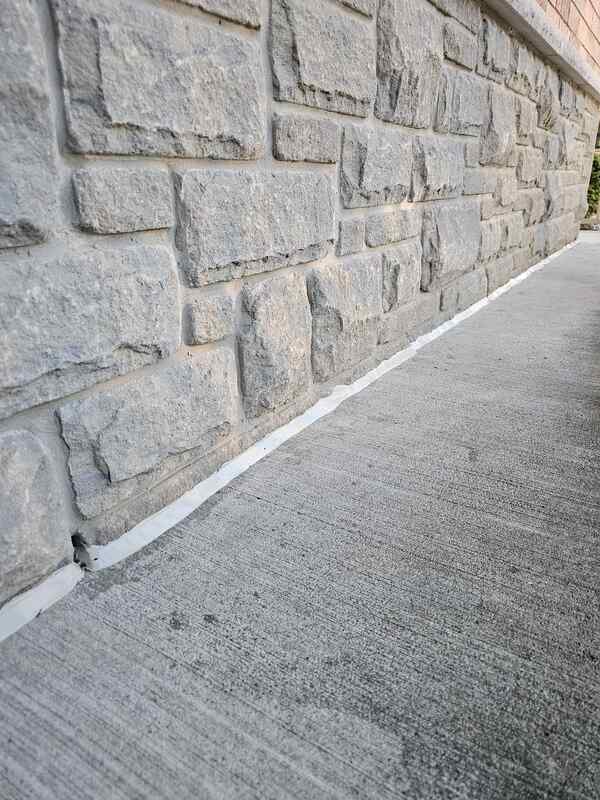
Phase 1: Deep Mechanical Channel Carving of Impact-Fatigued Step Seams
All existing sealant, crumbling mortar, degraded foam backer, and compacted debris are removed completely using high-powered oscillating tools, grout saws, and specialized detail scrapers. The extraction setup must be carefully adapted to the unique step profile and joint width.
Step joints that have been repeatedly filled with hard mortar over the years require a narrow rotary cutting tool to safely clear the hardened material from the full depth of the channel without fracturing or chipping the concrete edge.
The extraction phase is complete only when bare concrete is completely exposed on both faces of every joint for the full depth of the channel.
Phase 2: Removing Ground Salt Crusts, Carbonation, and Embedded Weed Roots
After mechanical extraction, all joint faces are deeply scrubbed with specialized solvents to strip away winter road salt deposits, concrete carbonation film, and footwear hydrocarbon residues.
Invasive weed root systems that have penetrated the joint channel must be eradicated completely, including the hidden root structure at the absolute base of the channel.
Sealing directly over live root material produces a sealant that is physically displaced from below before the polymer has even finished curing. The joint surfaces must be confirmed clinically clean, bone-dry, and chemically neutral before any new backing material or sealant compound is injected.
Phase 3: Seating High-Density Backing Foam Cushions to Absorb Foot Strikes
Concrete step joints are typically wide enough to require a professional backer rod before sealant injection to establish the correct depth-to-width ratio for the sealant cross-section. In a step joint that receives constant physical foot strikes, the backer rod serves a vital additional structural function.
It provides an industrial compression buffer that prevents the sealant from being driven to the bottom of the joint cavity under foot loads, which would restore the destructive three-sided adhesion condition that causes the bead to tear.
As detailed in our guide to professional joint preparation, creating a flexible hourglass profile is the engineering prerequisite for long-term elongation performance under simultaneous thermal and physical loading.
High-density closed-cell backer rod is specified for step joint applications specifically because its superior compression resistance prevents it from flattening under heavy foot strikes. Standard open-cell foam lacks the structural memory required to survive this high-impact environment.
Phase 4: Tooling Heavy-Duty, Traffic-Rated Polyurethane Slopes
Our installation crew injects a specified traffic-rated commercial compound deep into the prepped joint track using advanced equipment to ensure consistent bead depth and complete substrate contact throughout every horizontal and vertical step seam.
Our field crews completely eliminate edge cracking and joint separation under continuous foot strike shear by injecting elite, traffic-grade commercial polyurethanes like Tremco Vulkem 45SSL or Sikaflex-1a deep into the prepped joint track.
These heavy-duty elastomeric compounds act as a permanent shock-absorbing barrier, delivering the precise tensile strength and abrasion resistance needed to survive severe sub-zero Ontario freeze cycles.
On horizontal step treads, the finished bead is hand-tooled to a slightly sloped profile that actively forces surface water outward toward the step edge rather than toward the riser face.
On vertical concrete riser joints, the bead is tooled to a smooth concave profile that ensures complete adhesion to both concrete faces and creates a clean, water-shedding surface track.
The heavy-duty, climate-matched polyurethanes we deploy are specifically manufactured to withstand severe structural loading and unshielded environmental shifting without tearing loose.
These commercial-grade structural barriers are engineered to meet strict regional building regulations, aligning perfectly with the rigorous testing parameters governed by the official CSA Group concrete standards repository.
This superior engineering index enables the cured rubberized bead to expand and compress seamlessly through Ontario’s freezing winters and blisteringly hot summers without unzipping from your shifting frames or moving masonry substrates.
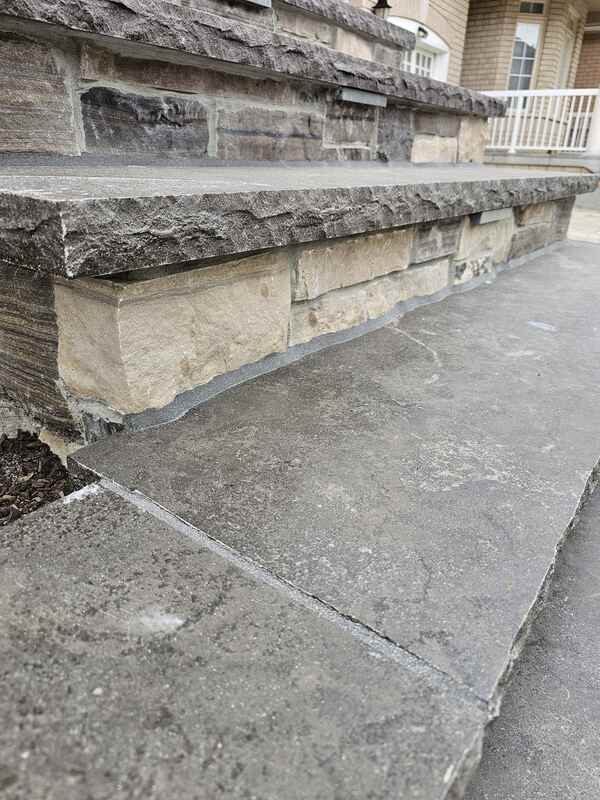
5 Signs Your Concrete Steps Need Immediate Attention
A careful inspection of every step joint and landing seam on your entry staircase identifies every active failure before sub-base erosion or structural hazards escalate. Spotting these structural red flags early allows you to address the problem before it compromises your home’s main entrance pathway.
Left unsealed, these expanding stair cracks also invite burrowing insects and ants to establish nests right beneath your feet.
To discover how unshielded outdoor gaps turn into active pest pathways, read our article on pest prevention window caulking to learn how to insulate your property boundaries.
1. Cracked, Chipped, or Crumbling Mortar Fills
Step joints filled with mortar that has cracked, chipped, or separated from the concrete faces are providing absolutely zero weatherproofing function. This rigid, broken material actively contributes to severe frost damage at every step edge by trapping incoming moisture inside the seam.
2. Rocking, Wobbling, or Shifting Step Treads
A concrete step tread that visibly rocks or shifts under foot pressure has completely lost its underlying sub-base support. This unstable movement proves the stair slab is bearing precariously on an empty void created by relentless water erosion through an open joint.
3. Widening Gaps Separating the Staircase From the House
Visible gaps forming between the staircase masonry structure and your house foundation wall confirm that frost heaving has occurred. This severe seasonal movement has completely disconnected the massive stairs from their original structural connection to the main building envelope.
4. Active Weed and Moss Growth Emerging From Seams
Weed growth emerging from step joints confirms that the sub-base below the concrete has accumulated enough organic debris and moisture to support root systems. This vegetation proves the joint has been left open long enough for complete biological establishment at a significant depth.
5. Edge Crumbling and Deeply Hollowed Joint Cavities
Any step joint that is crumbling at the concrete edges or can be probed deeper than 15 millimetres with a thin tool has completely lost its sealant compound. A gap this deep indicates that a significant portion of its sub-base support has already washed away during past rainstorms.
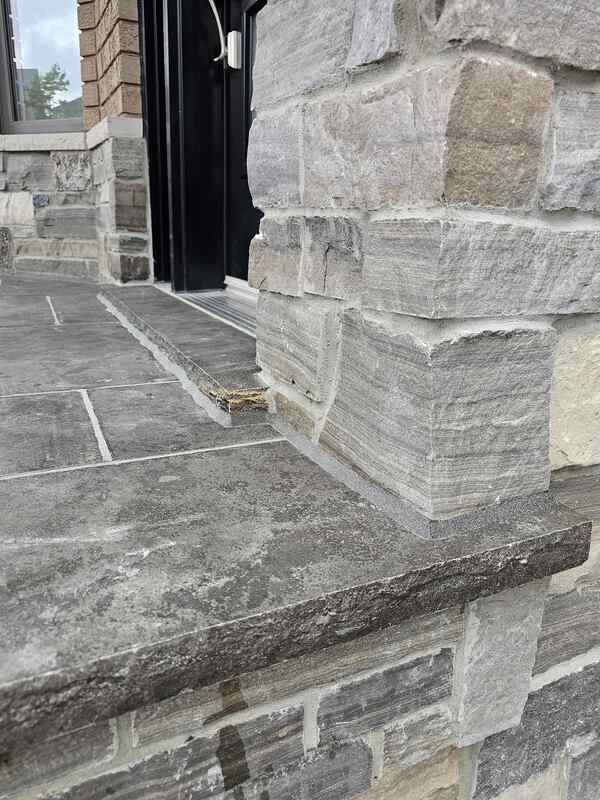
Armor Your Entry Steps Before Structural Sub-Base Erosion Sets In
A compromised concrete staircase seam represents a major liability right at the most heavily trafficked walking location on your property. Relentless winter freeze-thaw cycles widen the unshielded gaps, while heavy rainfall actively washes out the underlying aggregate sub-base support.
Left unsealed, this continuous erosion triggers a dangerous physical separation between the multi-ton step assembly and your main foundation wall.
Intercepting this degradation early costs a tiny fraction of the extensive mudjacking slab leveling or complete concrete reconstruction required once structural settling takes hold.
Deploying a premium, traffic-rated polymer barrier permanently blocks sub-base washout and stabilizes your entrance treads before a dangerous tripping hazard forms.
Coordinate an On-Site Concrete Step Evaluation (Heading 3)
Contact Oleg at Proper Caulking to schedule a specialized concrete step joint structural analysis for your Oakville, Burlington, or Milton property today. Our technical field crew methodically checks every single horizontal tread seam, vertical riser junction, and staircase-to-foundation connection across your entryway.
Our technicians deliver a precise, line-item summary detailing where your threshold barriers are breaking down and which framing pockets are exposed to water tracking. We completely eliminate future risk by securing our specialized utility weatherproofing applications with a comprehensive 10-year trade warranty on all labor.
Deploying this custom perimeter shield early in the spring weather window is the most reliable way to insulate your exterior utility connections before peak storm cycles hit the Halton region.
Protect Your Entry Steps and Walkways From Sub-Base Washout
Don’t let cracked step seams or failed porch joints wobble your stairs, wash out your gravel sub-base, or disconnect your stairs from the foundation. Contact us for a specialized, professional concrete step joint assessment today.
Proper Caulking – Oakville, Burlington & Milton, Ontario