
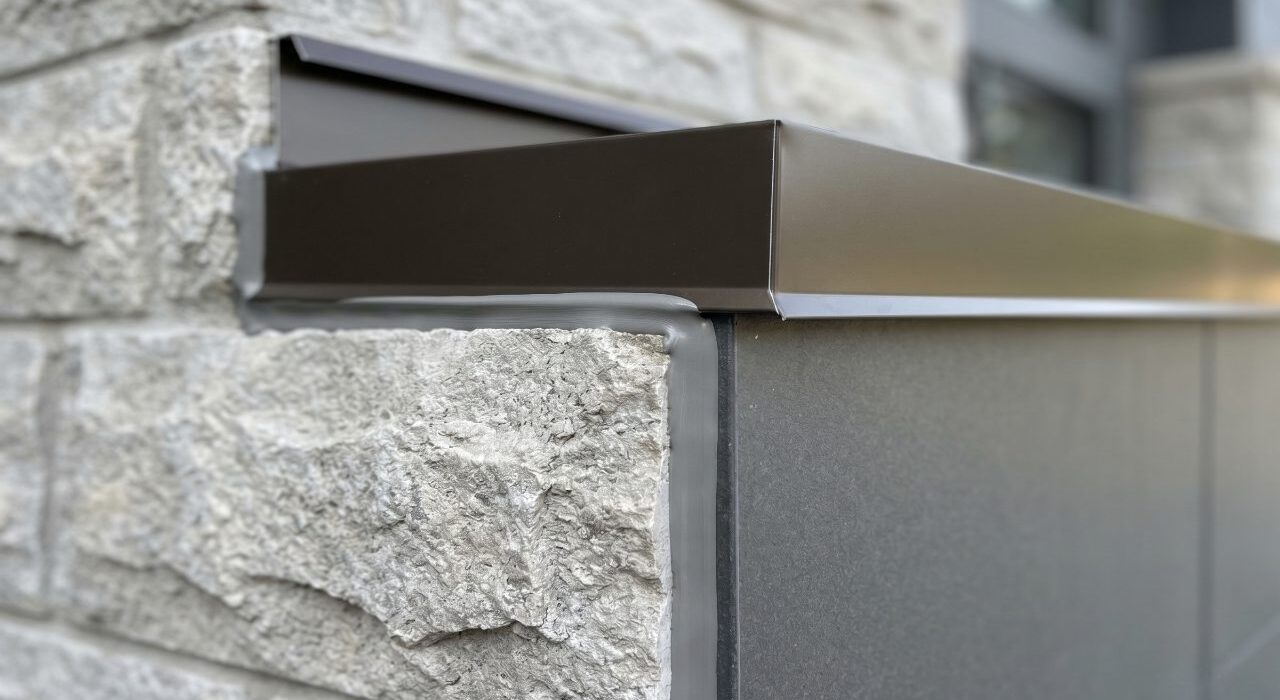
Managing specialized Exterior Transition Caulking projects requires a strict engineering approach to protect luxury custom estates across Hamilton, Niagara, Burlington and and Milton. Whether navigating wind-driven shoreline storms along the Niagara Horseshoe or managing complex material expansion on newer custom builds, multi-substrate junctions demand elite perimeter defense.
Because high-end custom homes routinely blend premium architectural elements like smooth anodized aluminum trim wraps, copper valley flashings, and structural steel lintels directly against rough masonry blocks, uncalibrated consumer sealants rapidly split and trigger catastrophic sub-wall framing rot. Protecting these volatile material boundaries requires completely bypassing standard hardware-store products in favor of commercial-grade, high-elongation hybrid polymers.
⏱️ Transition Service Standard
Sealing dynamic junctions between dissimilar materials (like aluminum flashing meeting clay brick) requires high-performance, low-modulus polyurethane or hybrid polymers like Tremco Dymeric 240FC or DOWSIL 795 to withstand conflicting thermal expansion axes. To prevent centerline tearing, transitions must maintain a strict 3:2 width-to-depth joint ratio over compressed closed-cell backer rods. Skipping specialized multi-substrate primers ensures the compound will delaminate from the smoother substrate face within a single winter freeze-thaw cycle.
Transition Physics: The Extreme Stress of Coefficient Disparity
Every building material possesses a unique thermal expansion coefficient that dictates its movement rate per degree of temperature change. Anodized aluminum flashing expands at approximately twice the physical rate of clay brick masonry under the identical solar radiation load.
Vinyl cladding planks expand significantly more than solid wood trim wraps under the same rapid afternoon temperature rise. Modern steel panel systems used in commercial building additions expand and contract at a rate that differs from both the glass curtain walls they adjoin and the concrete foundations they connect to at grade level.
When two construction materials with fundamentally different expansion coefficients share a joint, that seam experiences a net dimensional change every time the temperature shifts. In a typical Burlington or Oakville summer, a south-facing transition joint between an aluminum flashing track and a brick masonry wall handles multiple intense movement cycles in a single afternoon as cloud cover comes and goes.
Each of those rapid solar cycles places the joint under destructive multi-axis shearing forces. The metal or vinyl substrate pulls violently in one direction while the rigid masonry resists in another simultaneously, creating a relentless tug-of-war along the bond line.
Consumer-grade acrylic or retail latex sealants possess low elongation ratings of ten to twenty percent and have no meaningful resistance to repeated multi-axis shear loading. They rapidly fail by tearing cohesively through the center of the bead or delaminating adhesively from the smoother substrate face.
Because different architectural elements expand and contract along completely separate axes, calculating the precise physical tolerances of each substrate is a strict structural safety requirement.
Adhering to the thermal movement criteria established in the FEMA Building Science structural design parameters defines the engineering baseline required to evaluate these independent expansion metrics, ensuring joints do not rupture under intense weather loading.
The vertical masonry relief tracks that cushion a brick facade’s own thermal and moisture movements are a related but separate building envelope system that must be maintained independently of this horizontal transition joint.
Our article on brick masonry expansion joint caulking covers those vertical relief tracks and the distinct elastomeric sealant requirements they carry to shield your entire exterior wall elevation.
The Hidden Sub-Wall Trap: Lateral Water Siphoning and Framing Rot
When a multi-material transition joint opens, the destructive water tracking it enables is far more severe than a standard window perimeter leak. A standard window perimeter leak typically channels incoming water straight downward through the wall cavity following gravity.
A transition joint failure at a horizontal or diagonal material interface creates a completely different infiltration dynamic. Wind-driven rain under positive facade pressure does not arrive vertically. It strikes horizontally at the exact angle that forces it deep into a transition gap rather than rolling past it.
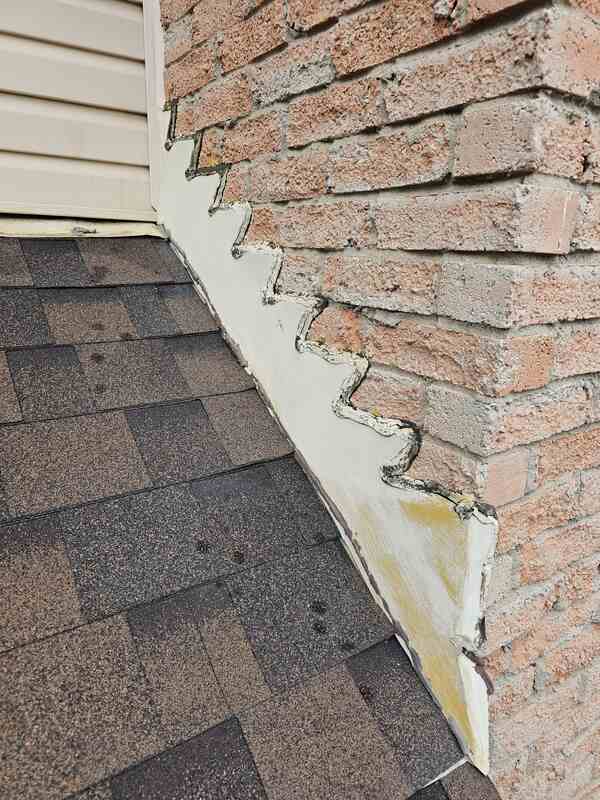
The moment water breaches the outer seam, capillary action takes control of the moisture migration path. Water siphons laterally through the drainage plane between the cladding and the weather-resistant barrier, moving horizontally and upward against gravity through capillary tension in narrow gaps between building materials.
This lateral water movement is precisely what makes transition joint failures so incredibly costly and difficult to diagnose early. The tracking moisture saturates hidden wall cavities far away from the original exterior entry point.
Load-bearing timber headers above window openings, structural garage beam pockets, and floor plate sill connections can quietly absorb moisture siphoned laterally from a transition joint failure two to three metres away from the actual source.
By the time interior staining, soft drywall, or structural deflection finally reveals the damage, the wood rot has been active for multiple seasons across a broad area of the internal wall assembly.
The garage door frame transition, where the rough framing masonry opening meets the aluminum capping and surrounding brick veneer, represents one of the highest-risk locations for this exact type of lateral siphoning.
Our article on garage door caulking frame sealing details the specific multi-material failure modes and structural restoration requirements at that complex junction.
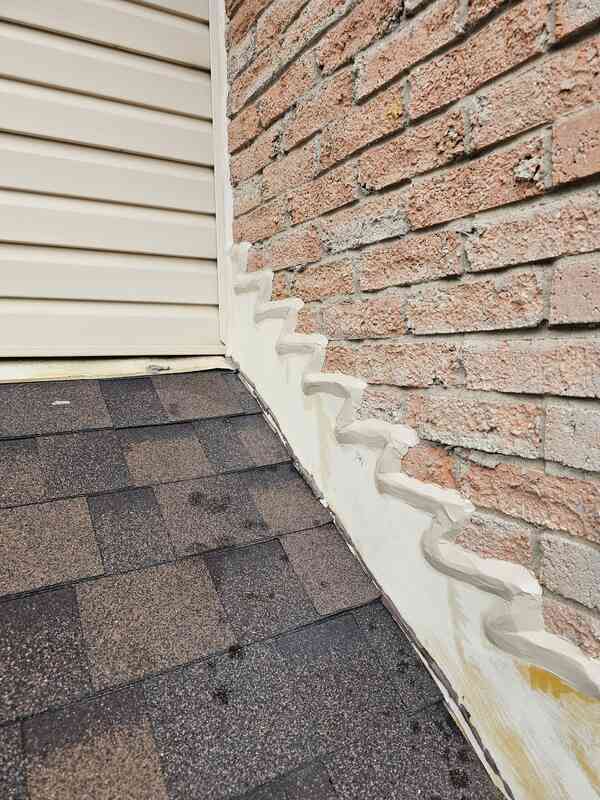
Our Specialized 4-Phase Substrate Integration Workflow
A transition joint restoration cannot follow the same protocol as a single-material window perimeter repair. Each substrate face in the joint requires a different extraction approach, a distinct chemical preparation, and unique site primers to achieve a perfect bond.
The workflow must account for both materials simultaneously at every stage of the execution. If you treat a multi-material boundary like standard PVC casing, the assembly will fail prematurely under climate cycles.
Phase 1: Dual-Substrate Mechanical Extraction of Weather-Baked Sealants
All existing sealant in the transition joint is removed completely, addressing both substrate faces with specialized tools and techniques appropriate to each material individually. To clear old residues without profile-scarring delicate aluminum trim wraps, galvanized steel flashings, or copper valleys, our technical crews completely avoid sloppy utility knife hacks.
Instead, we execute precise mechanical extraction using specialized, oscillating Fein SuperCut trade frames fitted with ultra-thin flush-cut segment blades, lifting failed retail compounds cleanly without scoring the protective metal surface finish.
On the masonry, brick, or composite face, extraction relies on hook scrapers and oscillating cutters chosen specifically for surface hardness and joint depth. The phase is only complete when both distinct substrate faces are bare for the full depth of the channel, leaving zero residual adhesive film on either face.
Phase 2: Chemical Decontamination and Molecular Adhesion Testing
After mechanical extraction, each substrate face is chemically cleaned with the specific solvent required for that material. Aluminum faces require a completely different chemical treatment than porous clay brick or concrete block faces. Using the wrong chemical fluid on non-porous metal introduces a film layer rather than stripping one away.
Where the high-movement sealant specification includes a specialized primer, an adhesion test is performed on each substrate face before full application proceeds. A sealant that fails at one face within a season almost always fails because the primer selection was completely mismatched to that specific material profile.
Phase 3: Seating High-Compression Hourglass Profiles Along Multi-Axis Gaps
Transition joints between dissimilar materials are frequently wider than standard joints because decades of differential settlement have physically widened the structural gap. Wide transition joints require a backing rope at the correct depth to establish a flexible two-point adhesion profile.
We enforce a strict 3:2 width-to-depth structural ratio across all high-stress multi-material joints to handle conflicting expansion rates cleanly. For a wide 15mm horizontal gap between an aluminum flashing track and a brick face, our technical crews seat closed-cell backing ropes to allow an exact 10mm tool center depth.
As detailed in our comprehensive guide to professional joint preparation, creating a flexible hourglass cross-section prevents the sealant from tearing down the center under multi-axis shear loading.
For complex transition joints that experience both in-plane shear and out-of-plane twisting, the backing material must account for a three-dimensional movement envelope.
Phase 4: Tooling Ultra-Elastomeric, Cross-Linked Hybrid Barriers
Our installation team injects the specified commercial-grade hybrid compound into the prepped joint track using advanced equipment that maintains uniform bead volume throughout the full multi-material run. The precise polymer selection for a dissimilar material transition is matched exactly to the specific substrate combination.
A high-stress architectural joint between anodized aluminum flashing and clay brick requires an elite multi-component formulation like Tremco Dymeric 240FC or Pecora Dynatrol II, which possess a completely different modulus and chemistry than a standard residential seam combining vinyl siding with natural wood trim.
The finished bead is carefully hand-drawn to a smooth, downward-sloping concave profile with a dedicated architectural tooling trowel.
This mechanical compression forces the compound deep into the microscopic pores of your cladding, establishing airtight two-point adhesion across both substrate faces and shaping a flawless watershed line that actively forces heavy storm sheets to slide off the facade rather than pooling at the material interface.
The heavy-duty, multi-component architectural compounds we deploy are specifically manufactured to withstand severe structural loading and unshielded environmental shifting without tearing loose.
These commercial-grade structural barriers are engineered to meet strict Canadian building regulations, aligning perfectly with the rigorous material testing parameters governed by the official Codes Canada publications repository hosted by the National Research Council Canada.
This superior structural grading enables the cured rubberized bead to expand and compress seamlessly through Ontario’s freezing winters and blisteringly hot summers without unzipping from your shifting frames or moving masonry substrates.
High-end custom estates routinely blend premium architectural elements, matching smooth anodized aluminum trim wraps, copper valley flashings, and structural steel lintels directly against rough masonry blocks.
Protecting these volatile multi-material transitions across the Golden Horseshoe demands high-elongation, non-staining commercial hybrids that prevent lateral rainwater siphoning from quietly rotting out your load-bearing sub-wall framing pockets.
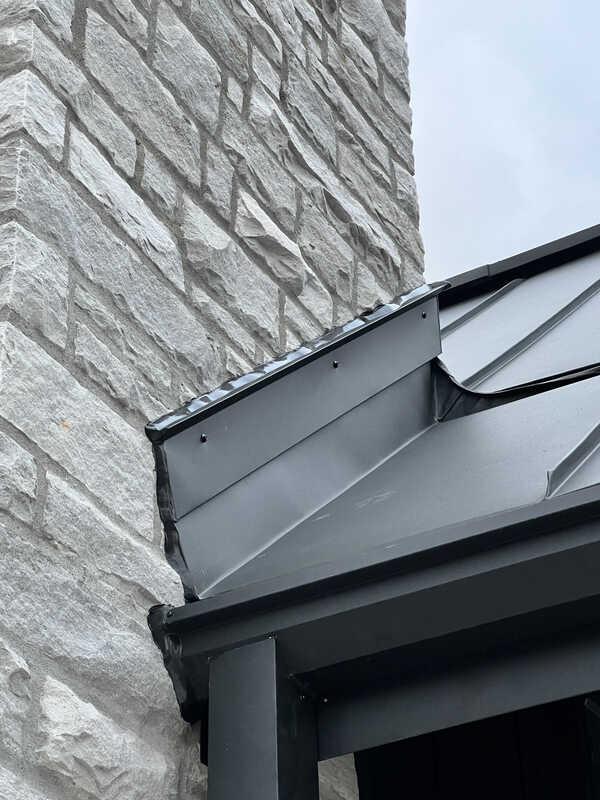
5 Signs Your Transition Joints Are Actively Failing
A systematic inspection of every dissimilar material junction on your building exterior identifies every active failure before lateral water siphoning reaches load-bearing framing. Spotting these subtle warning signs early lets you intercept moisture paths before they compromise hidden wall infrastructure.
Left unsealed, these expanding gaps also invite destructive wood-boring pests and burrowing rodents to invade your structural framework.
To discover how exterior wall gaps function as immediate pest highways, read our article on pest prevention window caulking to learn how to insulate your property boundaries.
1. Cohesive Tearing Through the Center of the Bead
Sealant that has torn cohesively through its center at a transition joint is exhibiting classic multi-axis shear failure. This split rubber line is no longer providing weatherproofing protection at that location, regardless of how cleanly or firmly it remains attached to the actual substrate faces.
2. Asymmetric Adhesive Delamination From One Substrate Face
Sealant that has released adhesively from one substrate face while remaining bonded to the other confirms that the two materials are moving at radically conflicting rates. This structural separation proves that the compound’s elongation limit has been completely exceeded at the faster-moving substrate face.
3. Offset Interior Water Staining far From Visible Joints
Water staining that appears on an interior wall surface at a location that does not correspond to any visible exterior joint directly above it indicates lateral moisture siphoning. This offset tracking confirms that rain is entering an open multi-material transition at a completely different location and tracking horizontally across sub-wall plates.
4. Soft, Discolored, or Structurally Deflecting Drywall Casing
Soft, discolored, or structurally deflecting drywall near a timber header or structural beam pocket should trigger an immediate investigation of the transition joints. This internal material softening proves that tracking water has been actively rotting out the underlying load-bearing support framework for multiple seasons.
5. Original Builder Seals Exceeding 10 Years of Total Exposure
Any multi-material transition joint that has not been professionally assessed since original construction is operating well beyond the service life of its original sealant. Even if the old compound appears smooth from the ground, its deep molecular adhesion against the conflicting material edges has completely vanished.
Armor Your Multi-Material Transitions Before Hidden Wall Decay Spreads
A compromised multi-substrate intersection joint represents one of the single most complex building envelope vulnerabilities to isolate and remediate once moisture tracks past your cladding lines.
The lateral groundwater or rainwater siphoning it enables completely bypasses every secondary moisture management layer, delivering tracking water straight into your load-bearing timbers and insulation cavities without any visible exterior indicators.
Proactively restoring these high-movement boundaries costs a microscopic fraction of the extensive structural framing repairs, sub-wall timber reconstruction, or hazardous mold remediation that follows from leaving dissimilar material gaps open.
Taking a preventative stance completely blocks horizontal rain siphoning and permanently stabilizes your structural framing plates before harsh winter freezing cycles take hold.
Coordinate an On-Site Multi-Substrate Joint Analysis
Contact Oleg at Proper Caulking to arrange a comprehensive on-site multi-substrate visual joint assessment for your Oakville, Burlington, or Milton property today. Our experienced technical field division methodically checks every single dynamic dissimilar junction, metal flashing track, and multi-substrate perimeter across your entire exterior layout.
Our technicians deliver a precise, line-item summary detailing where your flashing barriers are breaking down and which framing pockets are exposed to horizontal water tracking. We completely eliminate future risk by securing our specialized multi-substrate weatherproofing applications with a comprehensive 10-year trade warranty on all labor.
Deploying this custom perimeter shield early in the spring weather window is the most reliable way to protect your exterior cladding connections before peak storm cycles hit the Halton region.
If you want to check out how our field crews seal tricky masonry transitions, concrete steps, or horizontal structural ledges, take a look at our full menu of exterior sealing services built to eliminate drafts throughout the Halton region.
Questions Property Managers Ask About Dissimilar Material Transitions
Can a standard single-material silicone be used to seal aluminum roof flashing to a brick wall?
No, standard single-material retail silicones lack the specialized chemical adhesion promoters required to bind to both porous clay brick and smooth anodized aluminum simultaneously. Because these two substrates expand along completely separate axes under solar loading, uncalibrated compounds will rapidly experience asymmetric adhesive delamination from the smoother metal face.
What is the purpose of the 3:2 width-to-depth structural ratio along wide transition gaps?
Transition gaps are naturally wider due to decades of differential building settlement. Maintaining a strict 3:2 width-to-depth ratio (such as packing backer rod into a 15mm gap to allow a precise 10mm center tool depth) shapes the cured polymer into a flexible hourglass profile that evenly distributes multi-axis shear forces without snapping down the center line.
How does lateral water siphoning cause hidden framing rot inside a wall cavity?
When a horizontal or diagonal interface seam splits, wind-driven storm rain strikes at an angle that forces moisture deep into the gap. Capillary action then siphons this water horizontally and upward across the drainage plane, completely bypassing secondary house wraps to quietly rot out load-bearing timber headers and floor plate sill connections multiple meters away from the source leak.
Why do aluminum garage door capping transitions represent such a high risk for water tracking?
The junction where a rough masonry opening meets aluminum door casing capping combines an ultra-smooth metal surface with rough, porous brick veneer. This intersection endures continuous mechanical vibrations from the garage door mechanism alongside extreme solar heat, creating an aggressive multi-axis stress environment that rapidly tears cheap consumer-grade caulking lines apart.
What is the typical trade warranty coverage for a professional multi-substrate transition joint restoration?
When multi-substrate junctions undergo full mechanical extraction, chemical solvent decontamination, and specialized priming prior to the extrusion of commercial-grade hybrid polymers, the application carries a service lifespan of over a decade. At Proper Caulking, we secure these complex building envelope boundaries with a comprehensive 10-year warranty covering all labor.
Protect Your Wall Cavity and Framing From Multi-Substrate Leaks
Don’t let failed transition joints siphon storm rain behind your cladding, rot out your load-bearing timber headers, or compromise your framing studs. Contact our technical field division today to schedule your specialized, zero-obligation multi-substrate joint assessment.
Proper Caulking – Oakville, Burlington & Milton, Ontario