
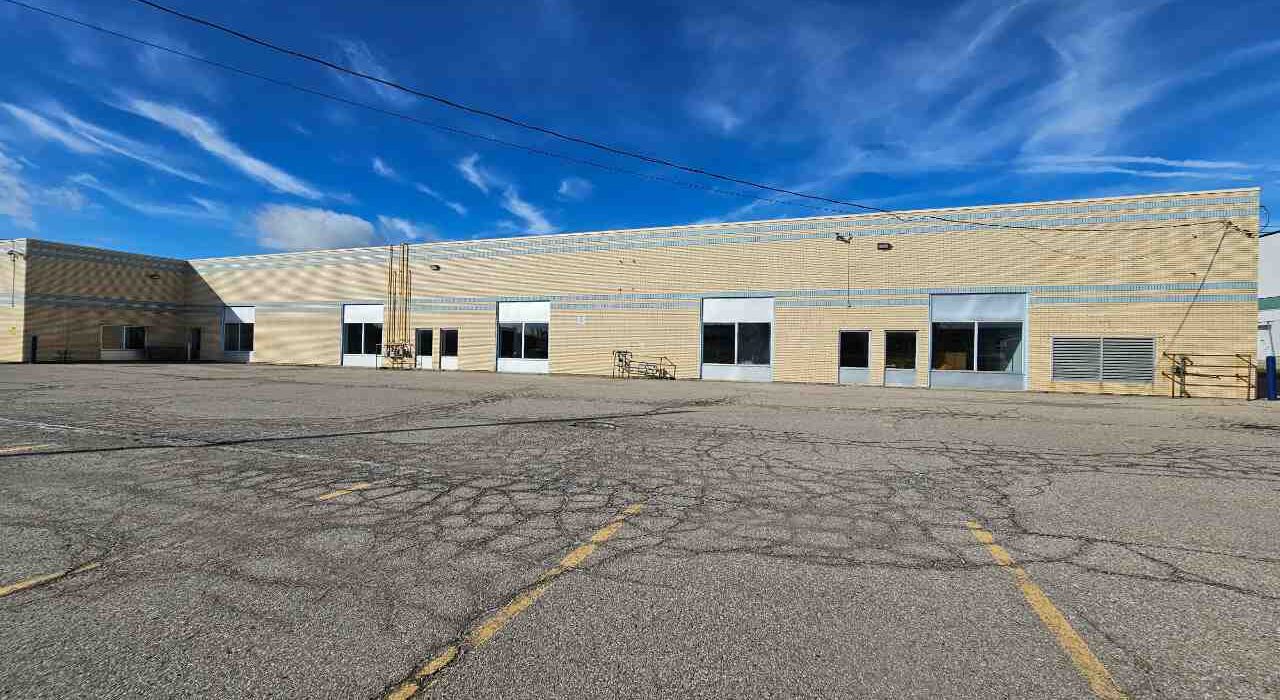
Commercial property managers and facility directors across Oakville and Burlington depend directly on professional commercial exterior caulking to preserve building envelope integrity. Retail plazas, corporate offices, and mixed-use developments require this specialized barrier to separate a watertight, tenant-ready asset from one accumulating severe, progressive facade damage.
A failed commercial joint is an immediate structural liability that generates cascading operational costs, tenant inventory claims, and structural remediation expenses. Left unsealed, water tracking and air leaks quickly trigger emergency building restoration bills that dwarf the cost of proactive sealing maintenance by orders of magnitude.
Understanding what drives commercial sealant failure and how to assess your facade joints is the foundation of intelligent asset management. Prioritizing timely maintenance protects your baseline operational costs and ensures long-term asset value protection across the Halton Region commercial real estate market.
🏢 Commercial Service Standard
Professional commercial exterior caulking demands high-performance, non-sag architectural sealants like DOWSIL 795 Structural Silicone or Tremco Dymonic 100 Polyurethane to secure volatile climate boundaries. Large-format precast concrete facades experiencing wind-induced racking must enforce a strict 2:1 width-to-depth joint geometry ratio over non-absorbent backing rods to prevent adhesive edge splitting. Skipping proper mechanical cutout and chemical form-release neutralization guarantees immediate boundary failure under Ontario’s thermal movement cycles.
The B2B Financial Risk of Failing Envelope Seals
A commercial building facade is subject to forces that residential construction does not encounter at the same scale.
Wind loads on a mid-rise commercial elevation in an exposed Oakville or Burlington location generate sustained pressure differentials that drive water laterally across the facade and into any joint that is not fully sealed and bonded.
A single heavy Ontario storm event can push thousands of litres of water against the building envelope over the course of a few hours, and every compromised joint is an entry point.
The consequences begin at the joint and radiate inward. Water entering through a failed precast concrete expansion joint penetrates the cavity behind the panel, contacts the interior framing and insulation, and reaches the interior finishes within a matter of storm events.
Drywall that has been wetted repeatedly buckles, stains, and supports mould growth. Tenant inventory damaged by a roof or wall leak becomes a liability claim against the property manager.
HVAC systems running against uncontrolled air infiltration through open envelope joints consume substantially more energy to maintain set-point temperatures, and the thermal bridging through unsealed metal-framed curtain wall assemblies compounds that cost through the heating and cooling seasons simultaneously.
The mould liability dimension deserves specific attention. Commercial tenants who document mould growth in leased premises connected to building envelope failures have a well-established legal basis for lease disputes, remediation cost recovery, and in some jurisdictions, business interruption claims.
A property owner facing a mould liability claim is managing a legal exposure that begins with the cost of professional remediation and extends into potential lease termination, reputational damage with the broader tenant market, and in severe cases, regulatory enforcement action.
The failed joint that initiated the moisture pathway costs a fraction of one percent of that exposure to repair proactively. The horizontal joint mechanics at commercial grade level and podium deck level carry their own specific risks.
The physics of water infiltration through flat or low-slope commercial joint systems are closely analogous to what we address in luxury residential applications, including pool deck caulking and concrete pool deck sealant work, where horizontal water volume management and sub-base protection drive the engineering requirements.
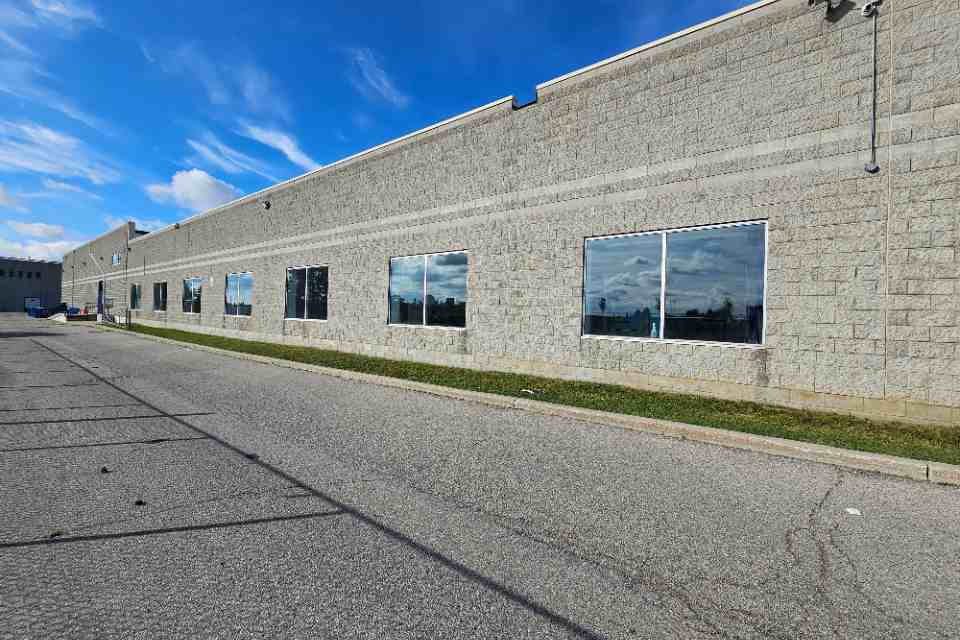
Material Science: Commercial Polyurethanes vs. Structural Silicones
The sealant chemistry required for a commercial facade application is categorically different from anything available in a retail hardware store. This critical material distinction matters both for long-term performance longevity and for strict regulatory compliance on commercial properties.
Commercial facades combine glass curtain wall systems, anodized aluminum frames, precast concrete panels, stone cladding, and composite panel systems within the same building envelope. Each of these unique structural substrates requires highly specific adhesion chemistry, custom elongation performance, and advanced weather resistance.
High-performance architectural sealants are specially formulated to withstand heavy UV radiation, intense environmental pollutants, and mechanical loads over their service life. Premium industry-standard compounds like DOWSIL 795, Tremco Dymonic 100, and Sonneborn NP1 are engineered to meet these exact structural demands.
DOWSIL 795 operates as an elite structural glazing and weatherproofing silicone with documented adhesion to glass, aluminum, and coated metal substrates under sustained wind loads. Conversely, Tremco Dymonic 100 is a high-movement polyurethane specified extensively for precast concrete expansion joints and masonry perimeter sealing where surface compatibility is required.
Sonneborn NP1 provides a durable, one-component polyurethane formula widely used for commercial window perimeters and wall penetrations where high elongation is a priority. This specialized compound develops an aggressive physical bond to porous masonry substrates that basic retail products cannot replicate.
Standard residential-grade acrylic and latex sealants applied on a commercial facade will deteriorate rapidly under intense solar baking and heavy pollution deposition. They quickly chalk, shrink, and lose their adhesive connection to glass and anodized aluminum frames within twelve to twenty-four months.
Open joints resulting from degraded retail caulk are completely indistinguishable from unsealed gaps, welcoming hidden water tracking deep inside your wall assembly. For authoritative technical guidance on building envelope weatherproofing and expanding joint layout designs, the Sealant, Waterproofing and Restoration Institute’s technical resources library publishes industry-standard reference documents.
This professional engineering documentation defines the correct approach to compound selection, cross-sectional geometry, and field installation for commercial applications. The complex movement physics of large-format commercial precast concrete panels also benefit from direct comparison with established residential masonry engineering.
The basic physical principles that govern masonry expansion joint design and vertical wall seam sealing on residential brick-clad homes apply directly at a commercial scale. However, industrial panel dimensions, heavy thermal mass, and wind-induced racking forces amplify joint movement amplitudes significantly beyond what any residential property generates.
Critical Failure Indicators on Commercial Facades
A systematic visual inspection of a commercial building’s exterior joint condition does not require specialist equipment. It requires a trained eye and knowledge of what each failure mode looks like and what it means structurally. The following indicators are what a professional building envelope assessment looks for on every commercial property evaluation.
Cohesive and Adhesive Joint Splitting Along Precast Seams
Cohesive failure occurs when the sealant bead tears through its own body rather than at the substrate interface. It presents as a crack or split running along the centre of the sealant bead, typically the full length of the affected joint.
This is the signature of three-sided adhesion: the sealant bonded to the back of the joint cavity as well as both panel faces, and tore under the thermal or wind-induced movement of the panels. The joint is open and water-transmitting despite the visual presence of sealant material.
Adhesive failure presents as separation between the sealant face and one or both of the adjacent substrate surfaces. The bead is intact but no longer bonded.
On a precast concrete facade, adhesive failure often correlates with surface contamination at the time of original installation, including form-release compounds, curing compounds, or efflorescence that was not fully removed before sealant application.
Chalking, Powdering, and Brittle Sealant Degradation
Sealant that has converted from an elastic, flexible state to a hard, powdery, or chalky surface has undergone irreversible UV photodegradation. The polymer chains in the compound have broken down under prolonged UV exposure, eliminating the crosslinked network that gives the material its elastomeric properties.
A chalking bead has no remaining elongation capability. It will fracture under any joint movement and cannot be restored by surface treatment. Complete mechanical removal and reapplication is the only corrective option.
Skyrocketing Building HVAC Operational Costs and Drafts
Unsealed or open envelope joints in curtain wall assemblies and precast panel interfaces create direct air leakage pathways through the building facade. On a large commercial elevation, the cumulative cross-section of multiple open joints represents a significant uncontrolled ventilation opening.
This structural breach forces the building’s central HVAC system to work against heavy, continuous drafts to maintain stability. Property managers who observe unexplained spikes in heating or cooling costs should immediately audit their exterior facade seams.
Persistent drafts at tenant spaces adjacent to exterior walls or severe difficulty maintaining set-point temperatures in perimeter zones are classic indicators of joint failure. These subtle thermal warning signs are often mistakenly attributed to basic mechanical system or HVAC equipment performance issues.
Including a comprehensive envelope joint inspection in your diagnostic facility assessment is the most efficient way to pinpoint these hidden energy leaks. Catching failed perimeter seals early protects your internal climate controls and prevents massive climate-control utility waste.
Resolving these structural drafts immediately stabilizes your operational overhead while protecting the comfort and retention of your active commercial tenants.
Interior Moisture Intrusions and Wall Finishes Discolouration
Water staining on interior gypsum finishes, discolouration at the base of curtain wall assemblies, and efflorescence on interior masonry surfaces adjacent to exterior joints are reliable indicators that water is penetrating the building envelope and reaching interior materials.
These signs typically appear well after the moisture infiltration has begun, because the water must saturate insulation layers and wall assembly cavities before it becomes visible at the interior finish surface.
The envelope failure that produced the interior sign has usually been active for multiple rain events before discovery.
Debonding and Separation Around Metal Window Perimeters
Aluminum and steel window frames in commercial assemblies experience significant thermal movement. A large aluminum curtain wall frame can shift several millimetres in dimension between a cold winter morning and a summer afternoon at peak sun exposure.
The perimeter sealant between the frame and the surrounding substrate must accommodate that movement continuously.
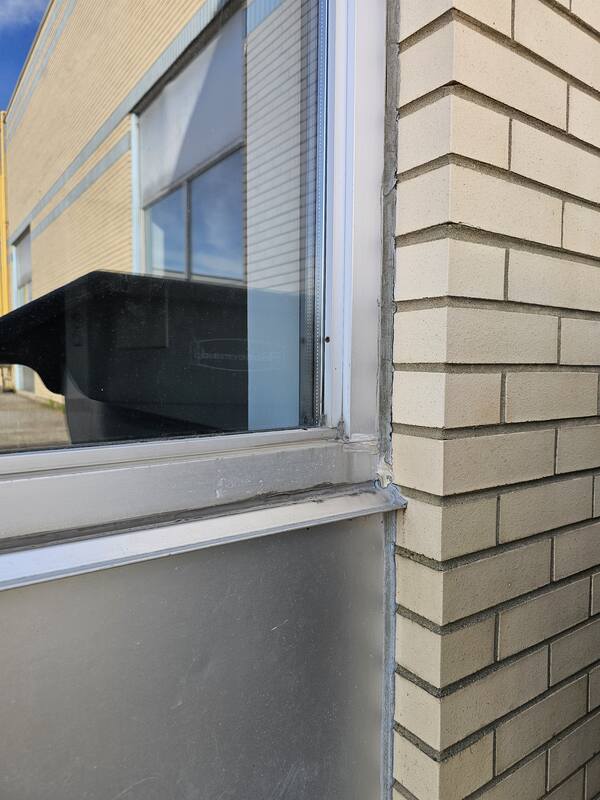
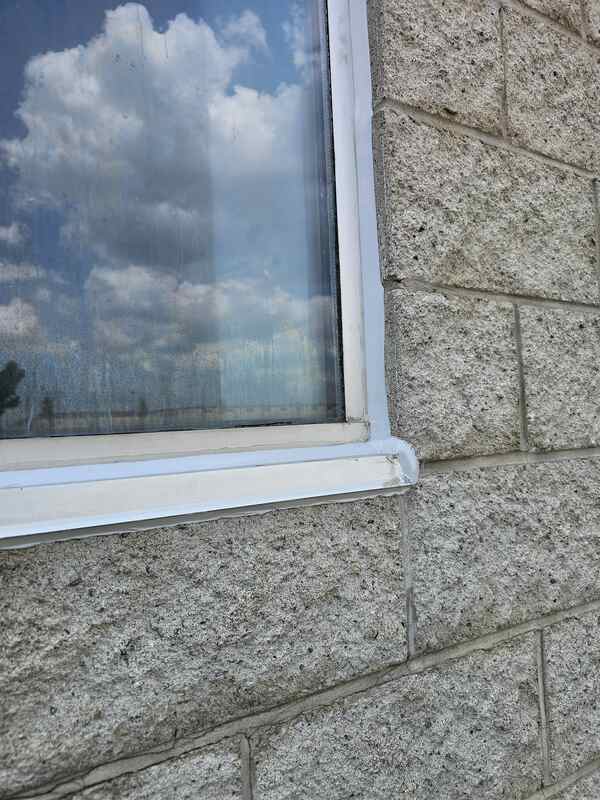
Sealant that has debonded from the aluminum face, lifted at the corner mitres, or separated from the adjacent masonry or panel substrate at the perimeter is no longer providing a weather seal at those locations, regardless of how intact the remaining bead appears.
The Surgical Workflow of High-Volume Mechanical Cutout
A commercial facade sealant restoration is not a task that accommodates shortcuts. Multiple surface contaminants present on a building exterior make adhesion completely unreliable unless you apply material directly to a mechanically cleaned bare substrate.
Industrial pollution deposition, form-release compound residue on precast panels, anodizing treatments on aluminum frames, and years of accumulated weathering products on masonry will aggressively ruin any new installation.
Our operational process begins and ends with complete substrate integrity. Every joint designated to receive new architectural sealant undergoes an exhaustive mechanical breakout to extract all deteriorated compounds.
Technicians utilize oscillating tools, detail cutters, and specialized hand scrapers tailored specifically to match the unique physical geometry and material limits of the surrounding commercial structure.
There are no engineering exceptions allowed for joints that appear partially sound. Partially bonded sealant inside a commercial expansion line is simply a failure in progress that welcomes hidden water intrusion.
The new high-performance material application starts from a pristine, spotless structural substrate or the project does not start at all.
Phase 1: Structural Extraction of Degraded Precast Panel Sealants
All existing sealant, foam backing, and contamination within the joint cavity is removed completely to bare substrate on both bonding faces.
On precast concrete panels, surface laitance, form-release compound residue, and carbonation layers at the panel face are mechanically abraded to expose sound concrete.
On aluminum frame perimeters, anodizing residue and factory coatings in the bonding zone are prepared to manufacturer specification for the specified sealant system.
This precise mechanical cleaning ensures a pristine, contaminant-free joint channel, setting up an uncompromised bond for the fresh compound.
Phase 2: Removing Chemical Form-Release Layers and Primer Curing
After mechanical extraction, joint faces are solvent-cleaned to thoroughly remove residual adhesive, atmospheric contamination, and trapped moisture.
Where the specified sealant system requires a primer for adhesion to specific substrates, primer is applied and allowed to cure to the manufacturer’s specified window before sealant injection.
On commercial aluminum and glass substrates, primer selection is matched to the specific sealant system.
It is then confirmed against the manufacturer’s adhesion test data for that exact substrate combination before any fresh material touches the wall.
Phase 3: Joint Geometry Engineering for Multi-Axis Structural Racking
Wide commercial expansion joints between heavy precast panels require closed-cell backer rod or ceramic fibre rope installed at precise manufacturer depths. Setting this internal foundation establishes the strict two-point adhesion geometry that gives your exterior weather barrier its full rated movement capability.
Large-format commercial concrete facades experience intense multi-axis movement from wind-induced racking, structural settlement, and horizontal thermal shifting. To absorb these massive shifting forces without tearing, our field crews enforce a strict 2:1 width-to-depth structural ratio across all exposed panel boundaries.
For a standard 24mm wide concrete expansion line, our technicians tool the center of the wet rubber ribbon to an exact depth of 12mm. This precise hourglass cross-section distributes dynamic structural stress evenly across the joint, completely preventing adhesive or cohesive edge splitting under load.
As outlined in our comprehensive guide covering what is a backer rod, installing this flexible backup layer is entirely non-negotiable for commercial building envelopes. Deep expansion lines that skip this structural step will unzip during their very first seasonal movement cycle, regardless of the sealant brand used.
Phase 4: High-Pressure Silicone Injection and Continuous Elevation Verification
Our crews inject specified architectural sealants deep into the prepared joints using high-pressure equipment that maintains uniform compound distribution across the entire elevation run. This consistent bead volume is absolutely critical on expansive facades where joint runs extend continuously across full multi-story building blocks.
The finished bead is instantly hand-compressed to a smooth concave profile and audited for uninterrupted material continuity and complete two-point adhesion across both substrate faces. This meticulous mechanical inspection ensures the correct cross-sectional geometry is locked in before the next sequence is started.
Our selected exterior compounds utilize specialized cross-linked chemistry to maintain absolute stability against wind-driven rain and intense structural friction. These structural barrier specifications align with the code-compliant climate design criteria preserved inside the public National Research Council Publications vault.
This advanced weatherproofing capability ensures the tooled material absorbs ongoing framework stress throughout extreme Ontario weather variations. The flexible chemical connection shields your exterior transitions without cracking or pulling loose from expanding concrete sheets, brick walls, or aluminum casings.
The Compounding Financial Risk of Postponed Facade Care
Building envelope maintenance deferred by a single corporate budget cycle rarely stays contained to that isolated fiscal window. An expansion joint marked as borderline during a routine spring assessment has typically experienced total adhesive failure by the following autumn.
The resulting sub-surface moisture tracking creates severe interior structural degradation that cannot be recovered or reversed by simply squeezing a new bead of caulk over the breach.
This operational delay ultimately triggers extensive masonry, structural framing, and interior drywall remediation tracking far beyond the scope of a basic exterior seal. This adds massive cost inflation and severe tenant disruption to what began as a routine building envelope tune-up.
For commercial real estate assets throughout the Oakville and Burlington office markets, corporate tenant retention and long-term lease renewal velocities are directly dictated by visible property conditions and infrastructure reliability.
The steep reputational cost of an unarmored, weather-stained building facade combined with internal moisture or dynamic draft complaints creates a massive financial liability. While this exposure never appears explicitly on a deferred facility ledger, it is felt deeply across your final asset asset valuation.
Secure Your Corporate Infrastructure and Regulatory Compliance
Contact Oleg at Proper Caulking to coordinate an expert commercial joint condition analysis for your Oakville or Burlington property today. Our dedicated field team works directly alongside regional property management firms, institutional facilities directors, and corporate retail asset groups to safely secure your facility envelope.
Our technicians meticulously map and photograph every dynamic wall joint failure we uncover across your elevations. We provide your management board with a completely transparent, line-item remediation scope engineered to satisfy stringent building envelope performance metrics and local structural audit compliance mandates.
If you want to see how our field crews seal advanced precast concrete expansion tracks, glass curtain wall frames, or low-profile masonry control joints, explore our full menu of commercial caulking services tailored to stop drafts throughout the Halton community. Every single commercial envelope project we execute stands fully backed by our comprehensive, industry-leading workmanship warranty.
Protect Your Building Envelope and Commercial Asset Value
Don’t let failed precast concrete expansion joints or leaking curtain walls spike your HVAC costs and disrupt tenant operations. Contact us for a specialized, professional commercial joint assessment today.
Proper Caulking – Oakville & Burlington, Ontario