
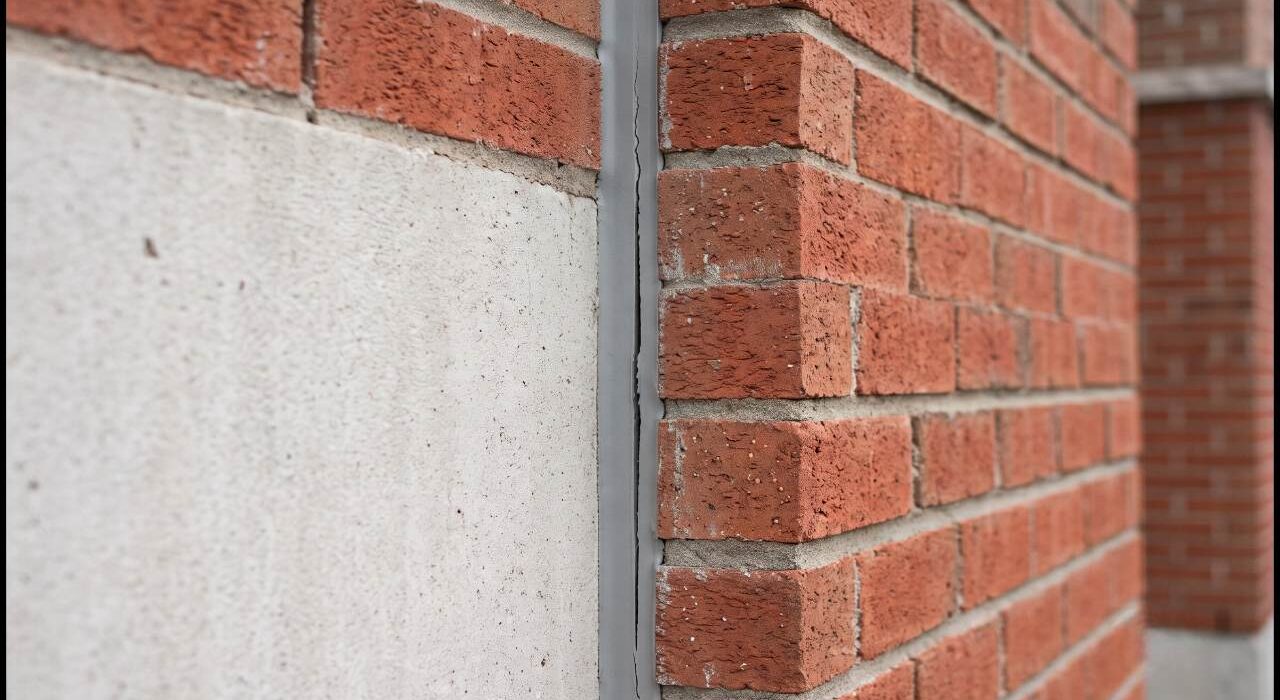
Understanding the mechanical physics of a joint boundary is the absolute deciding factor in preventing three sided adhesion failure from tearing a fresh structural sealant bead open prematurely. Most amateur handymen and low-cost contractors mistakenly treat deep architectural gaps like simple voids, packing them completely full of raw polymer without establishing internal movement controls.
In reality, filling a moving gap without isolation mechanics triggers a catastrophic failure vector down the centerline of the cured rubber compound. For a broader analysis of how these multi-material joint gaps degrade modern residential property boundaries over time, consult our comprehensive resource guide on exterior transition caulking for dissimilar materials.
JOINT STRESS CHART: TWO-POINT VS. THREE-POINT BONDING
When an architectural compound adheres to multiple faces simultaneously, the internal physics of the cured rubber are completely altered. Before injecting thick polymers into an open facade seam, field crews must calculate how spatial boundaries dictate elongation tolerances.
| Bonding Geometry | Adhesion Contact Faces | Internal Material Tension | Maximum Elongation Capacity | Primary Failure Mode |
|---|---|---|---|---|
| Two-Point Bonding | Left Substrate + Right Substrate | Low / Evenly Distributed | Over 100% Material Stretch | Longevity / Normal Aging |
| Three-Point Bonding | Left Side + Right Side + Rear Cavity Wall | Destructive / Concentrated | Less than 5% Total Movement | Centerline Split / Core Tear |
THE PHYSICS OF MATERIAL SHEARING AND REAR CAVITY TENSION
An elastomeric joint is specifically engineered to function identical to a flexible rubber band, stretching and compressing smoothly along a single, predictable axis between two independent faces. When a fluid compound is forced into an open channel without an internal barrier, it naturally flows into the rear of the gap and creates a permanent, sticky bond to the back wall framing studs or concrete sub-parging.
This multi-surface lock restricts the internal polymer from distributing tensile forces evenly across its cross-section when the building faces inevitably move. As a result, the compound experiences intense multi-axis stress concentration, causing the cured rubber to snap clean down its centerline or unzip entirely from the substrate borders under minor thermal loads.
THE MECHANICS OF THE HOURGLASS PROFILE
To prevent early tearing, technicians must enforce a strict two-point adhesion pattern where the sealant only links to the opposing faces of the joint. Achieving this profile requires seating a non-adherent backing buffer deep inside the open seam channel before chemical extrusion begins.
Installing a Bond-Breaker Barrier
Inserting a specialized polyethylene tape layer or a high-density backing rope completely isolates the fresh polymer from the rear of the building framing. This ensures the wet compound maintains absolute freedom of movement across its center width.
Configuring the Hourglass Shape
Compressing a flexible backing cylinder inside the gap forces the injected rubber into a professional hourglass cross-section that is thick at the bond walls and thin in the middle. This geometry channels extension stresses away from the side bond-lines, ensuring the compound stretches uniformly, as detailed in our guide on what backer rod is and why it is required for window sealing.
MATERIAL MODULUS AND PREVENTING EDGE DELAMINATION
High-performance polyurethanes and advanced silyl-modified hybrids deliver incredible elastic memory, but they require a properly engineered joint width-to-depth ratio to survive local weather cycles. Forcing thick, high-solids compounds into deep, square-shaped cavities completely bypasses the chemical elongation metrics stamped on the manufacturer’s label.
When a deep joint lacks a proper backing buffer, the volume of material is too dense to stretch, placing extreme strain directly onto the delicate side interfaces. This mechanical stress causes rapid adhesive peeling along masonry foundations and exterior brickwork, as explored in our field guide on sidewalk to brick expansion joint sealing.
To evaluate the official structural engineering parameters and technical design definitions that govern joint-sealing movement limits across global construction networks, architecture teams should consult the structural mandates curated by ASTM International.
LOCK IN LONG-TERM WEATHERPROOFING INTEGRITY
Contact Oleg at Proper Caulking to coordinate a meticulous technical audit of your building’s structural expansion seams and eliminate hidden moisture tracking. Our specialized building envelope restoration crews serve property owners across Oakville, Burlington, and Milton, specializing in precise old compound extraction and the installation of calibrated, code-compliant backing barriers.
Every custom residential or light commercial project we complete is engineered to handle dynamic material shifting, eliminate three-point adhesive failure, and safeguard your structure from water damage. Call our local team directly or access our digital scheduling portal today to secure a comprehensive, zero-obligation on-site structural transition assessment.
Eliminate Catastrophic Joint Failures
Improper three-sided bonding tears premium sealants open within months. Reach out to our building envelope specialists today to evaluate your expansion lines and install calibrated, code-compliant backing systems.
Proper Caulking – Oakville, Burlington & Milton, Ontario
FREQUENTLY ASKED QUESTIONS: THREE-SIDED ADHESION FAILURE
Why exactly does bonding to the back of a joint cavity cause the sealant to crack?
When a sealant bead sticks to three separate surfaces simultaneously, its center cannot move freely. The moment the joint expands, the internal tension is focused on a tiny cross-section of the rubber, forcing it to split right down the center or peel off the sides.
Can I use standard house wrap tape as a bond-breaker for deep expansion joints?
Yes, high-density polyethylene tapes work exceptionally well as bond-breakers because elastomeric sealants cannot stick to their slick surfaces. Applying a strip of tape to the back of a shallow joint completely isolates the compound from the rear wall framing, enforcing a clean two-point adhesion pattern.
How do I know if an active exterior joint has suffered a three-sided adhesion failure?
A joint experiencing three-sided failure will show a clean, straight tear running right down the middle of the bead, or the edges will be entirely peeled away from the walls. If you press into the torn bead with a small tool, you will find that the rubber is stuck directly to the rear wall cavity frame or concrete back-stop.
Does three-sided failure happen in small interior trim joints as well as deep exterior gaps?
It is extremely rare in small interior trim seams because painter’s acrylic latex is typically applied to static, low-movement areas like baseboards. It is a major issue on deep exterior joints because temperature swings force the materials to move constantly, placing extreme stress on the compound.
What is the difference between an adhesive failure and a cohesive failure mode?
Adhesive failure happens when the sealant completely peels off the side walls of the building material, indicating poor surface cleaning or missing primers. Cohesive failure happens when the chemical bond to the walls holds perfectly, but the sealant rips apart within its own center width because its movement limits were exceeded.