
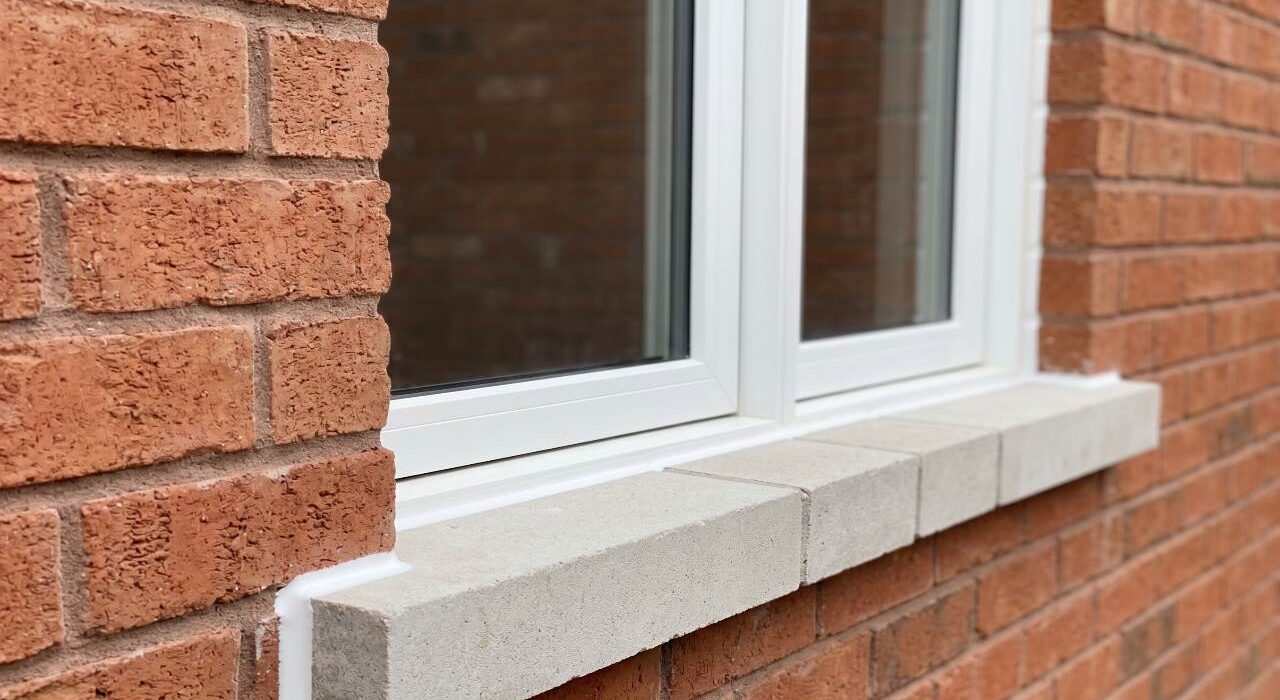
Step outside your local property and examine the multi-material framing seams where your windows, doors, and masonry brickwork meet. Managing the structural weatherproofing of these high-exposure perimeters relies directly on professional Milton exterior caulking installations to shield your home from severe weather damage.
Unshielded properties across Harrison, Scott, and Hawthorne Village face intense Niagara Escarpment wind loads that force driving rain horizontally against your building envelope. When these critical perimeter joints dry out and separate, they form a hidden entry track that lets storm water siphon directly into your wall cavities.
Executing a complete, commercial-grade joint restoration is not a routine cosmetic task; it is a structural necessity for any local building owner. This specialized weatherseal is the only way to keep your home’s envelope completely intact through a decade of intense Ontario freeze-thaw cycling, heavy UV radiation, and relentless escarpment storms.
The Milton Builder Boom: Why 10-Year-Old Subdivisions Are Failing Fast
Milton’s massive suburban expansion throughout the 2010s produced thousands of new subdivisions built rapidly to keep pace with soaring regional housing demands. The primary exterior sealant applied across these original residential tract developments was basic, low-cost builder-grade acrylic latex caulk.
Cheap latex caulk possesses a realistic maximum service life of only five to seven years under moderate climate conditions. On an unshielded Milton home elevation exposed to direct Niagara Escarpment wind loads and intense solar UV radiation, that operational lifespan is cut significantly shorter.
After a decade of harsh seasonal shifting, this low-grade perimeter sealant ceases to operate as a flexible weather barrier. It transforms into a brittle, heavily shrunken, and petrified shell that detaches completely from your window casings and splits across its cross-section.
The structural gaps left behind by this material breakdown are far more severe than simple hairline cosmetic cracks. They operate as wide, unshielded channels cutting straight through your building envelope that every major storm and winter freeze tests directly.
This destructive breakdown pattern remains entirely consistent across massive local housing developments. Because whole neighborhoods were completed in the same calendar year using the exact same materials, thousands of Milton properties are entering their peak sub-wall vulnerability window simultaneously.
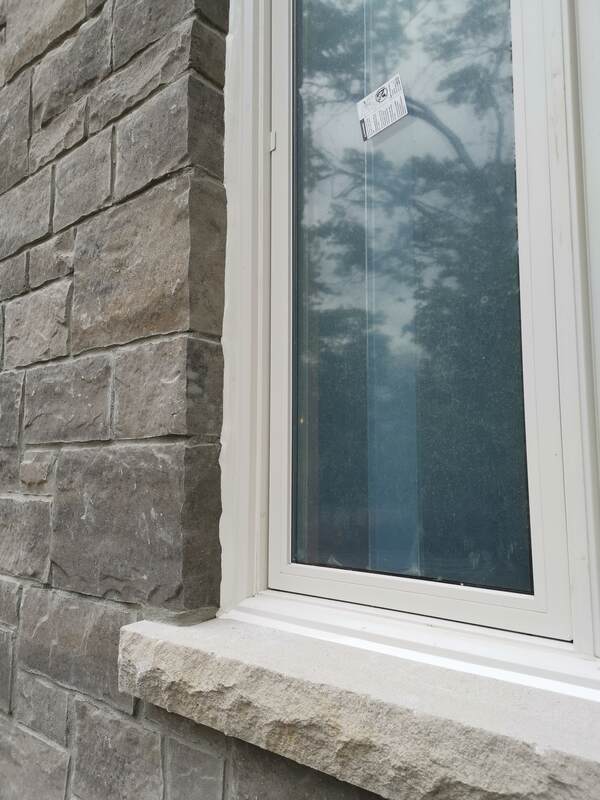
Escarpment Wind Pressures and Structural Cavity Insulation Failure
The geographic proximity of the Niagara Escarpment creates a powerful channeling effect on prevailing westerly winds. This environmental funneling drastically accelerates wind velocity and atmospheric pressure as air currents sweep directly across the Milton townscape.
Homes built on the western and northern perimeters of local developments, particularly within Harrison and Hawthorne Village, experience sustained, high-velocity wind loads. These harsh conditions drive severe storms horizontally against your wall faces rather than dropping rain vertically down them.
A standard builder-grade perimeter sealant that might remain somewhat adequate for a sheltered urban property is entirely insufficient for this high-exposure condition. When a cracked or open perimeter weatherseal is subjected to intense positive wind pressure, rain is physically siphoned through the gap under force rather than entering by standard gravity.
The water infiltration rate under these wind-driven storm conditions is dramatically higher than under still, vertical rainfall. Once past the breached seal, that water enters the dark wall cavity, contacts your fiberglass batt insulation, and completely saturates it.
Saturated building insulation loses its total thermal resistance R-value rating almost entirely the moment it gets damp. This moisture saturation leaves you with a wall assembly that is physically present but thermally useless, forcing your heating system to work continuously against uncontrolled air infiltration rather than a sealed container.
For a detailed analysis of how water entering a failed perimeter joint tracks through hidden wall assemblies to cause interior rot, our article on window frame leaking water covers that moisture migration dynamic in depth. It explains exactly how to catch these underlying building envelope defects before they flood your finished living spaces.
Simultaneously, the negative pressure side of your property, typically the leeward east and south faces during prevailing westerlies, experiences an intense vacuum effect. This atmospheric suction continuously draws your expensive, conditioned interior air outward through the exact same gaps that rain enters from on the windward side.
Your entire home envelope begins leaking in both directions simultaneously, forcing your HVAC systems to work overtime to compensate for the massive structural energy bleed. Taking the time to properly seal these multi-material framing perimeters stops this costly environmental siphon from draining your bank account.
For the strict regulatory standard governing how exterior wall transitions and trim flashing must be detailed to manage these severe pressure differentials, the exterior wall covering and trim flashing requirements published in the International Residential Code provide the technical engineering baseline.
Meeting these code criteria guarantees your home remains structurally protected against intense escarpment storms.
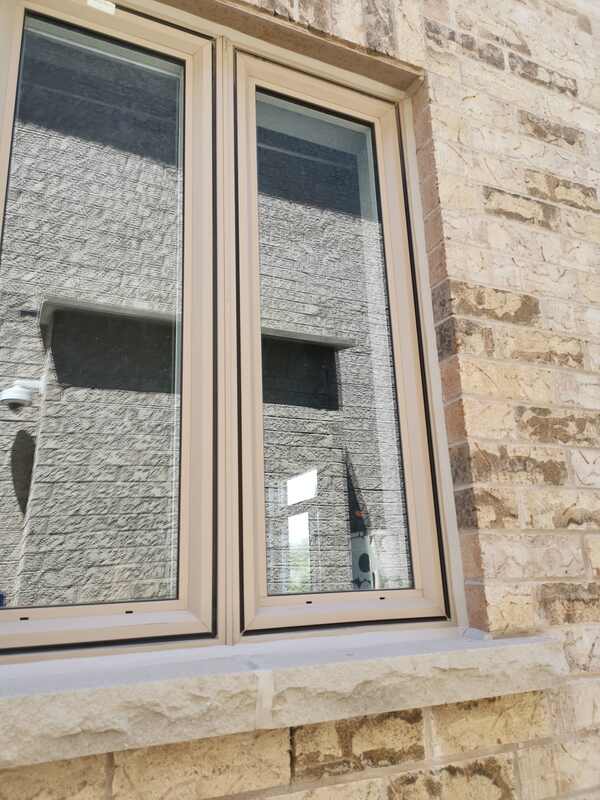
Our Specialized 4-Phase Milton Restoration Workflow
A builder-grade perimeter sealant that has been failing for multiple seasons cannot be remediated by applying new caulk over the top of it. The surface contamination, adhesion failure, and substrate degradation that have accumulated since the original installation require a complete mechanical restoration from bare substrate.
Here is exactly how we approach every Milton exterior joint restoration to secure your building envelope against severe environmental stress. We strip away the old shortcuts to build a permanent, weather-tight barrier that protects your asset from the ground up.
Phase 1: Total Mechanical Breakdown of Failed Subdivision Sealants
Every trace of the original builder-grade sealant is removed completely using oscillating tools, hook scrapers, and detail cutters appropriate to the joint width and substrate combination. No existing material is left in place.
New sealant applied over failed or contaminated compound inherits the adhesion weakness of whatever is underneath it, causing it to fail at that interface rather than bonding to the substrate.
The extraction target is bare brick, vinyl, aluminum, or wood on both faces of every joint before any preparation or new material begins.
Phase 2: Escarpment Pollution Stripping and Porous Masonry Preparation
Milton’s escarpment-adjacent location means exterior wall surfaces accumulate wind-transported organic debris, mineral deposits from seasonal melt runoff, and atmospheric pollution at significantly higher rates than more sheltered urban locations.
After mechanical extraction, joint faces are cleaned with appropriate solvents to remove adhesive residue, surface contamination, and any biological material that has colonized the joint channel during its period of failure.
On the clay brick masonry common across Milton subdivisions, the porous surface of the brick face adjacent to the joint is assessed for efflorescence deposits and moisture-related surface degradation. These chemical and mineral sheets would severely compromise new sealant adhesion if left unaddressed.
Phase 3: Deep Joint Engineering and High-Density Foam Insulation Seating
Builder-grade exterior joints in Milton subdivision homes were typically sealed without a backer rod, meaning the original sealant filled the full cavity depth and bonded to three surfaces rather than two.
The three-sided adhesion failure that results from this installation approach is the primary reason the original sealant has torn through the centre of the bead rather than stretching elastically at the adhesion faces.
Our guide to professional joint preparation covers the complete structural rationale for installing a foam backer rod in every joint that exceeds the optimal sealant depth-to-width ratio.
It explains why the two-point adhesion geometry it creates is the engineering baseline for elongation performance under escarpment-level movement demands.
For the wide perimeter joints common on vinyl window frames in Milton subdivision homes, where thermal movement from escarpment sun exposure is significant, the backer rod specification is matched to the joint width.
This customized depth tracking accommodates the precise anticipated movement amplitude at that elevation without generating stress concentrations.
Phase 4: Applying Climate-Rated Commercial Elastomeric Sealing Barriers
Our installation crew injects a specified commercial-grade polymer deep into the prepped joint track using advanced equipment that maintains uniform bead volume and steady application pressure throughout the full joint run. Every single linear foot of the fresh compound is hand-drawn to a smooth, downward-sloping concave profile with a dedicated architectural tooling trowel.
This mechanical compression drives the heavy polymer deep into the microscopic pores of your cladding, establishing airtight two-point adhesion across both substrate faces and shaping the ideal cross-sectional geometry required for maximum elongation under Milton’s demanding seasonal movement cycle.
The specialized, weather-matched elastomeric compounds we deploy are specifically manufactured to withstand severe structural loading and unshielded environmental shifting without tearing loose.
These commercial-grade structural barriers are engineered to meet strict modern building envelope durability regulations, aligning perfectly with the rigorous testing parameters governed by the National Research Council Canada repository.
This superior structural grading enables the cured rubberized bead to expand and compress seamlessly through Ontario’s freezing winters and blisteringly hot summers without unzipping from your shifting frames or moving masonry substrates.
5 Signs Your Milton Building Envelope Needs Immediate Attention
A thirty-minute walk around your Milton property’s exterior identifies every active failure point before the consequences reach your wall cavity or subfloor. Spotting these structural vulnerabilities early allows you to address the problem before it compromises your home’s thermal efficiency.
Left unsealed, these opening tracks also invite local pests to invade your interior spaces. To see how failing seals turn into insect highways, read our article on pest prevention window caulking to protect your framing [DOW].
1. Visible Stress Cracks and Substrate Delamination
Sealant that is visibly cracked, split down the center, or pulling away from either the window frame or the surrounding brick face is no longer providing weatherproofing at that joint. These opening fissures function as direct funnels, siphoning wind-driven rain past your siding during escarpment storms.
2. Complete Loss of Material Elasticity and Hardened Beads
A sealant bead that has turned hard as stone and cannot be lightly compressed with finger pressure has lost all of its elastomeric properties. This calcified retail compound can no longer flex, meaning it will fracture wide open under the very next significant seasonal thermal movement cycle.
3. Interior Moisture Staining and Active Mold Spores
Interior moisture staining, damp drywall, or unexplained mold near exterior walls confirms that water has been entering your building envelope through a failed perimeter joint. By the time damp rings show up on your drywall, the internal fiberglass insulation has likely been soaked for multiple seasons.
4. Persistent Drafts and Cold Rooms Near Exterior Walls
Cold rooms or persistent drafts adjacent to exterior walls, particularly on your escarpment-facing elevation, indicate uncontrolled air infiltration through open perimeter joints. This ongoing energy bleed forces your HVAC systems to work continuously against a massive structural draft.
5. Original Subdivision Sealants Exceeding a 10-Year Lifespan
Any window or door perimeter sealed during original construction ten or more years ago that has never been professionally replaced is operating far beyond its service life. Even if the old bead appears somewhat intact from across the driveway, its deep molecular adhesion has completely vanished.
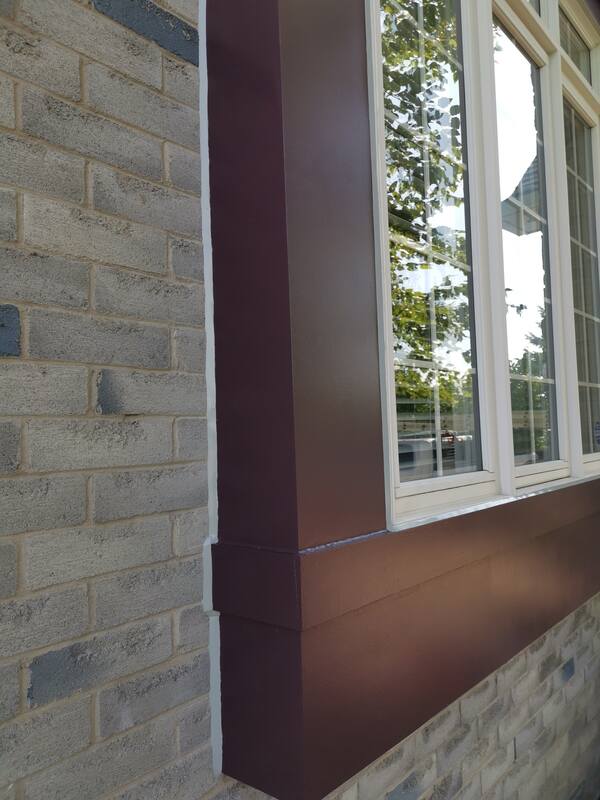
Armor Your Milton Property Before Brutal Niagara Escarpment Storms Strike
Milton’s geographic position subjects local exterior walls to fierce escarpment wind tunneling, relentless winter freeze-thaw shifting, and the systemic breakdown of cheap builder-grade sealants. Proactively resolving these expanding gaps with specialized local weatherstripping completely stops structural moisture intrusion long before freezing winter weather takes hold.
Investing in a premium building envelope restoration represents a microscopic fraction of the massive financial outlays required for structural framing carpentry, internal insulation replacement, or rotted wall cavity remediation. The linear perimeter gap cutting across your facade is incredibly narrow, but the catastrophic structural damage caused by ignoring it is immense.
Coordinate a Specialized Exterior Joint Analysis in Milton
Contact Oleg at Proper Caulking to arrange a comprehensive on-site building envelope assessment for your Milton home or commercial asset today. Our technical field team methodically audits every single window casing, exterior door perimeter, high-altitude roofline soffit line, and foundation-level grade transition across your property.
Our inspectors provide you with an honest, completely transparent summary outlining exactly which perimeter seals are failing and what underlying structural layers are at risk, delivering a detailed project estimate backed entirely by our signature 10-year workmanship warranty.
Taking this preventative maintenance step before the heavy seasonal rainstorms arrive stands as the single most effective way to insulate your exterior utility boundaries.
Protect Your Milton Property From Cold Escarpment Winds and Rot
Don’t let degraded subdivision seals saturate your cavity insulation, spike your seasonal hydro bills, or invite carpenter ants inside. Contact us for a specialized, professional residential or commercial building envelope sealing assessment today.
Proper Caulking – Oakville, Burlington & Milton, Ontario