
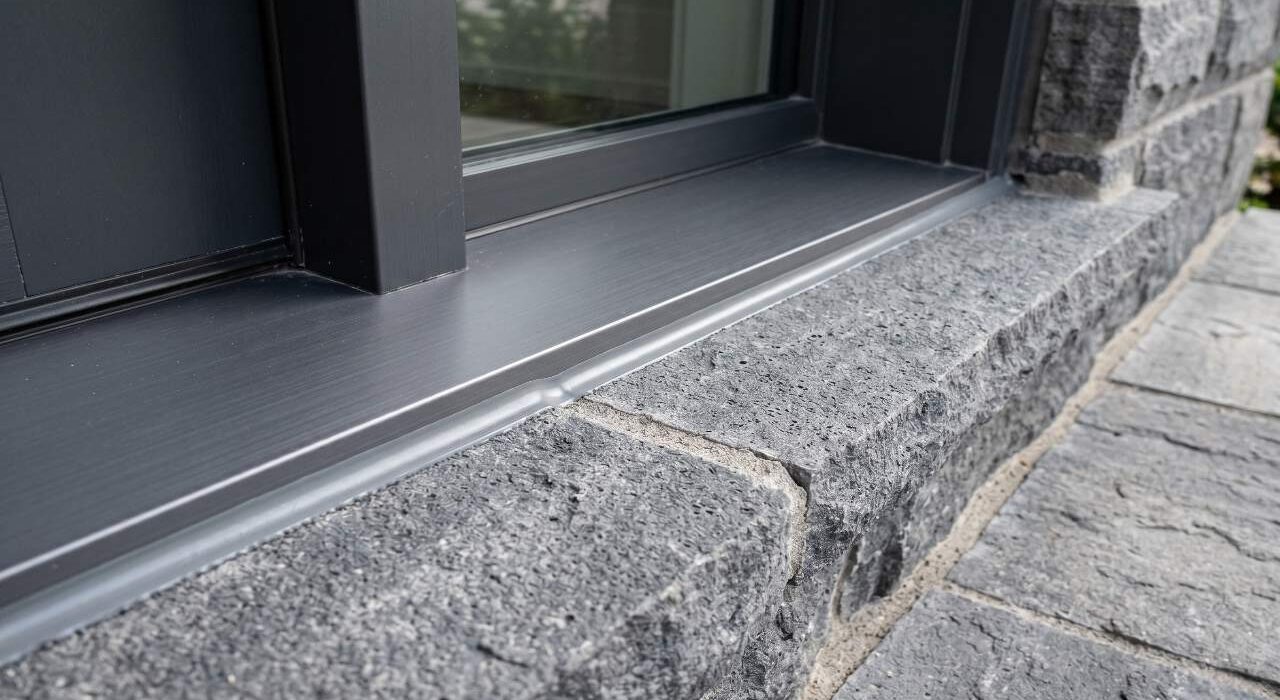
Step up to the front entryway of your home in Oakville, Burlington, or Milton and look down. The horizontal seam where your door threshold meets the exterior sill relies on professional exterior door caulking to operate as your last line of defense against subfloor moisture tracking and icy winter drafts.
This horizontal ground-level perimeter joint is the only structural barrier protecting the underlying sill plate, plywood subfloor, and interior hardwood sitting just centimeters behind it. When this critical high-traffic seam dries out and splits open, it forms a hidden entry tunnel that lets heavy rain funnel directly beneath your entryway floors.
Most local homeowners walk over this critical threshold dozens of times a day without a second thought. However, the progressive structural damage that this joint is failing to prevent is happening silently right underneath their feet.
Threshold Physics: Why Foot Traffic Destroys Rigid Sealants
A door threshold is not a static joint like a window frame perimeter. Every single time someone steps through your entryway, the horizontal sill plate flexes slightly under that physical load.
Every time your door slams or closes firmly, the surrounding frame absorbs a kinetic shockwave straight through the jamb and into the threshold seam. This combination of physical compression from heavy foot traffic and repetitive movement creates a cyclic shear stress that high-elevation static joints never experience.
Standard retail acrylic and latex caulks are entirely too rigid once cured. They feature weak elongation ratings in the ten to twenty percent range and possess no meaningful resistance to continuous physical shear loading.
Under this intense stress pattern, cheap retail caulk applied at a door threshold begins to shear and crack apart within one to two seasons. This rapid breakdown occurs regardless of how carefully or neatly the consumer product was squeezed into the gap.
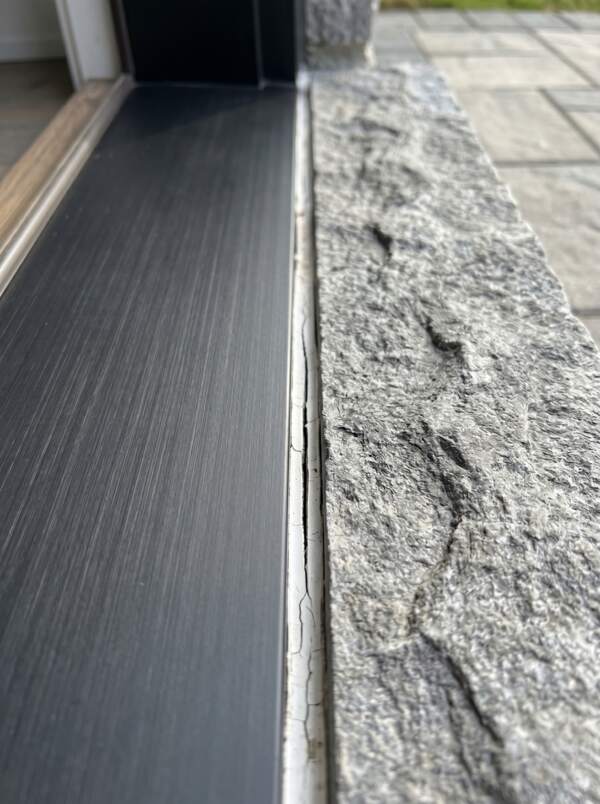
The cracks start small, forming tiny micro-gaps that are almost invisible from a standing position. They run along the center of the bead or pull away at the adhesion face directly against the sill metal or stone facade.
By the time these fractures are wide enough to be visible at ground level, water has already been finding its way through them for multiple rain seasons.
To see how horizontal ground seams handle intense climate movements compared to foot strikes, you can see how we seal dynamic pool deck caulking stone coping joints to block seasonal water tracking
The Hidden Sub-Floor Nightmare: Rotted Sill Plates and Warped Hardwood
Rainwater runs down the face of every exterior entry door during a local storm event. At the base of the frame, that broad runoff collects instantly at the horizontal threshold seam.
If the perimeter sealant is cracked, open, or debonded from the sill material, the water cannot drain away. Instead, it follows the path of least resistance inward, slipping straight beneath your entryway floors.
The structural timber sill plate sitting directly beneath the door frame absorbs this moisture continuously across every passing rain event. Sustained saturation accelerates wood cell breakdown, rotting out the primary load-bearing lumber member over multiple seasons.
Beyond the sill plate, the plywood subfloor extending inward from your entrance absorbs the pooling water that the frame fails to stop. Subfloors that cycle between wet and dry states repeatedly will quickly delaminate, soften, and lose their structural bearing capacity.
The interior hardwood flooring installed over that subfloor operates as your first visible indicator of a major underlying moisture problem. Hardwood planks adjacent to the entry door that buckle upward at the edges, cup across their face, or develop gaps are responding to a severe moisture differential.
By the time interior hardwood is cupping near a front entry, the subfloor below has typically been taking moisture for two or more seasons. This structural decay tracks downward past the sill plate to cause basement ceiling mold and structural concrete cracks, which we detail in our Oakville foundation caulking concrete guide.
This moisture migration pattern is directly comparable to what we describe in our article on window frame leaking water structures. Water entering a perimeter joint at one location travels silently through the surrounding assembly and emerges as visible damage at a lower or interior point.
For the regulatory framework governing sill flashing and threshold moisture protection at exterior door assemblies, proper door detailing must be strictly enforced.
Meeting the strict exterior wall covering rules published inside the official International Residential Code directory defines the structural compliance baseline for proper door threshold detailing.
The Surgical Sealing Process for Entryway Thresholds and Sills
Smearing fresh caulk over a failed threshold sealant produces a result that will fail before the next winter. The threshold surface is heavily contaminated with tracked-in grit, road salt, footwear hydrocarbon residue, and degraded old adhesives.
New sealant bonded over this contamination binds directly to the debris layer rather than the clean building substrate. A permanent threshold weatherseal demands a pristine breakout down to bare, clean material on both bonding faces.
Phase 1: Shaving Away Traffic-Fatigued Sealants and Sill Contaminants
All existing sealant along the full threshold perimeter is removed mechanically using detail scrapers, manual picking tools, and thin-blade cutters. At an entryway door threshold, the extraction target is bare metal sill plate or wood trim material on the interior face and bare concrete, stone, or masonry on the exterior face.
Traffic-fatigued sealant at a door threshold is often compressed, deformed, and deeply embedded with abrasive street grit. Because of this structural compaction, a complete extraction takes significantly longer than a standard vertical frame joint and requires highly controlled hand tools to prevent scratching premium metal finishes or threshold wraps.
Phase 2: Removing Tracked Dirt, Salts, and Hydrocarbon Grime
After mechanical extraction, both bonding faces are cleaned with specialized industrial solvents to completely strip away residual adhesive and sub-floor dirt. Concrete and masonry surfaces at entry grade levels accumulate a thick layer of tracking grease, footwear grime, and chemical deposits that tools alone cannot clear.
Road salt accumulation is a severe architectural concern at entry thresholds across the Halton Region. Left untreated, white sodium chloride residue chemically destroys a fresh sealant’s adhesion chemistry, causing rapid delamination. The structural substrate must be confirmed 100% neutralized, clean, and dry before any new weatherproofing material is applied.
Phase 3: Installing Closed-Cell Backing Foam for Deep Entryway Cavities
Where the gap between the door sill and the exterior concrete step or landing slab is wide, a closed-cell backer rod is packed to the correct depth. This structural foam packing controls the sealant’s depth-to-width ratio and establishes the precise two-point adhesion geometry required for ultimate elongation.
As detailed in our guide to professional joint preparation, creating a flexible hourglass cross-section is the fundamental requirement for joint survival under heavy cyclic physical loading. At a door threshold specifically, closed-cell backing foam is completely mandatory for any sub-frame gap exceeding approximately eight millimeters in depth.
The severe physical traffic loading that a ground entryway joint experiences means that an un-backed, overfilled joint will tear apart under the sheer compression of a single heavy foot strike.
Phase 4: Tooling Heavy-Duty Polyurethane Beads for Foot-Traffic Durability
Our technician injects a traffic-rated, heavy-bodied industrial compound across the full perimeter of your lower entry line using specialized high-pressure delivery systems. The freshly applied polymer track is hand-pressed immediately into a smooth concave profile with an architectural tooling trowel.
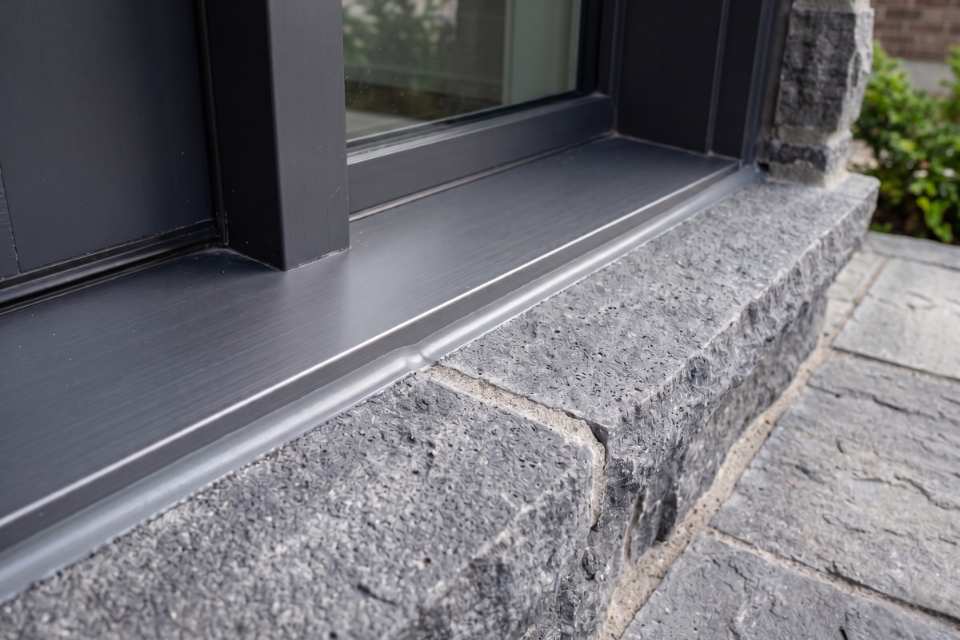
This mechanical compression drives the thick sealant deep into the microscopic pores of the stone sill and frame casing. The tooled downward slope forms a continuous watershed barrier that forces heavy storm sheets to slide off the threshold instead of siphoning backward into your wood framing lanes.
The specialized, heavy-gauge polyurethanes we deploy to seal entryways are formulated to withstand relentless physical friction and impact loading without tearing loose.
These commercial elastomeric compounds are engineered to meet strict modern building envelope durability rules, aligning perfectly with the structural material performance guidelines published in the official Codes Canada publications directory.
This superior structural grading enables the cured rubberized bead to expand and compress seamlessly during intense Ontario freeze-thaw drops while surviving decades of heavy step impact.
Tooling this flexible compound along your high-stress threshold transitions forms a permanent, shock-absorbing barrier that easily handles the heaviest tracking loads streaming down your exterior entryway.
5 Signs Your Entry Threshold Needs Immediate Attention
A close inspection of every exterior door threshold on your home takes ten minutes and identifies every active failure before the consequences reach the subfloor.
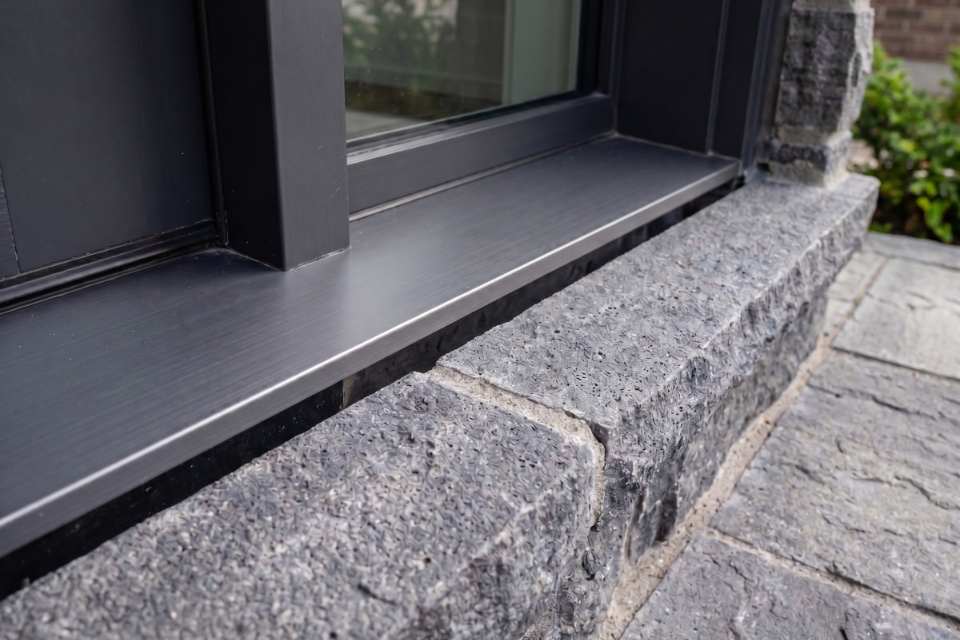
Sealant that is cracked, compressed, or visibly separated from either the sill face or the exterior step surface is no longer providing moisture protection at that threshold.
A bead that is flat, convex, or level with the surrounding surface rather than slightly concave will pool water at the joint face rather than shedding it outward.
Hardwood floors adjacent to an entry door that are showing cupping, edge-raising, or gap formation are indicating subfloor moisture that has been accumulating through the threshold for multiple seasons.
Visible rust staining on any metal threshold trim or door hardware at ground level confirms that moisture has been contacting those components repeatedly from the joint direction.
Any entry door threshold that has not been professionally assessed or resealed in more than seven years is operating beyond the expected service life of its original sealant regardless of surface appearance.
Defend Your Entryway Sills Before Subfloor Wood Rot Takes Hold
A cracked or separated door threshold weatherseal allows cascading storm water to infiltrate your main structural sill plate, your plywood subfloor layers, and your interior hardwood flooring with every single rain event.
This localized grade-level water tracking builds silently beneath your entrance mats through multiple seasonal storm cycles until hidden timber decay destroys your floor framing.
Deploying a high-movement, traffic-rated polymer barrier that shields your subfloor assembly costs a tiny fraction of the expensive framing reconstruction, structural sill repair, or mold remediation that follows from leaving these joints open.
The threshold perimeter seam is incredibly small, but the complex, multi-layered structural floor layout beneath it is not.
Coordinate an Expert On-Site Entryway and Threshold Assessment
Contact Oleg at Proper Caulking to arrange a comprehensive on-site entryway and threshold joint structural analysis for your Oakville, Burlington, or Milton property today. Our experienced technical field crew methodically checks every single main entry frame, sliding glass patio door, and low-profile French door transition across your entire exterior footprint.
Our technicians deliver a precise, line-item summary detailing where your threshold barriers are breaking down and which framing pockets are exposed to water tracking. We completely eliminate future risk by securing our specialized exterior weatherproofing applications with a comprehensive 10-year trade warranty on all labor.
Deploying this custom perimeter shield early in the spring weather window is the most reliable way to insulate your exterior entry connections before peak storm cycles hit the Halton region.
If you want to check out how our team seals tricky masonry transitions, exterior cladding boards, or horizontal structural ledges, take a look at our full menu of exterior sealing services built to eliminate drafts throughout the Halton region.
Protect Your Subfloors and Entryways From Costly Threshold Leaks
Don’t let degraded entryway seals rot your plywood sill plates, warp your premium interior hardwood floors, or create freezing drafts under your doors. Contact us for a specialized, professional door threshold joint assessment today.
Proper Caulking – Oakville, Burlington & Milton, Ontario