
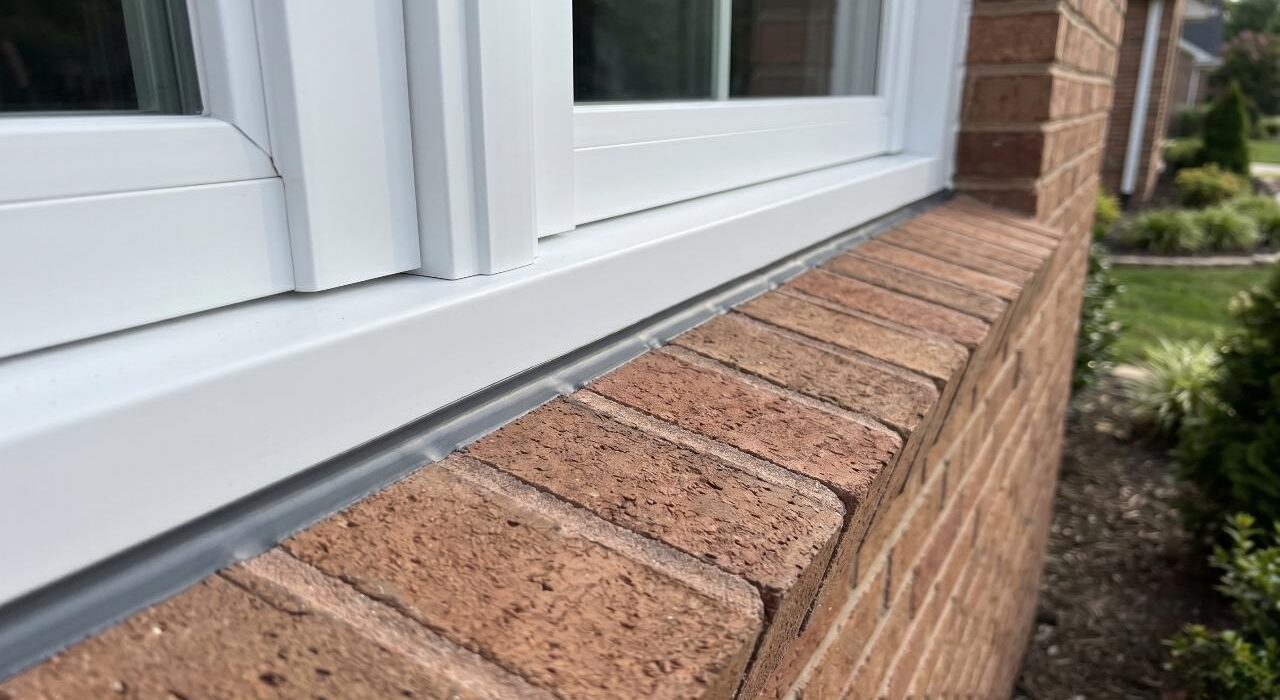
Severe wind-driven rainstorms cause intense water sheeting across your home’s exposed glass panes. This heavy runoff drains straight downward, making specialized brick window sill caulking your most critical line of defense.
Professional weatherproofing seals the horizontal gap where your bottom vinyl frame meets the sloped masonry ledge. Those unshielded lower boundaries are the direct source of hidden water tracking, sub-wall insulation degradation, and freezing crawlspace drafts.
Leaving these angled rowlock mortar joints wide open through multiple seasonal freeze-thaw cycles allows pooling rain to funnel straight into your lower structural wall framework. I am Oleg, owner of Proper Caulking, and I have spent years closing these overlooked masonry gaps across Oakville, Burlington, and Milton.
The Lower Ledge Vulnerability: Angled Rowlocks and Split Seals
The sloped masonry sill positioned directly beneath an exterior window assembly bears a punishing hydrostatic water load every single time a rainstorm hits your facade.
While your vertical brick walls shed water downward relatively quickly, this low-profile horizontal ledge actively collects and slows down cascading runoff before gravity can push it away.
This continuous pooling creates a high-pressure moisture shelf that tests the integrity of your perimeter seals during every local storm cycle.
Because thousands of gallons of water sheet off your slick glass panes during a heavy downpour, this exact structural intersection demands an entirely different weatherproofing approach than standard vertical masonry lines.
The Mechanics of the Angled Rowlock Course
An architectural rowlock brick course is engineered specifically to deflect this heavy, downward-traveling moisture volume away from your home’s main framing.
In this specialized layout configuration, individual clay bricks are laid flat on their narrow edges at a pronounced, forward-sloping angle designed to slide cascading sheets of rain outward and away from the vinyl window frame.
While this forward pitch works beautifully to protect your building envelope when the masonry is brand new, the narrow mortar joints running between each angled brick represent a severe structural vulnerability.
These thin vertical mortar channels sit completely unshielded from the elements, leaving them directly exposed to relentless pooling and intense solar baking throughout the year.
Why Winter Freezing Temperatures Split Ledge Mortar Joints
Intense winter freeze-thaw cycles across Oakville and Burlington are incredibly destructive to these specialized horizontal rowlock joints. When cold seasonal rains hit your ledge, standing water gets trapped inside the microscopic hairline cracks cutting across the brittle, aging mortar lines.
As temperatures plunge overnight below the freezing mark, that absorbed moisture instantly turns to ice, expanding by roughly nine percent and fracturing the internal bond of the mortar joint from the inside out.
Once these vertical lanes split completely open, the angled brick ledge stops shedding water and starts acting like an active sub-surface drainage funnel.
The Catastrophic Reality of Ignoring Sub-Window Cracks
Ignoring deteriorating brick window sill mortar joints or cracked perimeter window frame seals is a recipe for expensive structural failure.
These unshielded applications directly violate the code-compliant masonry water-management benchmarks developed inside the official Canada Masonry Design Centre codes and standards database.
Siphoning rainwater tracks straight through these broken channels, bypassing your exterior brick veneer, your drainage cavity, and your primary building wrap entirely.
If you are noticing similar horizontal tracking lower down your facade walls, you can review our master structural guide on water table flashing caulking to inspect mid-wall masonry shelf breakdowns.
This unshielded water dumps directly onto the raw, load-bearing wood framing studs and multi-ply sub-sill timbers hidden right beneath your window frame.
Because this structural rot occurs silently deep inside the wall assembly, the structural decay spreads for multiple seasons before a ground-level inspection ever reveals the problem.
Our Specialized 4-Phase Brick Sill Waterproofing System
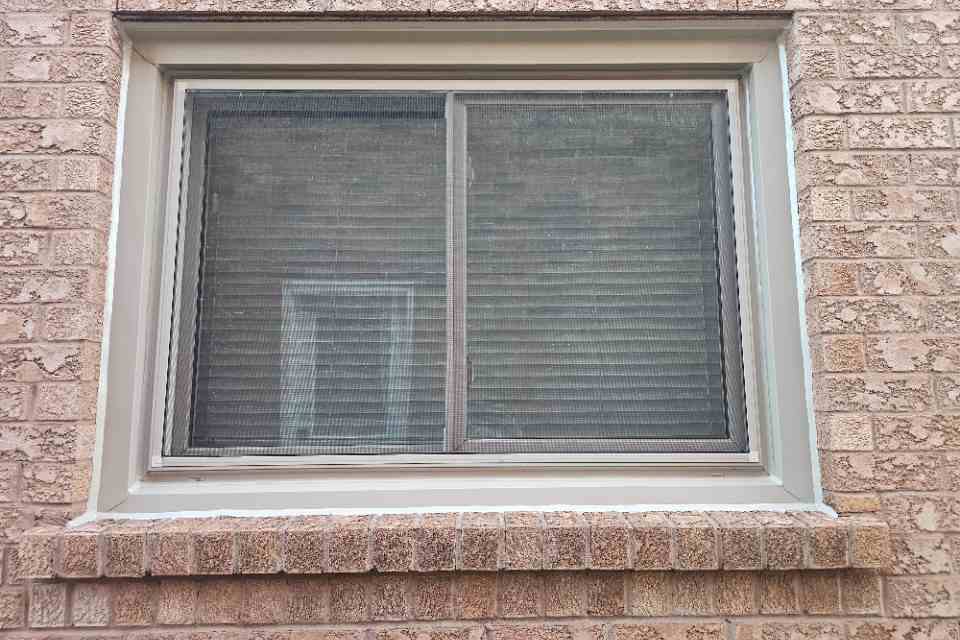
Sealing an aging brick window sill correctly requires addressing both the horizontal frame track and the angled mortar lines running beneath it as one integrated architectural system.
Smearing a single layer of retail caulking over the visible frame joint while ignoring the rowlock mortar cracks leaves your primary sub-surface water entry points completely open.
True environmental protection demands a highly systematic approach that treats the entire masonry ledge as a continuous, watertight defense line.
Failing to address both paths simultaneously guarantees that cascading winter rain will continue to track beneath your frame through adjacent masonry cracks.
Phase 1: Excavating the Bottom Frame Track
Our technical field crew completely extracts all failed builder-grade caulk, decaying organic moss, and loose mortar crumbs from beneath the lower window frame casing. This deep extraction must reach the full depth of the original channel to expose clean, bare brick and solid vinyl on both bonding faces.
Leaving any residual oil, dust, or old store-bought residue inside the track completely destroys the molecular bonding capabilities of your new material.
Stripping the joint down to a raw, unblemished structural foundation is the only way to ensure the upcoming commercial polymer establishes a permanent weatherseal.
Phase 2: Stabilizing the Angled Rowlock Mortar Lines
We individually audit every single vertical mortar joint running between your sloped sill bricks to hunt down hairline cracks, crumbling filler, or hollow sections. Every compromised masonry lane is completely routed out using specialized hand chisels and detail scrapers before a high-movement, texturized polymer is applied.
Sealing these vertical lines restores the active water-shedding function the rowlock course was originally built to provide. This critical stabilization step ensures that heavy sheets of rainwater sheeting off your glass panes slide smoothly off the ledge instead of sinking into your foundation walls.
Phase 3: Inserting the Closed-Cell Cushion
Where the horizontal gap beneath your vinyl frame is deep enough, we compress a high-density, closed-cell backing foam strip deep into the cavity track. We enforce a strict 3:2 width-to-depth structural ratio across all horizontal multi-material transition lines to handle conflicting expansion rates cleanly.
For a standard 15mm horizontal gap running between your vinyl casing and your masonry ledge, our technical field crews seat backing foam ropes to allow an exact 10mm tool center depth. Setting this flexible two-point configuration is absolutely mandatory because sun-exposed brick sills absorb intense solar radiation and experience extreme thermal movement throughout the year.
Providing this underlying depth control allows the finalized bead to expand and contract seamlessly without tearing loose from the substrates. As detailed in our comprehensive backer rod window sealing guide, maintaining this specific hourglass cross-section geometry is mandatory to handle intense material expansion.
Phase 4: Tooling the Elastomeric Watershed Collar
Our installers inject a specified, heavy-bodied commercial polymer across the entire horizontal frame track using professional high-pressure applicators. This intensive application ensures completely consistent material volume and total adhesion against both the vinyl window frame and the brick sill surface.
The fresh bead is instantly hand-tooled into a crisp, concave profile using a dedicated architectural tooling trowel to compress the material deep into the masonry pores.
This sharp downward pitch forces pooling stormwater to shed cleanly away from your wall cavity, while aligning perfectly with the rigorous exterior window safety parameters governed by the official National Research Council Publications archive.
Prevent Costly Sub-Sill Timber Decay and Interior Mold Spores
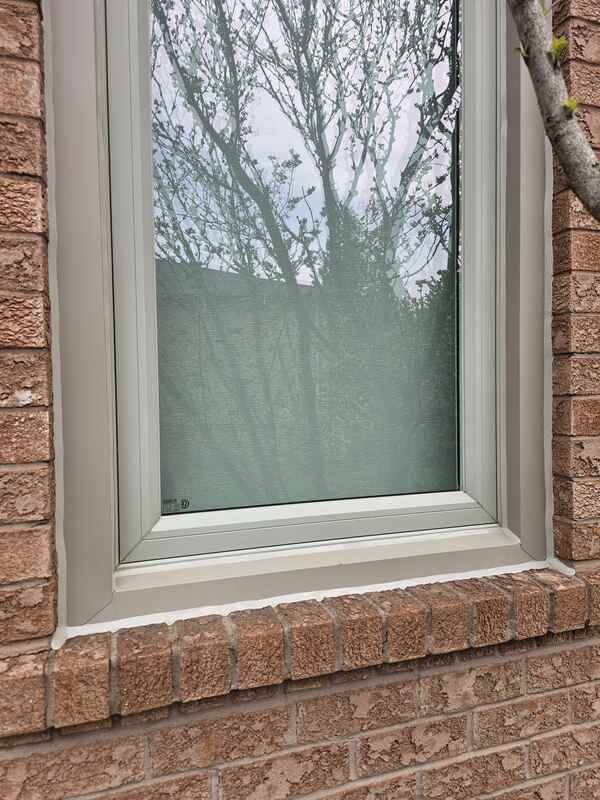
Leaving a cracked brick sill unsealed lets water reach your sub-window framing repeatedly, season after season, with no visible warning. This slow, hidden water tracking saturates the internal wood framing long before interior drywall begins bubbling or toxic mold spores take hold.
Once the moisture breaks through your indoor paint or warps your window tracks, the hidden decay is already advanced. Replacing rotted sub-window framing studs and ruined structural insulation afterward costs thousands more than a single preventative seal would have cost upfront.
Secure Your Lower Window Masonry Boundaries Today
Coordinate a zero-obligation on-site visual assessment with Oleg at Proper Caulking before the next seasonal heavy downpours arrive. Our technical field division carefully evaluates your sloped rowlock bricks and bottom frame joints across Oakville, Burlington, and Milton to catch failures early.
Every premium brick sill installation we execute stands backed entirely by our 10-year workmanship warranty against material peeling.
If you want to check out how our field crews seal tricky masonry transitions, concrete steps, or horizontal structural ledges, take a look at our full menu of exterior sealing services built to eliminate drafts throughout the Halton region.
Booking your evaluation early in the spring ensures your protective silicone installation is complete and fully cured before peak seasonal weather cycles arrive. Protect your lower structural framing paths and lower your winter energy bills by arranging your home evaluation before the heavy seasonal rainstorms arrive.
Stop Sub-Window Water Tracking and Structural Rot
Don’t let split rowlock mortar joints or failed frame seals funnel rain straight into your lower wall timbers. Contact us for a specialized, professional brick window sill assessment today.
Proper Caulking – Oakville, Burlington & Milton, Ontario
Frequently Asked Questions: Brick Window Sill Caulking
Why is the brick ledge or rowlock course directly underneath my window cracking?
The horizontal brick sills beneath your windows crack frequently because they take the full force of sun exposure and seasonal temperature shifts. This intense weather cycle causes the vinyl window frame and the rigid clay bricks to expand and shrink at completely different speeds, tearing cheap retail caulking and brittle mortar beds apart over time.
Can rainwater leak straight through cracked brick sill mortar joints?
Yes, rain sheeting off your window glass pools heavily on the horizontal ledge and will sink directly into any broken vertical mortar lines. Once water passes these exterior brick joints, it completely bypasses your home’s protective outer wrap, silently soaking into the raw wood framing studs and structural sub-sill timbers hidden behind the wall
What type of sealant is used to seal a vinyl window frame to a brick masonry ledge?
Sealing this horizontal multi-material transition demands a commercial-grade, neutral-cure architectural polymer with high elastic elongation thresholds. Standard store-bought latex caulk will snap and split within months, whereas industrial-grade polymers maintain a flexible, watertight bond across completely different substrates like smooth vinyl and porous clay brick.
How do I know if the structural framing hidden beneath my brick window sill is rotting?
Because sub-sill timber rot occurs deep inside the wall cavity, early warning signs manifest indoors as bubbling paint, fine drywall cracks, or dark mold patches right below your interior window trim. If your window begins sticking or feels unusually stiff when you try to slide it open or closed, the load-bearing wood framework below it may already be swollen with trapped water tracking.