
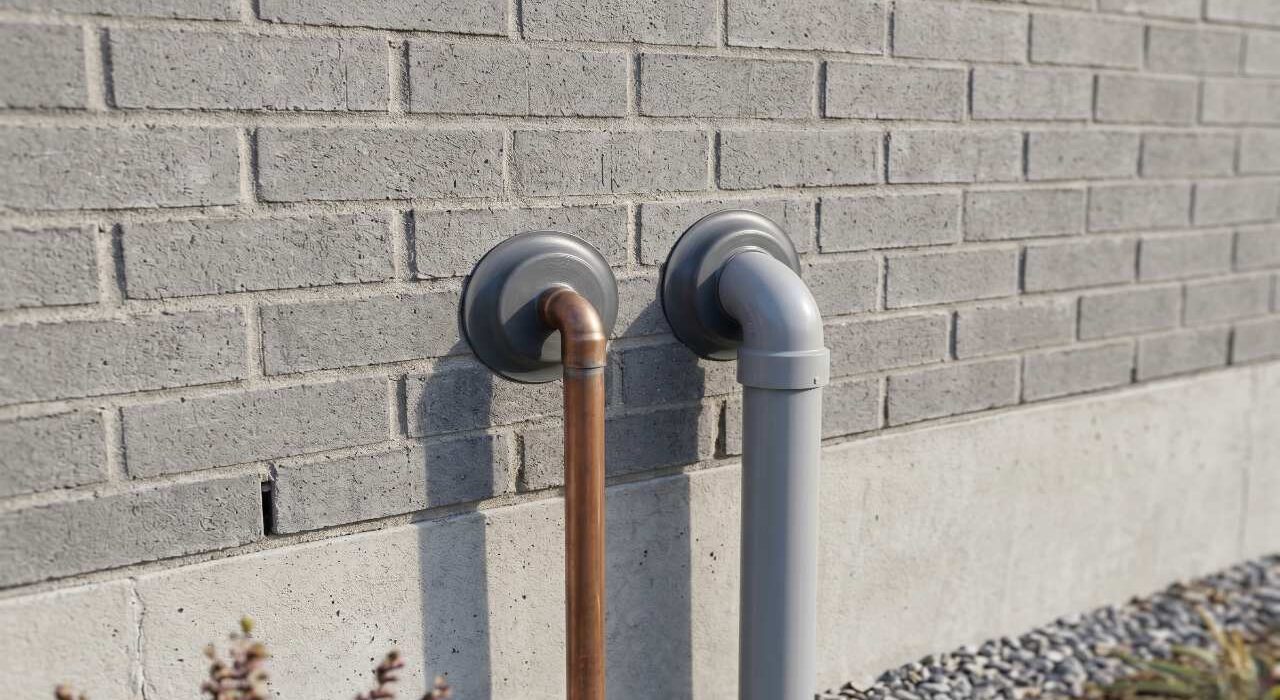
Spring and summer temperature swings cause intense thermal movement across your home’s outside cladding panels. This shifting explains why standard seals split, making specialized exterior utility caulking the most critical step required to protect oversized holes drilled by HVAC, internet, and electrical installers.
Those unshielded gaps are the direct source of freezing basement drafts, condensation, and hidden water tracking. Leaving these mechanical breaches wide open through multiple seasonal storm cycles allows driving rain to seep straight into your wall cavity framework.
I am Oleg, owner of Proper Caulking, and I have spent years closing these overlooked foundational gaps across Oakville, Burlington, and Milton. The difference between our multi-layered process and a cheap spray-foam fix from a hardware store is the difference between a permanent barrier and a temporary patch that fails within one season.
⏱️ Utility Sealing Standard
The smartest way to seal exterior mechanical utility lines is by tightly packing the raw wall cavity with compressed stainless steel wire mesh to establish an unchewable physical defense barrier that mice cannot breach. Next, installers must seat closed-cell backer rods to maintain a strict 3:2 width-to-depth joint geometry ratio surrounding the piping profile. The face must then be tool-finished with heavy-bodied, neutral-cure commercial silicones (such as DOWSIL 795) to absorb continuous equipment vibrations without unzipping from porous foundation concrete.
The Core Vulnerabilities: What Lines Are Open on Your Home?
Trade apprentices working on strict installation deadlines prioritize getting their mechanical lines through your wall as quickly as possible. Closing the structural gap around that fresh penetration is rarely their next step, leaving your property envelope immediately exposed to environmental stress.
The unfortunate result is a home exterior riddled with multiple oversized, sloppily drilled openings that have never been properly sealed to modern building science standards. Here are the four highest-risk penetration zones found on a standard Halton Region residential property that require specialized structural remediation.
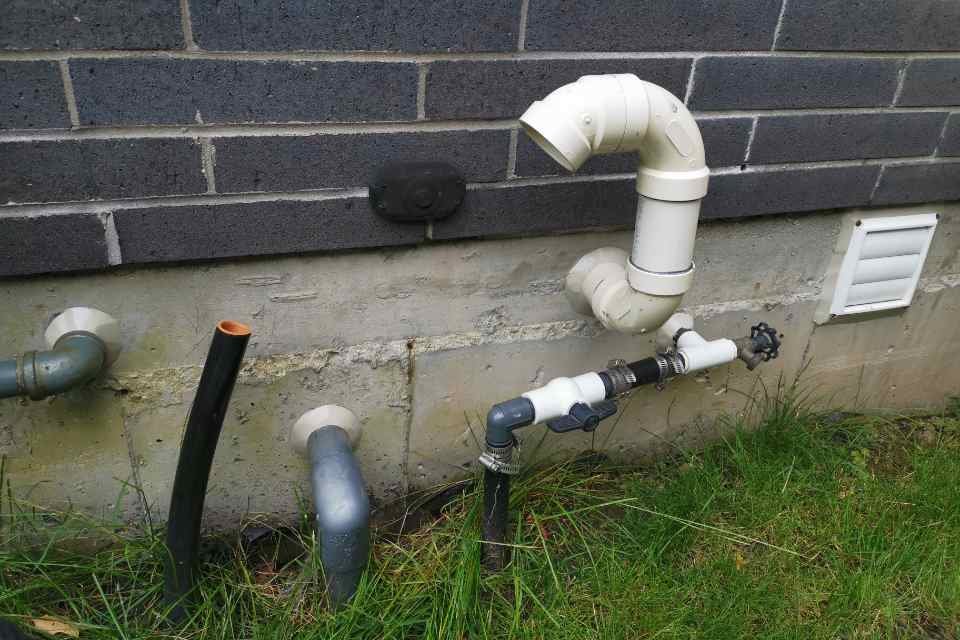
1. AC Refrigerant Lines and Insulation Bundles
Central air conditioning refrigerant line sets must run through large-diameter holes drilled straight through your foundation masonry or exterior siding panels. These copper pipes are typically wrapped in black foam insulation sleeves that naturally compress, warp, and degrade under intense solar radiation and seasonal weather cycles.
The resulting void between the shrinking foam bundle and the surrounding brick or siding stays wide open to freezing winter air, driving moisture, and destructive pest entry for the life of the system. Failing to seal this massive foundation breach allows heavy outdoor humidity to siphon directly into your basement or crawlspace framing cavities.
2. Black Internet, Fibre-Optic, and Television Cables
Telecom and internet service installers routinely puncture exterior walls using standard high-speed drill bits with absolutely no protective sleeve or structural sealing requirements. They complete their hookup and move on to the next appointment, leaving your delicate interior wall cavities completely defenseless against the elements.
Over time, multiple utility lines are often crammed through that same unshielded hole, and the remaining gap is frequently left open or filled with a small bead of cheap retail latex.
Our comprehensive guide on exterior caulking painting prep demonstrates exactly why these store-bought water-based pastes crack, separate, and fail under regional environmental loads within a matter of months.
3. Grey PVC and Metal Electrical Conduit Pipes
Electrical conduit penetrations through exterior masonry have become incredibly common on local properties undergoing sub-panel upgrades, backup generator connections, or modern EV charger installations. The unshielded annular space surrounding these rigid grey PVC or metal pipes represents a direct air and moisture highway cutting straight into your main wall framework.
Completely closing this circular gap demands an advanced, commercial-grade polymer that can maintain a flawless adhesive bond across completely different material types simultaneously.
To explore how our field technicians select advanced architectural compounds to handle these complex multi-material intersections, you can read our specialized guide on exterior transition caulking to analyze our structural substrate standards.
4. Outdoor Brass Hose Spigots and Hose Bibbs
Standard exterior hose bibb installations require a deep pipe penetration that cuts entirely through your home’s full multi-layered wall assembly. While the exterior metal mounting flange provides a clean visual cover over the hole perimeter from the outside, it does absolutely nothing to seal the raw structural void hidden directly behind it.
Heavy rainwater running down the exterior face of your brick or siding easily creeps past the unsealed flange plate, finding the open gap surrounding the brass spigot body. The water then follows gravity straight inward along the smooth pipe, saturating your interior insulation layers and causing silent framing rot long before a visible water stain ever breaks through your indoor drywall.
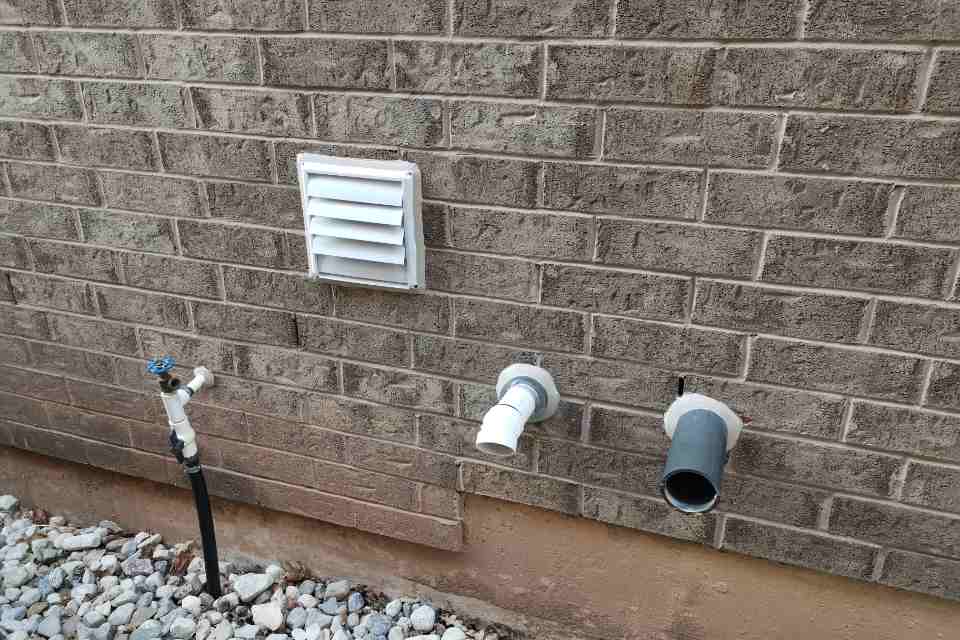
Our Specialized 4-Phase Pest-Proof and Weatherproof Workflow
Spraying standard expanding foam into a raw wall opening represents the most common response to a messy utility penetration hole. However, it is also the single least effective defense against local rodents, because field mice routinely chew through soft expanding foam in a matter of minutes.
Standard hardware store foam fails to provide any true physical exclusion against persistent pest species looking for autumn warmth. Building a durable, pest-proof utility penetration seal demands a highly specialized, multi-layered structural system rather than a single store-bought product.
Phase 1: Deep Cavity Clearing and Substrate Prep
Our technical field crew completely extracts all existing foam, decaying latex, and trapped outdoor debris from the annular space surrounding your utility lines. This deep manual clearing is only complete when bare brick, raw stone, or unblemished siding faces are exposed alongside the mechanical lines for the full depth accessible from your exterior face.
Phase 2: Compressing the Rodent-Proof Steel Foundation
Once the utility cavity is cleared out, we tightly pack the internal void space around your lines with heavy industrial stainless steel mesh or copper wire fabric. This specialized metal framework is compressed deep into the annular gap to establish an unchewable physical defense barrier that no retail foam product can replicate.
Phase 3: Seating Closed-Cell Depth Cushions
A high-density closed-cell backer rod is compressed directly over the steel mesh foundation layer to set the exact material depth required for your final sealant application. This crucial padding sets the correct geometric parameters to prevent three-sided adhesion failure within the cured sealant collar.
We enforce a strict 3:2 width-to-depth structural ratio across all high-stress multi-material joints to handle conflicting expansion rates cleanly. For a standard 15mm horizontal annular gap surrounding a grey PVC conduit, our technical crews seat closed-cell backing ropes to allow an exact 10mm tool center depth.
It also delivers the structural compression resistance needed to maintain a secure backing position against vibrating conduit and refrigerant lines. These moving lines transmit heavy mechanical movement from connected household equipment directly into your wall framework.
As outlined in our comprehensive backer rod window sealing guide, establishing this precise two-point configuration is the fundamental requirement for joint elongation performance under continuous stress. This advanced shape allows the rubber collar to survive intense multi-axis thermal movement without tearing away from the edge faces.
Phase 4: Tooling the Elastomeric Collar Seal
Our installers inject a specialized, heavy-bodied polymer collar around the entire circumference of the utility line [INDEX]. We utilize advanced high-pressure application systems to ensure a perfectly consistent material depth that completely fills the remaining cavity space.
Our technical field teams completely eliminate line separation surrounding vibrating mechanical penetrations by tool-finishing a thick structural ring of elite, commercial-grade architectural silicones like DOWSIL 795 Building Sealant or Sikasil-WS 295.
This thick chemical barrier bonds simultaneously to the shifting utility pipes and the surrounding masonry walls. These specific material pairings align directly with the high-movement durability profiles managed within the official National Research Council Canada Construction Research standards repository.
The fresh compound is immediately drawn with a custom detailing trowel into a smooth, seamless concave ring that forces heavy stormwater sheets to slide downward and shed cleanly away from your interior framing layers.
Prevent Costly Pest Remediations and Basement Water Tracking
An unseen mouse colony tracing its way into your home through an open conduit hole costs thousands in emergency extermination, sub-wall insulation extraction, and skeletal framing cleanup. Taking action early completely stops these destructive rodent families from nesting deep inside your heated drywall systems during late autumn weather shifts.
Similarly, a degraded hose bibb flange seal that admits rainwater behind an exterior water tap rapidly turns into an expensive rim joist remediation project rather than a basic maintenance visit. Squeezing a specialized, elastomeric polymer collar around these low-profile openings completely protects your sub-floor timbers from catastrophic dry rot before freezing winter temperatures split your masonry joints apart.
Secure Your Lower Building Envelope Boundaries Today
Coordinate a zero-obligation on-site visual assessment with Oleg at Proper Caulking to identify every single open mechanical penetration across your Oakville, Burlington, or Milton property today. Our experienced technical field division carefully checks every single internet wire hookup, air conditioning line set, and grey electrical pipe across your building envelope.
Every premium service we execute stands backed entirely by our signature 10-year workmanship warranty against material peeling or adhesive failure. Protect your lower structural framing paths and lower your winter energy bills by dropping a line to our local dispatch team to arrange your home evaluation before the heavy seasonal rainstorms arrive.
Frequently Asked Questions: Exterior Utility Caulking
Why does caulk crack around exterior utility pipes?
Exterior caulking cracks around mechanical penetrations due to intense multi-material thermal expansion and continuous equipment vibration. Standard metal conduits heat up and cool down at completely different rates than the surrounding clay brick or concrete foundation walls.
Can mice chew through standard exterior expanding foam?
Yes, field mice can easily chew through standard polyurethane expanding spray foam in less than two minutes. True pest exclusion requires packing the wall cavity with unchewable stainless steel wire mesh before a heavy elastomeric polymer collar is applied over the face.
What is the difference between neutral-cure and acetoxy-cure silicone?
Acetoxy-cure silicones release a highly corrosive acetic acid vapor during curing that permanently etches and discolors glass coatings, vinyl siding, and delicate metals. Conversely, neutral-cure architectural silicones release non-corrosive byproducts, making them mandatory for high-exposure multi-material lines.
How often should exterior utility wall penetrations be inspected?
Homeowners across Oakville, Burlington, and Milton should visually audit their lower utility boundaries at least once every twelve months. Spotting hairline separations early intercepts destructive basement drafts and hidden framing rot before structural moisture damage forces expensive interior drywall remediation.
Block Rodents and Freezing Drafts at the Source
Don’t let sloppily drilled cable lines, AC insulation bundles, or leaking hose spigots rot your rim joists and let mice inside. Contact us today to coordinate a specialized, zero-obligation exterior utility sealing assessment.
Proper Caulking – Oakville, Burlington & Milton, Ontario