
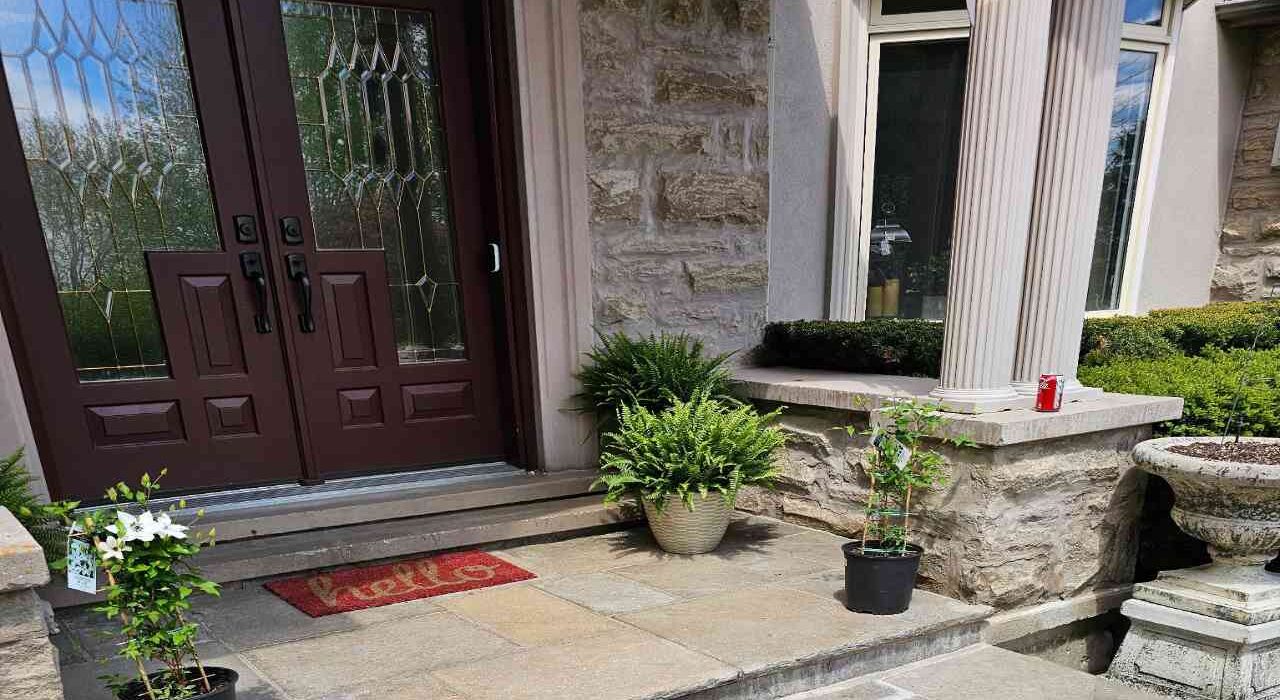
Walk down the side of a two-story brick home in Southeast Oakville or Burlington’s Roseland neighbourhood. Running vertically from the foundation to the roofline, you will notice long, clean gaps cutting straight through the brick courses without mortar. These deliberate gaps are engineered brick masonry expansion joints, serving as a fundamental feature of modern construction.
Most homeowners who notice these gaps assume they are looking at structural foundation cracks. They are actually controlled movement seams built into the wall by design. Their core purpose is to keep your surrounding rigid brickwork from destroying itself as it expands and contracts through intense seasonal weather shifts.
The critical requirement for these thermal movement boundaries is that they remain completely waterproofed. A properly functioning expansion seam utilizes a high-performance exterior brick caulking bead to block water intrusion. Leaving a failed sealant joint open creates a severe structural water trap that grows costlier with every local storm event.
The Science of Masonry Movement: Why Brick Needs to Breathe
Clay brick is not a static material. It responds physically to temperature, moisture, and time, and the forces generated by that response are substantial enough to fracture solid masonry if the wall assembly has no controlled relief point.
In a southern Ontario summer, brick facades on south and west-facing elevations absorb significant radiant heat. Clay brick expands as it heats, and a long, uninterrupted run of brickwork accumulates that expansion across its full length. Without a relief point, the expanding brick has nowhere to go.
It bears against adjacent sections of the wall and generates compressive stress that can exceed the tensile strength of the surrounding mortar joints and the brick faces themselves. The result is cracking, spalling, and displacement in the sections of brickwork that had no room to move.
In winter, the same material shrinks under cold temperatures, creating tensile stress across the wall that can open horizontal and diagonal cracks through mortar courses and into the brick units themselves.
Vertical expansion joints interrupt the wall at intervals specifically calibrated to the brick’s expansion coefficient, the wall length, and the anticipated temperature range for the local climate. They give the brick room to expand laterally without generating damaging compressive loads in adjacent sections.
For detailed technical guidance on protecting structural boundaries from moisture penetration, the Brick Industry Association’s masonry maintenance standards outline authoritative field inspection guidelines. This professional engineering documentation on joint repair and water penetration control is directly applicable to premium residential brick facades.
Filling these joints with mortar, which is rigid and non-elastic, eliminates the relief the joint was designed to provide. The mortar cracks under the first significant thermal cycle, and the cracked mortar then allows water into the joint while providing none of the flexible sealing that a properly specified sealant delivers.
Mortar is the wrong material for this application regardless of how carefully it is applied.
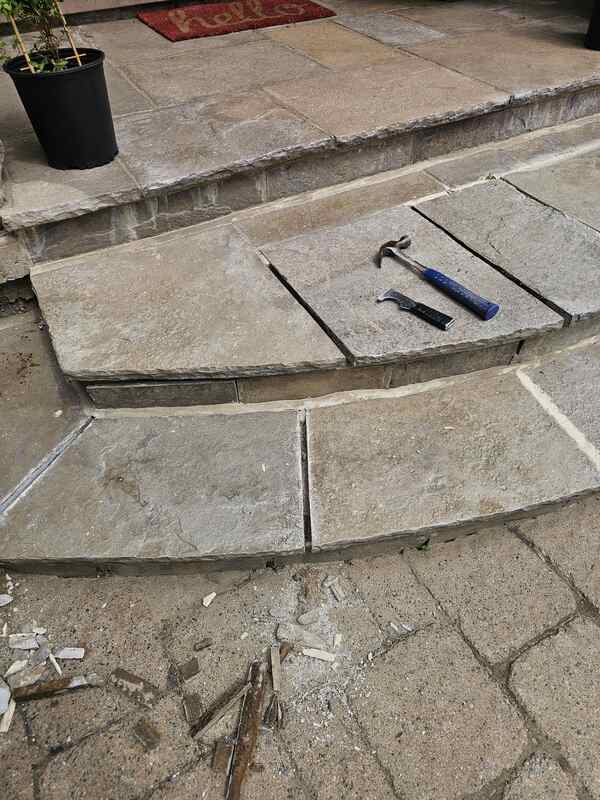
The correct material is a commercial-grade elastomeric sealant with sufficient elongation capability to stretch and compress through the full range of movement the joint experiences across a calendar year, while maintaining its bond to both brick faces throughout.
The Threat of Brick Spalling and Hidden Water Traps
When the exterior sealant in a vertical expansion joint fails, whether through age, improper material selection, or poor original installation, the joint becomes an open channel into the interior of the masonry wall. The consequences follow a predictable sequence, and each stage is more expensive to address than the one before it.
During heavy rain, water enters the open joint and saturates the inner masonry layers and any cavity insulation or building wrap behind the brick veneer. In an active joint with traffic from wind-driven rain, the volume of water entering the wall assembly over a single storm event is significant.
The masonry absorbs it, the cavity absorbs it, and the wooden framing and sheathing behind the exterior wrap are exposed to moisture they were not designed to manage directly.
When temperatures drop below freezing, any water retained in the porous brick units expands by approximately nine percent as it freezes. The ice crystals form inside the brick’s internal pore structure and push outward against the face of the brick with force that exceeds the material’s tensile strength.
The face of the brick delaminates and blows off. This is spalling, and it is irreversible without replacing the affected brick units entirely. On a heritage or premium brick finish common in Roseland or Southeast Oakville, matching replacement brick for spalled units is a difficult and expensive task.
Behind the brick face, the wooden structural elements that have been absorbing moisture through repeated rain events are developing the conditions for rot.
Wood rot in wall framing progresses slowly and silently, invisible behind the brick veneer until it has compromised enough structural material to affect the wall assembly’s integrity or until an interior inspection reveals the damage during a renovation.
By that point, the remediation involves not just the failed sealant but the framing repair, sheathing replacement, and in some cases insulation and interior finishing work.
Where vertical expansion joints run down to grade level and terminate at a horizontal concrete slab, driveway, or walkway, the intersection of the two joints creates a compounding vulnerability.
Water channelled down the vertical joint reaches the base of the wall and, without a properly sealed grade-level transition, continues into the sub-base beneath the adjacent concrete.
For a detailed look at what that ground-level failure means for both the concrete and the foundation wall, our article on failed concrete seals and grade-level joints covers the full structural risk at that transition.
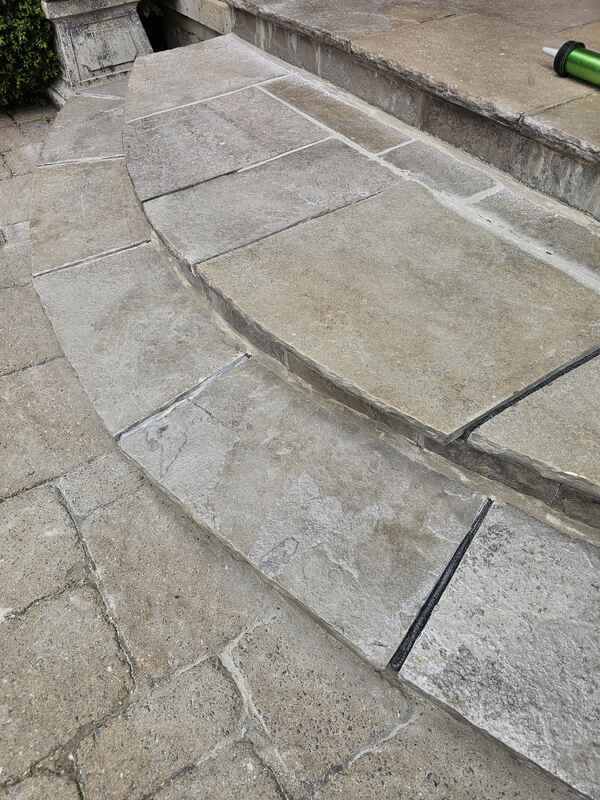
Critical Failure Signs in Vertical Brick Expansion Joints
A quick inspection of your home’s perimeter will reveal the structural health of your masonry wall joints. Look for these specific visual indicators that prove your vertical expansion sealant has reached the end of its functional service life.
Timing this work for the optimal seasonal window also matters. The moderate temperatures of May and June allow thick silicone beads in deep vertical joints to cure evenly from the face inward, without the surface skinning that occurs in peak summer heat.
Deep Unsealed Voids and Missing Sealant
Total material absence leaves a completely unshielded cavity. Old compound either debonded entirely or fell out due to poor surface adhesion. Rainwater flows directly inside your wall assembly with every single storm event.
Center Splitting Along the Sealant Bead
Lengthwise cracking indicates a catastrophic three-sided adhesion failure. A cheap contractor filled the gap without installing a backer rod, forcing the material to bond incorrectly to the back cavity wall. The joint remains fully open despite the visual presence of caulk.
Rigid Chalky Caulking That Crumbles on Impact
A hardened, brittle exterior bead means the compound has lost its elastic performance completely. Instead of absorbing structural brick shifting, it acts like a rigid insert. The dead material fractures further with every local temperature shift.
Visible Efflorescence Staining Along Masonry Edges
White mineral deposits or dark water stains on surrounding bricks reveal a hidden moisture trap. Rainwater is actively channeling through the split seam and wicking outward into your home’s porous brickwork. The underlying masonry is already completely saturated.
Spalling and Shattered Brick Faces
Visible face loss near the vertical seam indicates severe freeze-thaw damage. Trapped water expanded inside the saturated bricks during winter, physically snapping the clay units apart. Immediate sealing stops further structural decay but cannot reverse existing damage.
Completing this work before the summer thermal expansion cycle is at its maximum also ensures the joint is sealed while the gap is at an intermediate width, giving the sealant maximum movement capability in both the expansion and contraction direction.
For the full explanation of why this seasonal window is the right time for this type of work across Oakville, our article on optimal seasonal sealing and Oakville exterior caulking covers the curing chemistry and timing in detail.
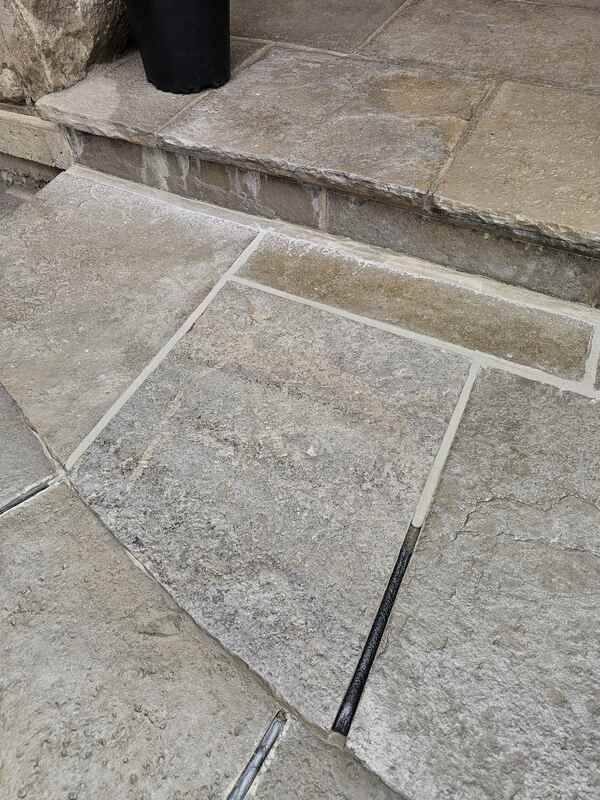
The Meticulous Cutout Workflow for Deep Vertical Seams
A surface-applied patch over an existing failed sealant in a deep vertical brick joint will not hold. The adhesion failure that caused the original sealant to pull away from the brick face is not resolved by adding new material on top of it.
New sealant bonded to old sealant inherits the bond integrity of the underlying material, which means it will debond along the same failure plane under the first significant thermal movement cycle. This is the most common reason a homeowner has a brick joint repaired twice in three years and still has the same problem.
The only approach that produces a lasting result is complete mechanical extraction down to bare, clean brick substrate on both faces of the joint, followed by correct joint preparation and the application of a properly specified commercial sealant to the clean substrate directly.
Phase 1: Mechanical Cavity Breakout and Brick Profile Cleaning
Every trace of the existing sealant and any backer material in the joint is removed completely using oscillating tools, hook scrapers, and narrow rotary cutting tools run carefully along the joint faces.
The goal is clean, bare brick on both sides of the joint with zero residual adhesive, compressed foam, or polymer debris left behind in the channel.
For deep structural joints, this extraction process takes time and requires exceptionally controlled tool depth to avoid damaging the brittle brick edges on either side of the gap.
Brick edges that are chipped or fractured during extraction will heavily compromise the adhesion face for the new sealant and may require consolidation before the joint can be properly resealed.
Phase 2: Porous Substrate Stripping and Efflorescence Neutralization
After mechanical extraction, the joint faces are thoroughly cleaned with specialized solvents to strip away residual adhesive, powdery white efflorescence deposits, and embedded surface contamination.
Brick is a highly porous substrate, and its surface condition at the time of sealant application directly affects the overall quality and durability of the adhesive bond.
A contaminated surface produces a sealant installation that looks visually correct but is already severely compromised at the deep molecular level.
Taking the time to properly prep these vertical channels ensures a permanent, weather-resistant bond.
Phase 3: Deep Vertical Void Cushioning and Three-Sided Bond Prevention
Deep vertical expansion joints require a backer rod installed at the correct depth before any fresh architectural sealant is injected into your cladding channels. We enforce a strict 2:1 width-to-depth structural ratio across all high-exposure brick boundaries by seating high-density closed-cell backer rods at exact manufacturer depths.
For a standard 12mm wide vertical masonry joint, our technical crews tool the center ribbon thickness to an exact depth of 6mm. Controlling this depth-to-width ratio gives the sealant the correct hourglass cross-sectional geometry it requires for maximum flex and elongation performance.
Without depth control, the sealant fills the full depth of the cavity and bonds to three surfaces instead of two. This structural flaw causes the material to tear right through the middle of the bead under normal thermal movement.
As outlined in our comprehensive guide covering what is a backer rod, installing this flexible backup foundation is the absolute structural prerequisite for any deep joint application. Skipping this essential backing step remains the single most common cause of sealant failure in deep masonry joints.
For vertical masonry joints, a closed-cell backer rod is always the standard choice for our local crews. It provides the firm backing support the sealant needs while completely preventing destructive three-sided adhesion.
This friction-fit foam cushion also adds an extra layer of air and moisture resistance behind your fresh sealant face. It locks in your structural weather barrier protection through decades of intense freeze-thaw shifts.
Phase 4: Non-Sag Silicone Injection and Smooth Concave Water-Shedding Tooling
Our installation crew injects heavy-bodied, non-sag architectural silicone deep into the prepped joint track using advanced equipment that maintains uniform material pressure. This specialized delivery method ensures consistent bead volume along every linear meter of the wall run, avoiding the uneven pockets common with retail products.
The freshly applied bead is instantly pressed and tooled by hand into a smooth, slightly concave profile with a dedicated masonry trowel. This essential compression step forces the material deep into the microscopic pores of both substrates, establishing airtight two-point adhesion, maximizing internal expansion geometry, and forming a clean face that forces rain to slide off the facade.
The heavy-duty, multi-component architectural compounds we deploy are specifically manufactured to survive severe environmental shifting without losing their grip. These specialized industrial sealants feature massive elastomeric thresholds that accommodate extensive expansion, fully satisfying the rigid structural guidelines archived in the official National Research Council Publications repository.
This superior structural grading enables the cured rubberized bead to expand and compress seamlessly through Ontario’s freezing winters and blisteringly hot summers. The rubberized seal handles extreme seasonal shifting without unzipping from your moving brick masonry or shifting window frames.
Proactive Maintenance Prevents Costly Structural Repairs
A vertical brick expansion joint in pristine condition remains virtually unnoticeable to the untrained eye. It executes its structural duty quietly, absorbing the intense thermal expansion forces of the surrounding facade while keeping moisture completely outside the masonry matrix.
Conversely, a failed joint rapidly exposes itself through fractured, spalled bricks, localized wall staining, and stressful interior moisture issues. Ultimately, this breach triggers deep timber framing decay behind a wall that has been absorbing driving rain for multiple seasons without a functioning elastomeric barrier.
Intercepting a degrading expansion joint before the structural damage loop takes hold represents a straightforward, permanent exterior maintenance task. Repairing the progressive structural consequences of a masonry channel left open through multiple winters and severe freeze-thaw cycles is vastly more expensive.
Arrange Your Comprehensive Exterior Masonry Audit
Contact Oleg at Proper Caulking to coordinate a thorough, zero-obligation exterior masonry joint audit for your Oakville or Burlington property today. Our experienced team systematically analyzes every vertical contraction lane, grade-level material transition, and window or door perimeter across your building envelope.
Our field crew provides an honest, detailed evaluation of your structural boundaries, delivering a transparent project scope backed entirely by our signature 10-year workmanship warranty. Booking your appointment early in the spring ensures your protective silicone installation is complete and fully cured before peak seasonal storm cycles hit the Halton region.
Protect Your Brickwork From Costly Spalling Damage
Don’t let split vertical seams trap water behind your masonry or shatter your expensive brick faces. Contact us for a free, professional exterior joint inspection today.
Proper Caulking – Oakville & Burlington, Ontario