
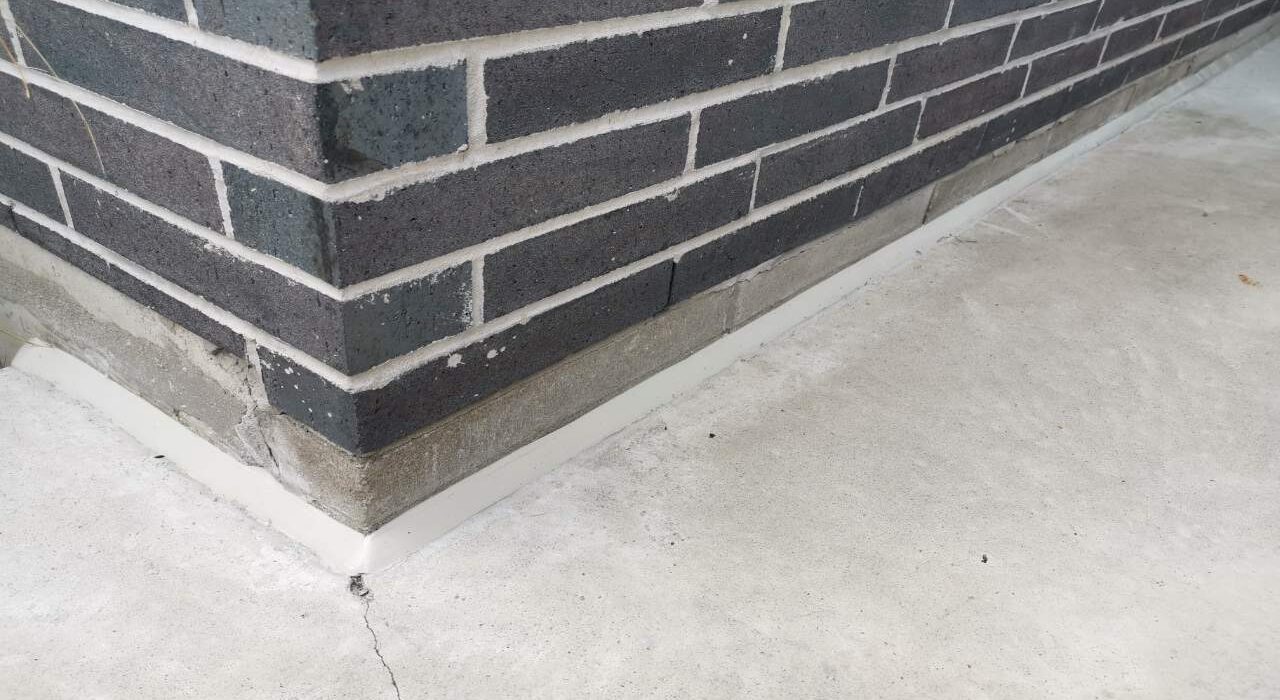
Maintaining a watertight sidewalk to brick expansion joint is a property owner’s single most critical line of defence against sub-grade water infiltration and progressive foundation erosion. When concrete walkways inevitably settle, shift, and pull away from clay brick walls, they create an unobstructed structural pathway for surface rainwater to track directly down your home’s lower walls.
This uncontrolled seasonal runoff rapidly bypasses peripheral drainage assets, saturates porous block walls, and floods straight into residential or retail basements. To evaluate how these ground-level horizontal concrete surfaces must be structurally managed to preserve an exterior perimeter envelope, see our technical service guide on driveway and patio concrete control joint sealing.
2. SURFACE COMPARISON CHART: MASONRY BRICK VS. HORIZONTAL CONCRETE SLABS
Different building materials display distinct structural masses and physical coefficients of expansion. Before selecting a traffic-grade polymer for a foundation perimeter transition, installers must analyze the unique structural attributes of both intersecting planes.
| Property Feature | Clay Brick Foundation Wall | Concrete Sidewalk Slab | The Joint Boundary Zone |
|---|---|---|---|
| Primary Material Composition | Fired clay units with rigid mortar joints | Cast-in-place Portland cement | Multi-material hybrid interface |
| Porosity & Liquid Absorption | Moderate; capillary wicking capacity | Extremely high; alkaline moisture retention | Volatile water-transmitting channel |
| Structural Movement Vector | Minimal; static vertical load lines | Dynamic; horizontal and vertical shifting | Multi-axis structural shearing |
| Water-Shedding Function | Vertical drop; sheds moisture downward | Horizontal plane; holds pooling runoff | Last line of foundation defence |
3. THE PHYSICS OF VERTICAL-TO-HORIZONTAL ADHESION
Horizontal concrete walkways experience highly dynamic, localized movements driven by soil settling, winter frost-heaving, and intense vehicle or pedestrian weight loads. Conversely, vertical brick walls remain essentially static, experiencing only minor linear thermal expansion when exposed to direct afternoon solar absorption.
Because these two structural planes move in different directions at completely different speeds, the joint boundary undergoes immense multi-axis shearing forces. This extreme mechanical stress tears weak, uncalibrated retail caulks loose almost immediately, transforming the interface into a massive funnel that dumps heavy Ontario storm runoff straight into your sub-grade block walls.
4. THE 4-STEP FOUNDATION GAP RESTORATION PROTOCOL
The mechanical execution of a foundation seal restoration requires an uncompromising deep-cleaning framework. Squeezing new caulking over active dirt, weeds, or old material is a fatal error that guarantees immediate edge failure.
Step 1: Deep Channel Debris Cleanout (Mechanical Extraction)
Technicians must utilize narrow joint-scrapers, heavy-duty wire brushes, and high-pressure blowers to extract all packed dirt, decaying organic roots, shifting sand, and old failing caulks. This extraction must clear out the entire inner channel down to a physical depth of at least 25 millimetres to expose the raw, hidden masonry pores.
Step 2: Chemical Masonry Priming
Ground-level concrete is highly alkaline and constantly wicks sub-base ground moisture directly to the surface, which will aggressively destroy a standard unprimed chemical bond. Applying a specialized, commercial-grade masonry primer stabilizes the interior edges of both the concrete and the brick, creating an unbreakable chemical connection that blocks rising moisture from peeling the compound.
Step 3: High-Density Backer Rope Seating
Installers must force a heavy-duty, closed-cell polyethylene backing material into the excavated channel at a controlled depth before any fresh sealant touches the joint. Seating this flexible backing rope establishes a proper hourglass shape and explicitly prevents three-sided adhesion to the underlying sand sub-base, as outlined in our architectural engineering guide on what backer rod is and why it is required for window sealing.
Step 4: Bulk Chemical Injection & Sloped Tooling
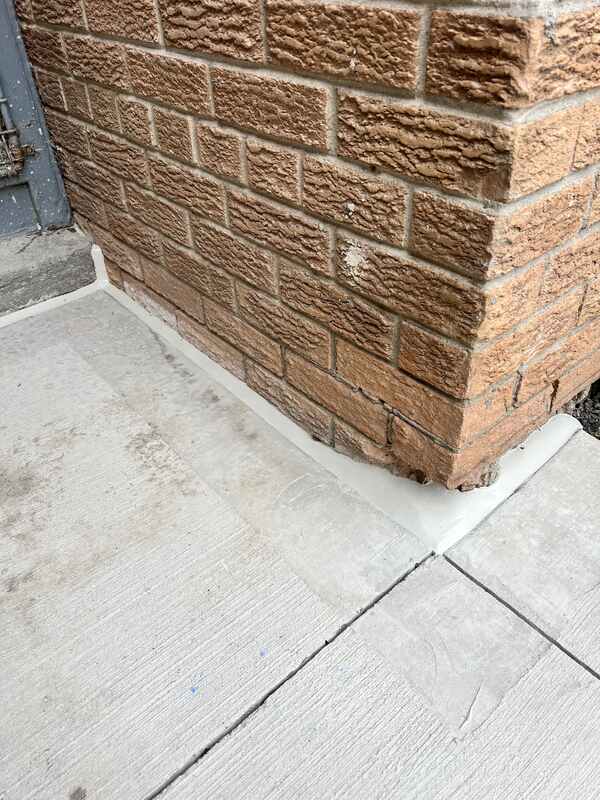
Inject a continuous, heavy-duty bead of non-sag commercial traffic-grade polymer deep into the prepared expansion line using high-pressure extrusion gear. The fresh material must be immediately tooled by hand to a sharp, distinct sloping profile that actively channels pooling rain and melting snow completely away from the brick veneer.
5. POLYMER SELECTION: TRAFFIC-GRADE POLYURETHANES VS. CO-POLYMERS
Selecting the correct chemical formulation is the deciding factor in whether a sub-grade foundation transition remains watertight over the long term. Deploying a low-tier compound along a horizontal surface ensures that the sealant bead will rip apart under vehicle and pedestrian traffic loads.
Cheap Acrylic Latex Sealants
Standard cheap consumer caulks and decorative acrylic sealants are immediately disqualified for horizontal perimeter applications due to zero puncture resistance and low elasticity limits. These entry-level products shred and tear open the first time they are exposed to lawnmower wheels, heavy foot traffic, or freezing winter conditions.
Acrylic formulas cure purely through water evaporation, which causes the material to shrink significantly and lose its flexibility within its first winter. For a complete analysis of how these entry-level retail compounds break down under cold-weather conditions, review our comparison guide on silicone vs polyurethane vs acrylic caulking.
High-Performance Polyurethanes
Advanced traffic-grade moisture-cure polyurethanes represent the absolute industry standard for sealing a sidewalk to brick expansion joint safely. These heavy-duty formulations absorb intense multi-axis compression and extension cycles, resist constant underwater submersion, and provide massive tensile strength against the continuous shearing forces found where walkways or porches tie into main home structures, as detailed in our guide on porch to house expansion joint caulking.
To cross-reference the exact laboratory testing methodologies and class designations that define elastomeric sealants for traffic-bearing environments, engineers should review the formal material guidelines managed directly by the ASTM International C920 Standards Directory.
Advanced Hybrid Sealants
Silyl-modified polymers and polyurethane hybrids bring an even broader performance profile to ground-level foundations by matching high tear resistance with an entirely non-bubbling cure mechanism. These premium formulas contain zero volatile organic solvents, prevent outgassing bubbles from ruining wet seals on damp stone, and immediately accept topcoat painting once fully cross-linked.
They deliver an exceptional surface bond to both porous brick and poured concrete without generating any corrosive chemical byproducts during application. This structural resilience ensures the cured bead accommodates massive frost-induced ground shifting without peeling away from the foundation masonry faces.
6. PROTECT YOUR FOUNDATION AND SUB-GRADE WALLS
Reach out to Oleg at Proper Caulking to coordinate a detailed, professional structural transition assessment and secure your foundation against hidden water intrusion. Our specialized horizontal remediation crews operate across Oakville, Burlington, and Milton, focusing on complete channel excavation, chemical pore priming, and the application of high-elongation traffic-grade elastomers.
Every residential and retail edge project we complete is meticulously engineered to stop basement flooding, eliminate frost-heave tearing, and preserve your property’s structural value. Contact our local team directly or use our digital booking system today to schedule your comprehensive, zero-obligation on-site expansion joint inspection.
Stop Foundation Water Leakage Today
Sinking walkways and shifting sidewalks dump thousands of litres of rainwater straight into your basement. Contact our horizontal waterproofing specialists today to secure your structural brick boundaries with traffic-grade polymers.
Proper Caulking – Oakville, Burlington & Milton, Ontario
FREQUENTLY ASKED QUESTIONS: SIDEWALK TO BRICK EXPANSION JOINTS
How long does traffic-grade polyurethane take to cure before it can be stepped on?
Most commercial-grade moisture-cure polyurethanes require a full 24 to 48 hours to skin over and achieve initial elastomeric hardness. Walking on the joint prematurely or exposing it to heavy lawnmower wheels will puncture the soft polymer membrane, causing the inner compound to slump and ruining the seal.
Can this joint sealing method stop water that is already leaking into my basement?
Exterior joint sealing acts as your absolute first line of defence by blocking surface water from collecting and tracking down along the brickwork. While it permanently eliminates the primary overhead moisture funnel, any active sub-grade wall cracks or failed weeping tile networks below the soil must still be addressed via interior waterproofing methods.
What happens if a contractor caulks over a sidewalk gap without using a masonry primer?
Skipping the technical surface primer allows the highly alkaline concrete and rising groundwater to break down the chemical bond of the sealant. Within a single freeze-thaw winter cycle, the compound will completely unzip from the masonry faces, leaving an invisible, unbonded channel where water leaks freely right behind the bead.
Should a sunken or sloped concrete sidewalk be leveled before the expansion joint is sealed?
If a sidewalk slab has dropped significantly, it is highly recommended to perform mudjacking or polyurethane foam slab-lifting before applying new sealant. Sealing a heavily shifting or settling slab before it stabilizes puts intense mechanical strain on the compound, shortening its operational life.
How deep should the channel be cleaned before installing the closed-cell backer rope?
The horizontal joint channel should be completely cleared of old caulk, sand, and packed soil down to a minimum depth of 25 to 30 millimetres. This open clearance ensures there is ample room to seat the backer rod firmly while leaving enough depth for a perfectly balanced hourglass cross-section of fresh polymer.