
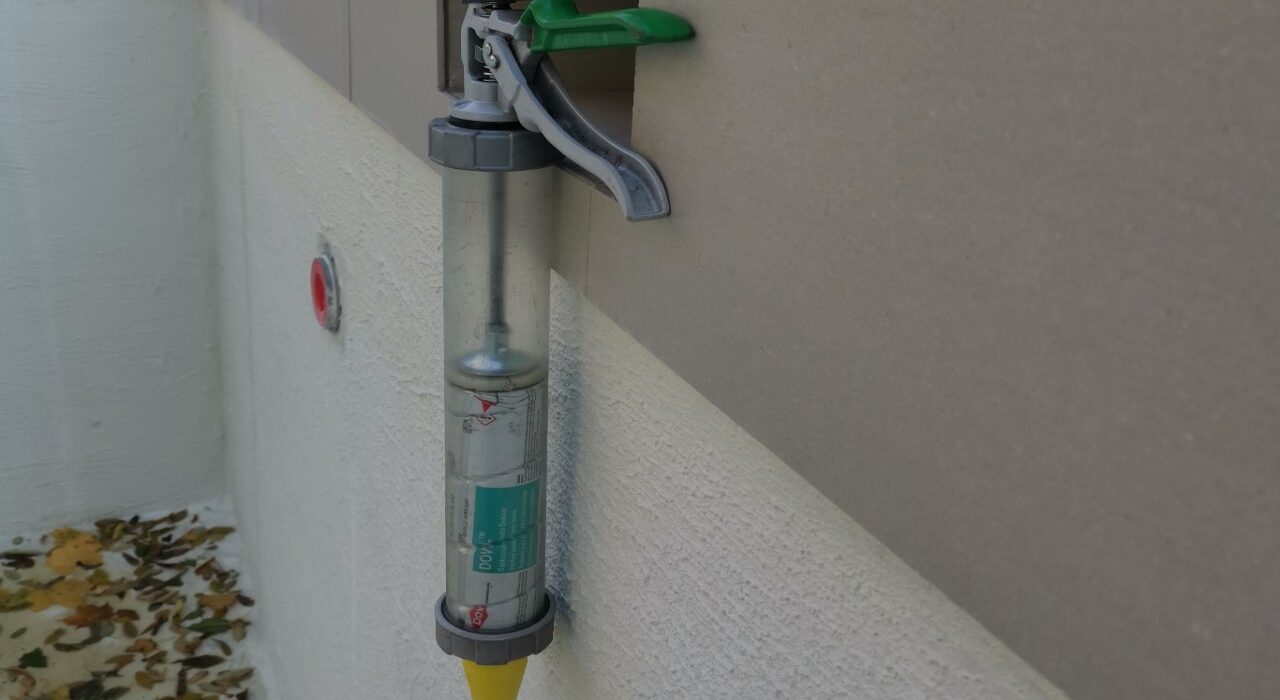
Selecting the best caulking gun thrust ratio for an exterior weatherproofing project is a critical mechanical choice that directly impacts bead consistency, edge adhesion, and installer hand fatigue. Most entry-level handymen and DIY property owners mistakenly believe that all dispensing frames function identically, leading to burst tubes, uneven extrusion, and incomplete joint wet-out.
In reality, the mechanical advantage built into a dispensing tool must be carefully calibrated to the viscosity of the chemical compound being squeezed out of the nozzle. For an analytical breakdown of how entry-level retail compounds behave and break down under regional temperature fluctuations, review our material comparison guide on silicone vs polyurethane vs acrylic caulking.
⏱️ Quick Answer
Standard 4:1 to 10:1 caulking guns are built for thin, lightweight interior acrylic latex. Heavy exterior sealants like moisture-cured polyurethanes and advanced hybrid MS-polymers require a high-thrust 18:1 to 26:1 mechanism to break through material surface tension. Using a high-thrust gun forces the wet sealant directly into the microscopic pores of brick, stone, or siding, creating an unbreakable chemical anchor that prevents the joint from peeling off during extreme weather changes.
PERFORMANCE CHART: VISCOSITY VS. ADVANTAGE RATIOS
Different chemical polymers feature distinct physical densities and internal flow resistances, requiring varying degrees of compressive force to initiate extrusion. Utilizing an under-powered tool frame with a heavy, cold compound forces the technician to exert excessive hand pressure, which completely ruins line tracking.
| Thrust Ratio | Mechanical Advantage | Target Compound Viscosity | Optimal Material Applications |
|---|---|---|---|
| Standard 4:1 to 10:1 | Low Advantage | Very Low / Water-Based | Lightweight interior painter’s acrylic latex |
| Mid-Range 12:1 to 14:1 | Moderate Advantage | Medium / Solvent-Evaporating | Standard architectural acetoxy and alkoxy silicones |
| High-Thrust 18:1 to 26:1 | High Advantage | Dense / Moisture-Cured | Heavy commercial polyurethanes and hybrid MS-polymers |
THE PHYSICS OF MATERIAL VISCOSITY AND ADVANTAGE
The thrust ratio of a manual caulking gun defines the mathematical relationship between the distance the trigger moves and the physical force applied to the internal drive piston. For example, an 18:1 high-thrust gun generates eighteen pounds of forward mechanical force onto the plunger for every single pound of manual pressure applied to the handle trigger.
Low-viscosity materials like interior water-based latex flow freely through a cut nozzle with very little resistance, making a low-ratio frame completely acceptable for interior trim prep. However, heavy exterior sealants feature a dense, thick molecular structure that aggressively resists flowing out of the tube, especially during cooler spring and autumn mornings in the Halton Region.
To achieve maximum surface wet-out under these conditions, technicians avoid a standard straight snip. Instead, use a utility knife to execute a sharp 45-degree angle cut matching the exact joint width, allowing the extreme piston pressure to tool the bead perfectly flat during the extrusion stroke.
Our field crews rely on heavy-duty industrial friction-rod frames like the Albion B12S20 or the Cox UltraFlow 26:1 to distribute these dense, thick polymers smoothly without gun chatter or nozzle skipping along your masonry.
CALIBRATING GEAR MODULUS TO THE SUBSTRATE ENVELOPE
Low-Thrust Frames (4:1 to 10:1)
Low-thrust dispensing frames are built purely for light, thin consumer products that offer virtually no internal material resistance during trigger compression. Forcing a thick, professional-grade structural polymer through a low-ratio tool will cause the internal push rod to slip, bend the metal trigger linkage, or split the plastic cartridge open at the rear seams.
Mid-Range Tools (12:1 to 14:1)
Mid-range frames serve as the standard baseline for injecting medium-bodied sealants like pure architectural silicones and light co-polymers. These tools provide enough mechanical leverage to smoothly drive standard wet-area products without requiring intense physical effort, making them an excellent choice for a master-level shower silicone replacement where precise bead control is paramount.
High-Thrust Mechanisms (18:1 to 26:1)
High-thrust mechanisms are completely mandatory when injecting heavy, high-solids moisture-cure polyurethanes and advanced silyl-modified hybrid compounds. The massive mechanical advantage allows a technician to effortlessly extrude a continuous, un-interrupted bead without causing the nozzle to shake or skip along the joint faces, ensuring the compound achieves maximum surface wet-out inside deep structural gaps.
WHY MECHANICAL PRESSURE DICTATES SURFACE ADHESION
When a thick architectural sealant is driven through a high-thrust gun, the massive piston pressure forces the liquid polymer to break through surface tension boundaries. This structural compression drives the wet material directly into the microscopic, uneven pores and crevices of the target substrate, building an unbreakable chemical anchor.
Skipping high-thrust gear forces the installer to drag an under-extruded, hollow bead along the joint line that merely sits loosely on top of the substrate faces.
This defective application lacks the necessary interface anchoring, ensuring the bead will rapidly unzip from the wall faces when subjected to intense wind loads or structural foundation movement, as detailed in our guide on sidewalk to brick expansion joint sealing.
To cross-reference the formal laboratory testing methodologies and mechanical design definitions that govern manual dispensing tools across global trade applications, professionals should consult the technology manuals published by ASTM International.
Field Configuration Checklist for High-Thrust Dispensing
- Verify the internal steel push-rod is completely clean of dried residue to ensure step-less friction grip.
- Engage the pressure-relief clutch to instantly check for container back-oozing during active trigger pauses.
- Store thick commercial cartridges in a climate-controlled crew cab at 20°C prior to cold-weather application to naturally lower initial flow resistance.
UPGRADE YOUR HOME’S STRUCTURAL WEATHERBARRIER
Reach out to Oleg at Proper Caulking to coordinate a meticulous building envelope inspection and eliminate hidden climate leaks across your exterior facades. Our specialized residential and commercial teams serve property owners throughout Oakville, Burlington, and Milton, combining technical field diagnostics with calibrated, industrial-grade extrusion gear.
Every custom joint restoration project we execute is strictly planned using elite material selections and professional mechanical tooling to guarantee enduring structural protection. Review your options below to speak directly with our local team and secure a comprehensive, zero-obligation on-site joint assessment.
Secure a Flawless Building Envelope Seal
Under-powered tools cause uneven extrusion, skipping beads, and early joint failure. Contact our technical field division today to evaluate your property facades and install advanced, high-movement compounds with calibrated trade precision.
Proper Caulking – Oakville, Burlington & Milton, Ontario
FREQUENTLY ASKED QUESTIONS: CAULKING GUN THRUST RATIOS
What happens if I try to use a cheap 4:1 thrust ratio gun to apply an exterior polyurethane?
Attempting to drive a high-viscosity polyurethane with a low-thrust frame will cause the steel push rod to slip entirely against the drive plate. You will have to squeeze the trigger with intense, painful hand force, which causes the nozzle tip to shake violently, leaving a jagged, uneven bead that lacks proper edge adhesion.
Why does cold winter weather require a higher caulking gun thrust ratio than summer?
As regional outdoor temperatures drop across the Halton Region, the liquid polymers inside caulking tubes thicken considerably and experience a major increase in internal flow resistance. A high-thrust 18:1 or 26:1 mechanism is required in cold weather to overcome this temperature-induced viscosity spike and keep the material flowing smoothly.
Can a thrust ratio be too high when applying a thin, lightweight interior latex caulk?
Yes, using an extremely high 26:1 thrust gun on a thin, water-based painter’s latex will apply too much force with a single trigger pull. The lightweight material will blast out of the nozzle tip far too quickly, creating a messy, over-extruded blowout that wastes compound and smears all over your trim work.
Do professional high-thrust caulking guns include a drip-stop or pressure-relief switch?
Most elite, industrial-grade high-thrust guns features a switchable non-drip mechanism built directly into the handle plate assembly. When engaged, this clutch instantly releases the forward kinetic tension on the internal steel push rod the moment you let go of the trigger, stopping thick polymers from oozing out onto surfaces.
How does a smooth friction-rod drive compare to a ratcheted drive on a high-thrust tool?
Smooth friction-rod guns are vastly superior for professional applications because they offer completely infinite extrusion adjustment and step-less control over the piston. Older ratcheting style guns rely on physical interlocking teeth that force the rod forward in fixed, rigid increments, causing sudden spurts of material that ruin line consistency.